![[Translate to English:]](/fileadmin/_processed/5/1/csm_laubiniger_homepage_wisskomm_politik_3fccec75d4.jpg "[Translate to English:]")
![[Translate to English:]](/fileadmin/_processed/5/1/csm_laubiniger_homepage_wisskomm_politik_9cdf21ea4e.jpg "[Translate to English:]")
In a seminar led by biologist Sascha Laubinger last winter semester, students explored issues relating to science communication and experienced what it means to speak with politicians.
Whether it’s climate change, genetic engineering or, currently, the coronavirus pandemic: scientific findings play a major role in our everyday lives. But which sources actually provide reliable facts? And how can experts engage in dialogue with the public or politicians about complex scientific issues – particularly when it comes to controversial topics such as green genetic engineering?
This is a question he has been asking himself for a long time, says Prof. Dr Sascha Laubinger, a lecturer in evolutionary plant genetics at the University’s Institute of Biology and Environmental Sciences. In his view, many socio-political debates would benefit if scientific findings played a greater role. For years, he says, positions in his field – green genetic engineering – have been too rigidly entrenched. When it comes to questions such as what risks or benefits new genetic engineering methods, such as so-called gene scissors, bring to plant breeding, scientific facts often play a secondary role, in the researcher’s experience. “Even many of my students are unaware of this,” says Laubinger.
Communicating controversial topics
This is another reason why the biologist has decided to encourage early-career researchers to reflect on the role of science in our society and on science communication, using selected topics, whilst they are still undergraduates. Last year, he launched a seminar which he now runs regularly during the winter semester. The aim of the course is not only for students to research controversial topics and communicate them clearly, but also to provide them with an opportunity to engage in dialogue with politicians about scientific findings.
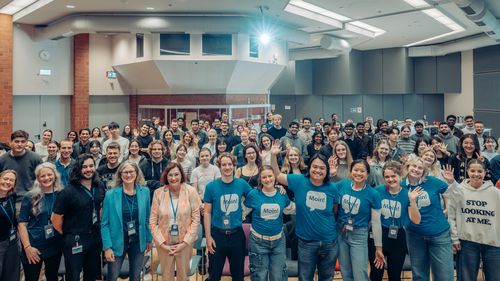
The first seminar, held last winter semester, focused on the topic of agriculture and climate change. The 35 participating students first explored the scientific fundamentals of how climate change affects our agriculture in the long term. The programme covered a wide range of aspects of the topic, including those outside their own disciplines, such as climate modelling, organic and conventional agriculture, the breeding of new plant varieties, plant protection and food security.
Remaining unbiased
One challenge, explains student Christian Streit, was identifying and using reliable sources, such as reports from the Food and Agriculture Organisation (FAO) or the Intergovernmental Panel on Climate Change (IPCC). “We didn’t want to rely on statements from Institutes that conduct research driven by vested interests,” he reports. “It was important to me that the students explored their topic in a scientifically sound manner and that we discussed it on that basis,” adds Laubinger. In the process, the seminar participants realised that it is not only difficult to distinguish reliable sources from unreliable ones, but also to remain unbiased: “If you only examine selected aspects in a study, you get certain results; if you focus on something else, you get different ones,” says student Gesa Gerding.
By the end of the term, the students had built up a solid foundation of facts – and, at the same time, developed a list of questions for discussions with politicians. “During the seminar, we realised that there is a gap between what we know scientifically and what politicians are implementing or planning to implement,” says Svenja Augustin, who also took part in the seminar.
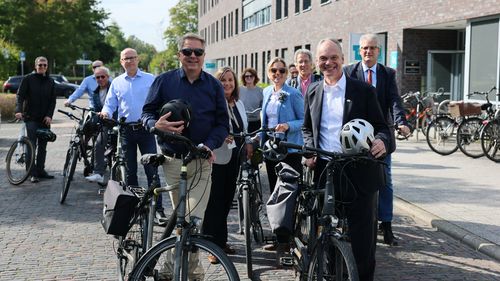
The students had the opportunity to raise their questions at the end of the seminar in January at Green Week in Berlin – a highlight, in the participants’ view. There, they spoke with Members of the Bundestag from the CDU and Die Linke, both of whom sit on the Bundestag Committee on Food and Agriculture. The topic was the future of agriculture, caught between the conflicting priorities of food security and global climate change. “This was complemented by questions on genetic engineering and the use of pesticides and fertilisers,” explains student Augustin.
Dialogue between academia and politics
Although the discussions took place on an equal footing, the students report, Christian Streit explains that the politicians were initially primarily concerned with setting out their own positions. For him and his fellow students, it was an exciting experience, as it not only forced them to communicate clearly but also to engage with views that are rarely heard in their student circles. “We had to step out of our comfort zone,” says the student.
In the students’ view, the seminar thus offered a good opportunity to bridge the gap between academia and politics. Laubinger and the students agree that, particularly in times of pressing problems, academic expertise should play a major role – for example, in mitigating the consequences of climate change for agriculture. The lecturer hopes that an ongoing dialogue between academia and politics will continue to raise awareness of the important role science plays in societal debates – and is looking forward to running the seminar again next semester with new students and new topics.