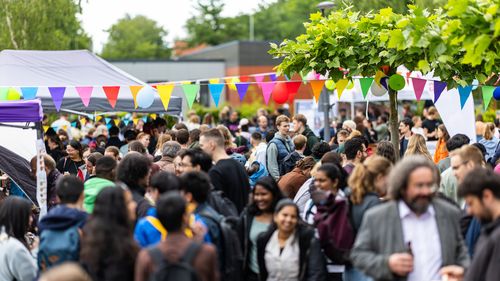
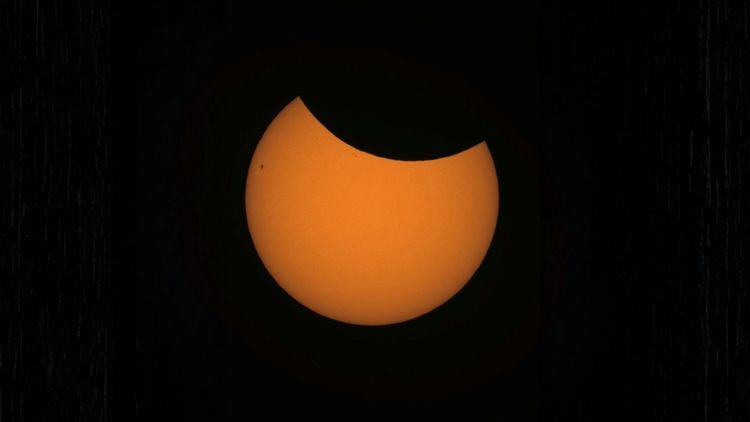

Solar eclipse over Europe: On Wednesday 12 August, this event will also be visible in Oldenburg in the evening – whilst, a few hours later, there will also be an excellent chance of spotting shooting stars in the sky. To mark these astronomical events, the University of Oldenburg, in collaboration with the Lower Saxony Rural Adult Education Centre (LEB), the Freie Schule Oldenburg and the Oldenburg Astronomy Society, is organising activities centred around the Utkiek.
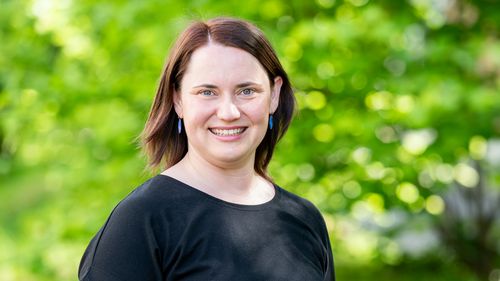
The LEB and University’s Tiny Observatory will open its doors from 4.30 pm in the school playground of the Freie Schule (Burmesterstr. 5–7, 26135 Oldenburg). Children, teenagers and adults can experience how telescopes and astronomical observations work in the mobile observatory. “We don’t just want to explain astronomy, but to bring it to life together,” says Prof. Dr Björn Poppe from the University Observatory. This also includes giving visitors the chance to examine real rocks from space. In addition, shortly before sunset, the Tiny Observatory team will launch a weather balloon, which is set to rise to the edge of the atmosphere to take pictures of the solar eclipse.
A short time later, visitors will also be able to watch for themselves from the school playground as the Moon moves in front of the Sun. “We expect that, from our vantage point, the Sun will be up to 86 per cent covered by around 8.15 pm. There won’t be another partial solar eclipse as impressive as this in our region for several years to come,” explains Poppe. The team at the Tiny Observatory will be showing what a total solar eclipse looks like via a video stream from Spain, where the Moon will completely cover the Sun that evening.
Anyone wishing to get a little closer to the events in the sky can climb the Utkiek, just a few minutes’ walk away. From 7.00 pm, members of the University’s Astronomy Society and the Oldenburg Astronomy Club invite the public to join them for a live observation session at the Helen-Voskuhl summit. They will also be answering questions on the subject and offering a look through their telescopes. At both locations, the team will be handing out free protective glasses – whilst stocks last.
It’s worth setting aside a little extra time: even though the Perseids won’t reach their peak until 13 August, if the sky is clear late on the evening of 12 August, there’s a good chance of spotting shooting stars in the sky. This well-known meteor shower occurs when the Earth passes through the dust trails left by Comet Swift-Tuttle.
The events in Oldenburg are taking place as part of the Long Night of Astronomy, which invites people across Germany to discover the cosmos.
Anyone unable to attend in person can also follow the event via the live feed from the University Observatory on YouTube at www.youtube.com/@sternwarteuniversitatolden5698.