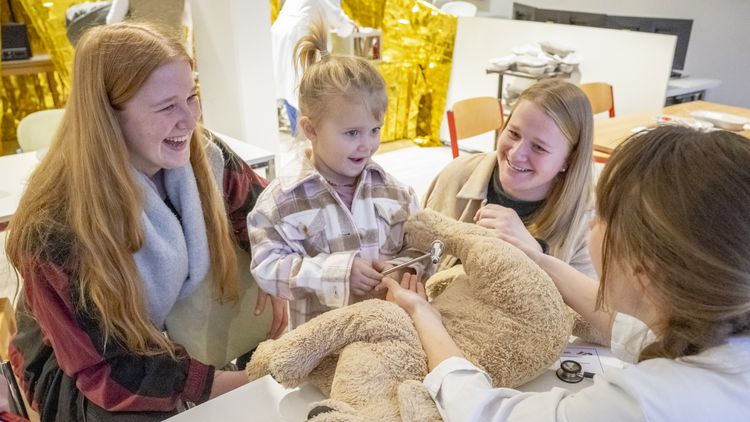
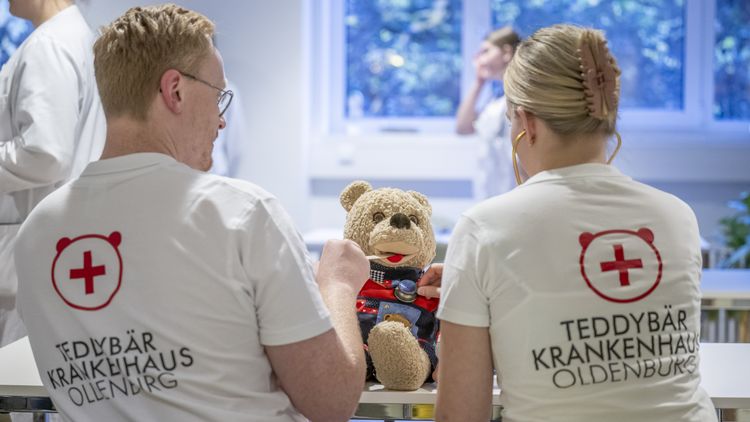
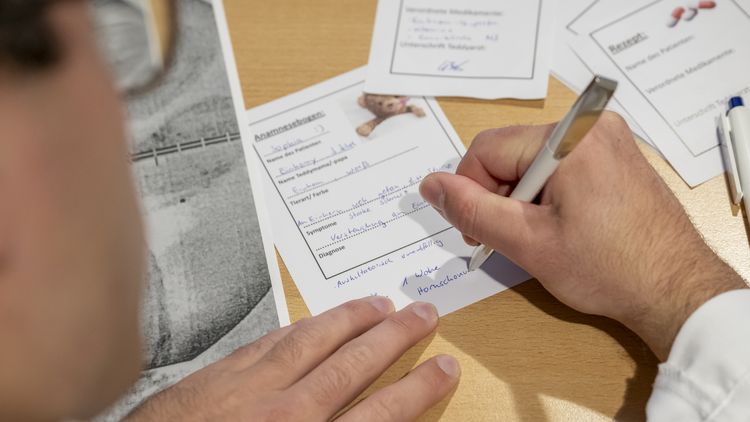


There is a quiet murmur in the "anamnesis room" of the Teddy Bear Hospital. Children are sitting everywhere and reporting on the complaints of their cuddly toys, which they have placed on the table in front of them, which today serves as an examination table. Dogs with broken legs, teddies with stomach ache, baby dolls with fever - the illnesses are just as varied as in the real emergency outpatient clinic at the University Clinic for Paediatrics and Adolescent Medicine at Oldenburg Hospital.
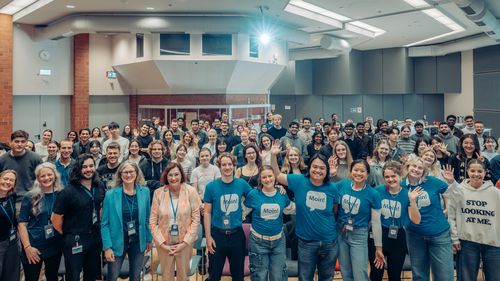
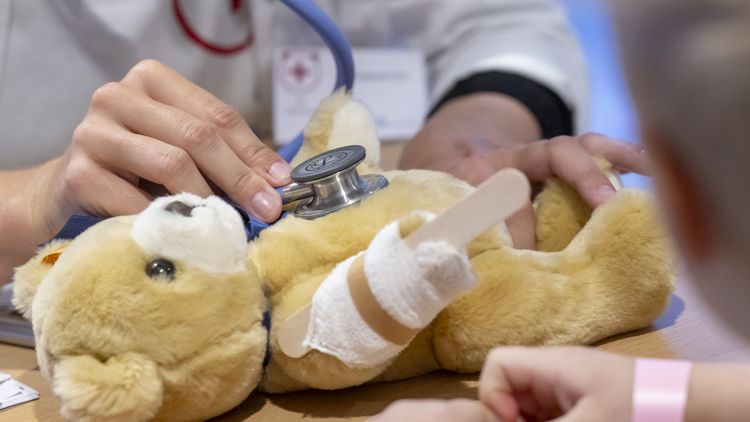
Medical students from the University of Oldenburg were once again on duty for three days this year to run the teddy bear hospital in the basement of the university hospital. Dressed in white coats, they examined hundreds of stuffed animals, listened to their hearts with a stethoscope, looked into the mouths of the plush patients with a spatula, stuck colourful plasters on plush arms and wrapped gauze bandages around injured body parts. The aim of the medical students: To familiarise children with hospital procedures in a playful way and thus allay their fears of being hospitalised themselves.
For example, three-year-old Nea is about to undergo a minor routine procedure in hospital. She has brought her cuddly dog with her to the Teddy Bear Hospital so that she can try out what it feels like to be in hospital. "The interaction with the children here is great," says her mum Christin Lange happily. She hopes that her daughter's experiences will make her own hospitalisation a little easier.
"Between 250 and 300 children visit us over the three days," says medical student Anna Lena Obst from the ten-strong organisation team at the Teddy Bear Hospital. Registered kindergarten groups come on three mornings and the doors are open to spontaneous visitors on two afternoons. Around 40 medical students are "on duty with the cuddly toy" these days.
"Many children initially have respect when they enter the hospital," Obst has observed. This is probably one of the reasons why it is surprisingly quiet in the anamnesis room: many children start by quietly telling us what's wrong with their pets. Talking to the young teddy bear hospital doctors quickly builds trust, however, and the children even hand over their cuddly toys for an "X-ray". In a room improvised from rescue blankets with a flashing overhead projector, the students demonstrate how such an examination is carried out. They then conjure up the appropriate X-ray image of the animal in question from a folder.
The future doctors have to demonstrate their talent for improvisation time and again. "This year, octopus cuddly toys are all the rage. We didn't have any X-ray images prepared for them," says Obst with a laugh. The students also have to constantly adapt to the different levels of knowledge of the teddy mums and dads. "It's great to see how the children discover medicine for themselves," says Obst.
They have the opportunity to do this in the laboratory, where they hold Teddy Benny's paw while a medical student takes "blood" from the bear, which was specially designed for this purpose. The children help with the subsequent examination in the laboratory and mix the teddy bear's blood with an indicator liquid in a test tube. The originally pale pink liquid quickly turns dark red and the children diagnose what "Benny" is suffering from by looking at a poster explaining the meaning of the colours: Fever.
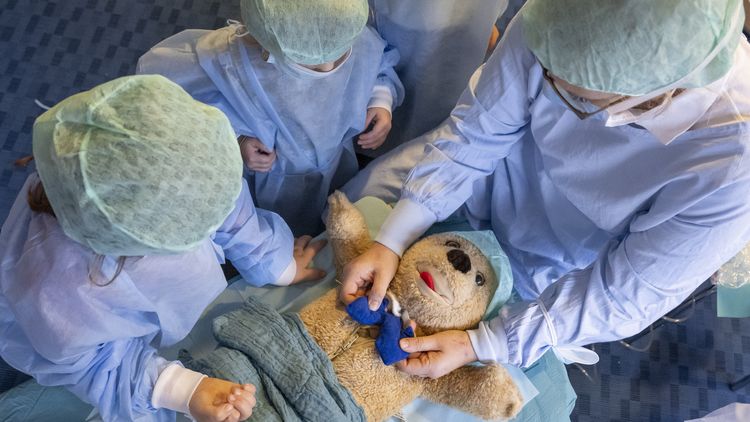
In the "operating theatre", the three to six-year-olds then slip into surgical gowns and caps themselves, put on a face mask and step up to the operating table. Benny is also lying here - in this case with appendicitis. Together with the children, student Anne Kistner-Peters prepares the patient for the operation and anaesthetises him so that he no longer responds even to the children's loudest cries. Together, the surgical team then opens the teddy's zipped stomach and makes its way past numerous plush organs to the appendix. There is hardly any sign of the children's initial shyness in the operating theatre. On the contrary: after the successful operation, they shout loudly again: "BENNY! BENNY! BENNY!" After a wake-up injection, the freshly operated teddy finally opens his eyes again and Anne Kistner-Peters' eyes also light up. "Helping children overcome their fear of hospital is a matter close to my heart," she says. She will soon be starting her practical year at the hospital. Her career goal: to become a paediatrician.
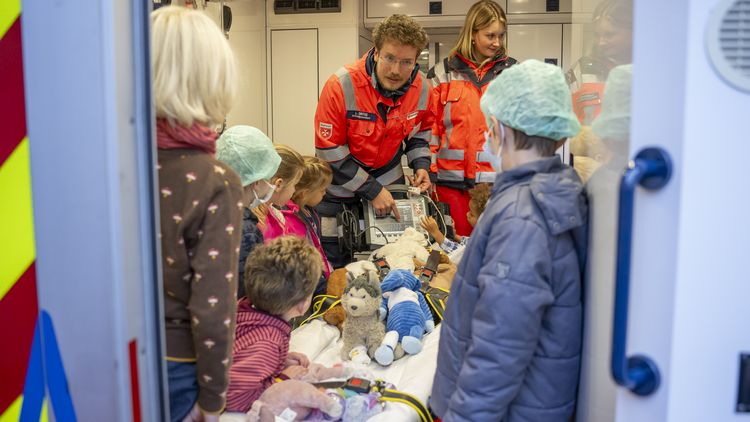
This year, the medical students received support from the hospital's nursing trainees, who looked after the children during short waiting periods at a play station, as well as from the Oldenburg fire brigade and the Malteser organisation, which allowed the children to explore an ambulance up close. Various sponsors also supported the campaign with donations and equipment.