
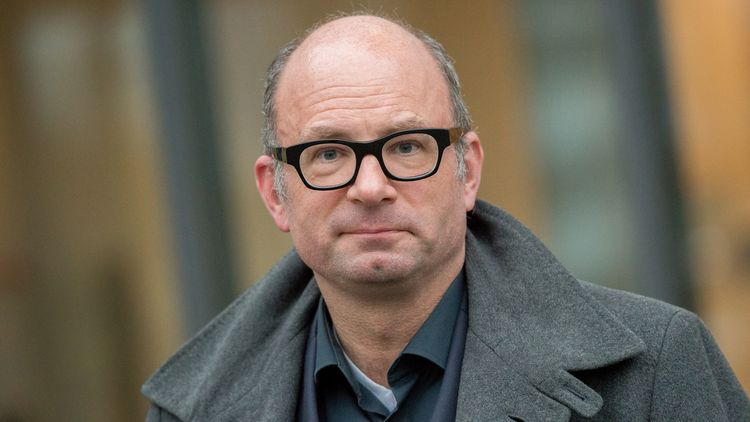


The new Infection Protection Act was passed by the Bundestag in mid-November, but many people are still uneasy. Is parliament being ignored? A guest article by constitutional law expert Volker Boehme-Neßler.
In mid-November, the Bundestag passed far-reaching amendments to the Infection Protection Act with the approval of the Bundesrat. This was urgently needed from a constitutional point of view. During the months of the pandemic, governments, districts and Public Health Departments have interfered extremely with the fundamental rights and everyday lives of citizens.
The constitution allows such interventions - but only in exceptional cases. They must be proportionate and have a sufficient legal basis. Since the beginning of the year, the decisive law has been the Infection Protection Act. There was no other. The problem was that the Infection Protection Act was not intended as a basis for combating a dangerous pandemic. It was aimed at localised outbreaks of infectious diseases - such as a measles outbreak at a school. Better late than never: the legal changes now planned are intended to create a sufficient legal basis for the comprehensive encroachments on fundamental rights. From a (constitutional) legal perspective, many details of the law can be criticised. You can tell that the law was knitted with a hot needle.
Unacceptable from a democratic point of view
But much worse than the legal flaws in the details is a fundamental flaw in the law: the amendments to the Infection Protection Act disempower the Bundestag itself. And that is completely unacceptable from a democratic point of view. What is at stake? According to the law, the Bundestag has the right to declare a so-called epidemic situation of national importance. As soon as it has done so, the decision-making power is largely transferred to the federal government and the state governments. They are then authorised to take extremely repressive measures to combat the pandemic. The Bundestag is no longer involved in this. It has given the governments a blanket authorisation.
But is that a problem? Isn't it always the executive's turn in the event of a disaster? And isn't the fight against the pandemic working quite well in Germany, despite all the shortcomings? That is correct. Germany is actually doing well in international comparison. Nevertheless, the behaviour of the Bundestag raises two major problems, one constitutional and one political.
Legal breaking point
The constitution is very clear. Germany must be a parliamentary democracy. Anything else would be unconstitutional. Parliament is at the centre of democracy. It is quite clear that a parliament cannot make all the necessary decisions. The fact that governments and administrations have a great deal of room for manoeuvre is necessary, unavoidable and right. But in the democracy of the Basic Law, parliament must make all important, essential decisions itself. And the essential decisions naturally include the question of whether and to what extent fundamental rights may be encroached upon. Whether a lockdown is imposed or not is, from the point of view of the constitution, an essential decision that must be made by the Bundestag - and no one else. Parliament may not delegate the decision to the governments or even delegate it to them. But that is exactly what it is doing with the new regulations. In this respect, the amendments to the Infection Protection Act are extremely problematic under constitutional law. This is a legal breaking point that will have an impact when the courts review the coronavirus measures.
Even worse, however, is the political damage caused by the Bundestag's behaviour. Since the beginning of the pandemic, very fundamental, even existential questions have been at stake. Will a lockdown be imposed? Will schools remain open? How will the burden of the pandemic be shared? Who will be vaccinated first when vaccines are on the market? And what about the problem of triage: who gets the bed in the intensive care unit if there aren't enough of them? Debates about this in the Bundestag? Not a chance!
In a democracy, such existential questions must be discussed and decided in parliament. Instead, the Bundestag repeatedly deals with individual technical issues and administrative details. In the amended Infection Protection Act, it subsequently casts into law what the governments are already doing anyway. To put it bluntly: Parliament nods in retrospect at what the federal and state governments decide and already practise. This does not correspond to the division of roles provided for in the Basic Law.
More acceptance and transparency through debates
Major debates in parliament have an important function. They ensure that all aspects of a problem are publicly recognised and discussed. In a major debate in the Bundestag, all the different interests, ideas, proposals and fears of citizens are - ideally - brought to the table. They are taken into account, discussed and - ideally - have an impact on the parliamentary decision at the end. This has an important consequence. Because parliament takes everyone seriously, acceptance of the decision increases. Even citizens who are outvoted in the end adhere to the rules if and because they feel that they are taken seriously and respected. Another point: the transparency associated with parliamentary debate increases understanding of decisions and legal regulations. This also leads to better compliance. Taking all citizens seriously in major debates and creating transparency - the Bundestag has so far failed to fulfil this fundamental democratic task during the pandemic. To put it bluntly.
A very problematic role is played by a fatal term that is repeatedly used in the debate and characterises thinking. All too often, governments describe their decisions as having no alternative. The Bundestag accepts this without protest. If there is no alternative, there can be no debate about alternatives. However, the term "no alternatives" is obviously wrong - and completely apolitical and undemocratic. Politics begins with the realisation that there are always alternatives to choose from. The very idea of politics and democracy is based on discussing different paths and making political decisions by majority vote. That is an adult form of politics. So far, however, the pandemic has been completely different. The Bundestag is keeping quiet and staying out of it.
Why is democracy being so naked?
This silence has fatal consequences, which are becoming increasingly apparent. Public understanding of the burdensome pandemic rules is eroding faster and faster, open and snotty protests are on the rise, as are secret breaches of the rules. Disenchantment with politics is growing in large sections of the population. Citizens are becoming more mistrustful of the state. Incomprehensible conspiracy theories that leave people stunned are spreading ever faster and in ever wider circles of the population. All of this plays into the hands of the populist AfD. Time and again, this unspeakable party demonstrates in deeds and words how deeply it despises parliament, democracy and the values of the Basic Law. Of all parties, it is now able to present itself to the public as the true representative of citizens' interests and defender of democratic rights. Why is democracy making such a fool of itself? It is high time for the Bundestag to reflect on its role and discuss and decide on the important issues of pandemic policy. In turbulent times, parliament is called upon more than ever. The Bundestag is the people's representative body. It must debate the big issues and set the course.
A guest article by Volker Boehme-Neßler


