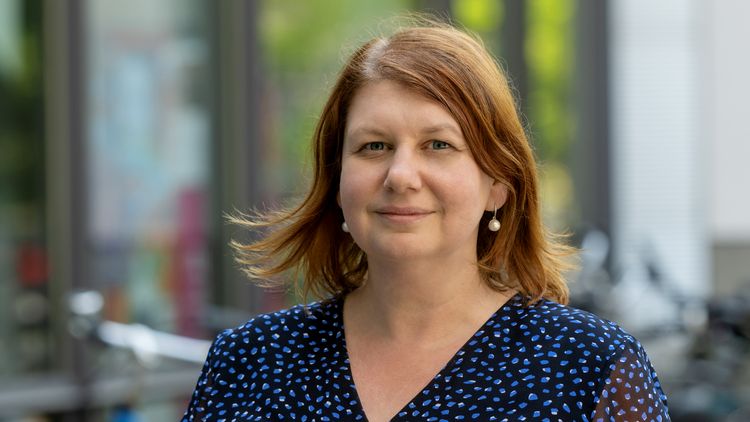

After legalisation: Oldenburg child and adolescent psychiatrist Yulia Golub, together with other researchers, is calling for prevention measures that actually reach vulnerable groups - especially young people.
Adults have been allowed to possess and consume cannabis for around one and a half years. Of course, legalisation does not apply to children and young people - does it still have an effect here?
If it weren't so serious, you could almost find it strange: While we are creating rules for legalisation for adults, the young people we should actually be protecting continue to obtain cannabis from the illegal street trade. Nevertheless, the change in the law has fundamentally changed things for them too - we clearly notice that here in the clinic.
What have you observed?
When we ask our patients, we hear more and more often: 'No, I don't take drugs. I only use cannabis. That used to be different. So the perception has changed massively. Cannabis has become a harmless substance in the eyes of young people. We used to discuss with them the fact that smoking tobacco is forbidden in our clinic, even if they do it at home. Now we have these conversations about cannabis.
The Centre for Interdisciplinary Addiction Research at Hamburg University Hospital recently published initial figures on changes in consumption behaviour following legalisation. According to these figures, the number of young people between the ages of 15 and 17 who use cannabis has not increased, but remains at 7.9 per cent.
Other studies suggest different conclusions: according to the drug affinity study by the Federal Institute of Public Health, which covers the period from 2015 to 2025, almost one in three 18 to 25-year-old men used cannabis in the past year - instead of one in five ten years ago. The proportion of women who have used cannabis in the past year has almost doubled in this age group - to 18.5 per cent. And among young people in Canada, where cannabis has been legal since 2018, consumption has risen by 26 per cent.
Why is cannabis use dangerous for teenagers and young adults?
The brain continues to develop until around the age of 27: the white matter in the brain expands and creates communication pathways between different regions of the brain, while the grey matter decreases somewhat. There are numerous studies that show that cannabis influences this development. Even after 14 days of abstinence, the activation patterns in the brain of chronic cannabis users differ from those who do not consume - especially in the long pathways between brain regions. In everyday life, this manifests itself in a loss of memory, attention and impulse control - in other words, everything you need to succeed at school, for example.
Can the brain recover from this?
This is exactly what we want to investigate in a study that we are currently working on. To do this, we are recruiting young adults who chronically smoke weed, who consume at least one gram on around five days a week and want to stop. We are supporting them in this and looking over several weeks to see whether their attention and memory recover from the losses caused by cannabis.
Is cannabis more dangerous than alcohol or tobacco?
Above all, the effects of cannabis are less well known to many people than those of alcohol and tobacco. In most cases, everyone knows when someone in the family or among friends has alcohol problems because the signs are familiar. For all the problems that exist with alcohol in our society, there is therefore a corresponding awareness of the associated dangers. As a doctor, I therefore often meet parents who are more alarmed by their children's first drunken binge on alcohol at a party than parents who realise that their child is starting to use cannabis. This is usually only noticed when it has grown into a huge problem and the children no longer go to school, for example, because they can't get out of bed in the morning. As with alcohol, whether occasional use turns into a problematic addiction depends on a whole range of factors. If everything else in life is going well - the relationship with family and friends and everyday life at school - the risk of an addiction requiring treatment is lower.
What kind of therapy can addicted young people take advantage of?
For young people, there are only around 220 beds in child and adolescent psychiatric clinics for the specialised treatment of addiction - throughout Germany. For adults, there is also a comprehensive rehabilitation system for the treatment of addiction. However, this is not the case for adolescents - there are only a handful of specialised rehabilitation facilities for minors who can be admitted after a qualified withdrawal. Adolescents receive much less help than adults because the relevant rehabilitation centres run by pension insurance providers are not accessible to them. Outpatient programmes for adolescents are also much less common. Parents can take their child to a drug counselling centre - but even there, group therapies are almost always aimed at adults.
What is the offer in Oldenburg like?
We have an outpatient addiction clinic for minors at our university hospital. We also recently received authorisation from the Lower Saxony Ministry of Health for ten inpatient treatment places. These places are specifically intended for adolescents who suffer from addiction in combination with other mental disorders. The premises for the new treatment places are currently being extended.
Together with colleagues from Ulm University Hospital, you recently criticised the lack of preventative measures in a major article in the FAZ. Why?
From my medical point of view, I have always been an opponent of legalisation and was accordingly disillusioned when the change in the law came into force. We had a discussion with my colleague Jörg Fegert from Ulm University Hospital, who is leading the field of child protection in Germany, about how urgently vulnerable groups need to be protected after cannabis legalisation - and how little is currently being done in Germany.
Of course, you have young people in mind. How can they be better addressed?
Occasional contact with cannabis is not a problem for every young person. So you have to ask yourself: who is at risk of addiction? These are mainly young people who are mentally ill, have few resources or grow up in institutionalised settings. They are considered particularly vulnerable. Underage, unaccompanied refugees who live in residential groups where smoking weed is widespread also represent a separate risk group. Young people whose parents - for very different reasons - are not always able to look after them with the utmost care are more at risk than others. The list goes on and on. The state should do all it can to create selective programmes specifically for these groups rather than for the masses. Hendrik Streeck, for example, could initiate this as the new Federal Commissioner for Addiction and Drug Issues.
One of the target groups is pregnant women. Why?
In an American study of almost 100,000 women, 6.8 per cent stated that they used cannabis - in relation to the first trimester of pregnancy, the figure was as high as 10.1 per cent. But hardly anyone talks about the consequences cannabis can have for the child during pregnancy. Almost everyone now knows that alcohol is the worst thing for the unborn child. But cannabis also enters the child's organism via the placenta or breast milk and can cause emotional and psychomotor developmental disorders. Children of users are more often born prematurely or underweight and have an increased risk of malformations. At the same time, pregnant women - even very young ones - are incredibly strong when it comes to changing their lifestyle for their child. We can capitalise on this by providing them with good information and support - before and after the birth.
Interview: Sonja Niemann