


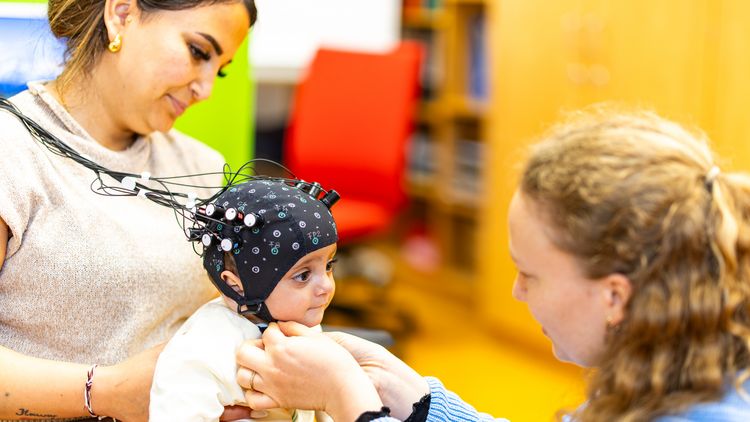
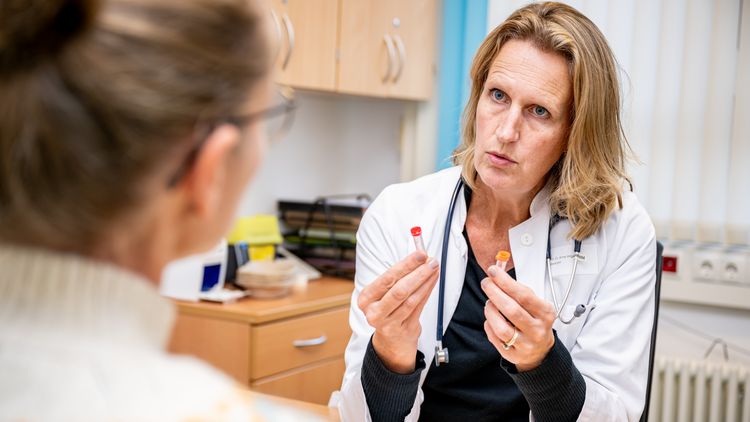


Complications during pregnancy or birth can cause lasting damage to a child’s brain function. In the quest to identify risk factors and new treatments, basic research at the university and everyday clinical practice in the neonatal intensive care unit at the Oldenburg University Clinic for Paediatric and Adolescent Medicine are growing ever closer.
For parents, a premature birth is always a harrowing and traumatic experience. "First they worry about whether their child will survive, then they start wondering whether the complications during birth might have caused permanent damage, especially to the brain," says Prof. Dr Axel Heep, a specialist in paediatric and adolescent medicine and director of the University Clinic for Paediatrics and Adolescent Medicine.
For the doctors working in the neonatal intensive care unit, answering this question is virtually impossible at such an early stage – which is precisely what motivates Heep. Brain development in early childhood is at the centre of his research. "The fundamental processes take place in the first 1,000 days, so during pregnancy and the first two years of life," he explains.
How the brain develops
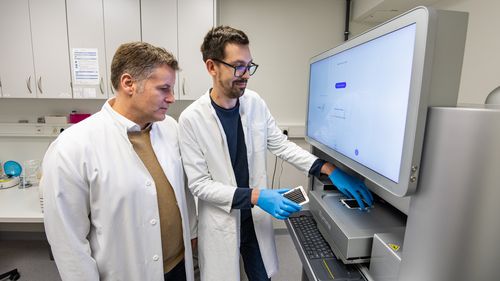
Nerve cells converge to create the brain, form networks, react to external stimuli and constantly build new connections. Heep wants to understand the influencing factors and effects of this process in as much detail as possible. "I design research projects based on clinical practice – but in their implementation I find it important to incorporate expertise from other research areas," says Heep. As a result, a network is forming around him that is bringing everyday clinical practice in the neonatology unit ever closer to the basic research at the university.
Research at the University of Oldenburg begins by looking at how the brain develops. The group led by anatomist and neurobiologist Prof. Dr Anja Bräuer is studying the molecular basis of brain development, which begins around the third week of pregnancy when the neural tube – the embryonic precursor to the central nervous system consisting of the spinal cord and brain – develops. Millions of nerve cells form here and then migrate to very specific, designated locations where they develop from stem cells into highly specialised nerve cells and create networks. Neurobiologist Dr Nicola Brandt, a member of Bräuer's team, is investigating how cell migration functions during the formation phase of the brain’s outermost layer, the cortex. The cortex itself consists of six layers that develop from the inside out in a highly complex process. If errors occur at this stage because nerve cells end up in the wrong position, brain damage can occur and can in some cases be severe.
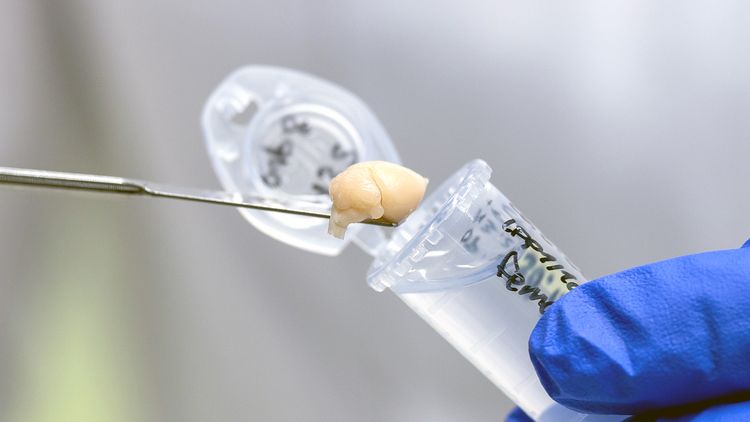
The fat molecule lysophosphatidic acid (LPA) and the proteins that regulate LPA play an important role in cell migration. Using a special method which involves manipulating an LPA-regulating protein in the brains of mice embryos during pregnancy, Brandt and doctoral candidate Marie Koop were able to demonstrate the effects of imbalances in LPA concentrations.
Under the microscope, the researchers were then able to track how far the manipulated cells migrated at different points in time before and after the birth. Their experiments revealed that many of the nerve cells that had been manipulated only migrated to an inner or middle brain layer, whereas those in a control group migrated all the way to the outer brain layers, as would be expected. "In this way we were able to demonstrate that LPA regulation is crucial for the migration of nerve cells," explains Koop.
Cell development: the devil is in the detail
Learning, thinking, remembering – for all these cognitive functions to work, not only must nerve cells migrate to the right location in the brain but they must also network correctly once they are there. Bräuer’s group is also researching this particular process. The team is investigating how nerve cells develop their typical shape. The focus is on the treetop-like dendrites and the "spines" (tiny protrusions) that cover their surface and are crucial for transmitting signals to and from other nerve cells.
"We are investigating what conditions are required for optimal development of the branched dendrites and their spines," says Bräuer. A protein called plasticity-related Gene 5, or PRG5 for short, plays a key role in nerve cell development. Franziska Köper, who is doing her doctorate under the supervision of both Bräuer and Heep, has now been able to decipher precisely how and where this happens.
She was able to demonstrate that PRG5 proteins form teams known as "multimers" along the dendrites. "The fact that the PRG5 proteins cluster at the sites where the spines also form is a clear indication that they play an important role in this process," Köper explains.
Understanding how proteins like PRG5 or signalling substances like LPA influence brain development at the molecular level could pave the way for new therapeutic approaches – also for premature babies, for example. "Find-ing the mechanism which allows us to steer brain development from the outside, so to speak, would be a dream come true," says Bräuer.
From brain function to behaviour
However, errors in brain development only become a problem if they lead to restrictions in people’s everyday lives. Psychologist Prof. Dr Andrea Hildebrandt and her team are therefore investigating brain-behaviour associations and in recent years they have focused on premature babies and their distinctive cognitive characteristics.
"Attention deficit hyperactivity disorder (ADHD), which is more common in premature babies, is an example of how a neurodevelopmental disorder can manifest in everyday life," Hildebrandt explains. Hildebrandt, Heep and their joint doctoral student Merle Marek investigated a crucial human trait called "self-regulation", which is closely linked to ADHD and refers to the ability to focus the attention and block out distractions.
In her doctoral thesis, Marek investigated the connection between the brain functioning of premature babies and their self-regulation abilities. For this, she drew on data from the Bavarian Longitudinal Study, a longitudinal study that examined premature babies born in the 1980s and continues to monitor them as adults today in various follow-up studies. Based on the results of cognitive tests and clinical ratings conducted as part of this study, Marek was able to conclude that babies born more than eight weeks pre-term still have more difficulties with self-regulation in adulthood than those who were full-term babies. "They find it more difficult to tune out irrelevant stimuli than other people do," Marek explains.
She then analysed MRI brain scans of these individuals to identify potential links between the observed deficits and brain structure and was able to show that the connectivity of brain areas that are important for self-regulation was weaker than in those born full term. One possible explanation is that a fatty layer that speeds up the transfer of information forms around the nerve bundles in the womb, but birth inhibits this process, and in pre-term babies this inhibition occurs at an earlier stage. "Although the cognitive control of participants in the longitudinal study continued to improve with age, our study shows that the initial difficulties never disappear entirely," says Heep. The good news: "Self-regulation is a relatively malleable function which can be learned with appropriate training," says Marek.
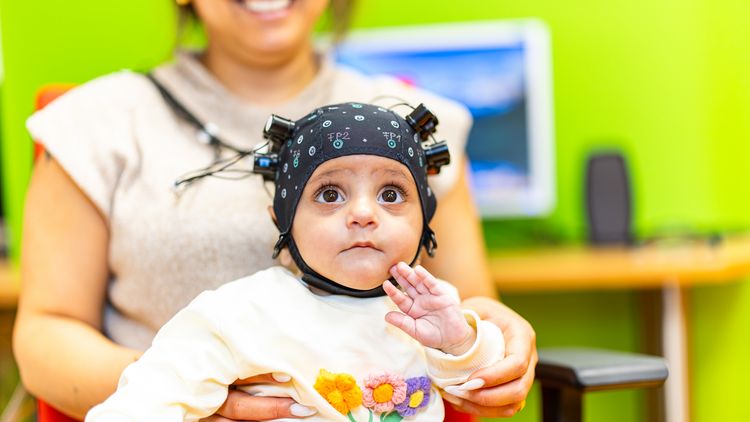
The collaboration between Heep and Hildebrandt also extends to other areas: the psychologist is currently recruiting babies born pre-term at Heep's clinic for a study in which she plans to investigate how well they link audio and visual stimuli compared to full-term babies. The paediatrician and the psychologist are also working together to find indications of cognitive anomalies in the brain scans of pre-term babies – and hope to develop new personalised treatment options based on their findings in the long term.
Although Bräuer and Hildebrandt conduct basic research with their respective teams, they also work in close collaboration with Heep's Perinatal Neurobiology research group. Their common goal is that the research results will produce findings that can help to improve treatment options for premature babies.
Heep, his research partners and his team at the clinic reached an important milestone this year: having completed an intensive preparation phase, a study group led by neonatologist Prof. Dr Anne Hilgendorff is now gathering large amounts of research data on the topic of "high-risk births".
Bringing together interdisciplinary expertise
The team includes both scientists and clinicians and combines the interdisciplinary expertise of research groups from the fields of gynaecology, obstetrics, paediatrics and adolescent medicine, child and adolescent psychiatry and psychotherapy, radiology, immunology, genetics, psychological methodology and statistics. "Together, we want to find out why some children are incredibly strong after a difficult start in life while others need more support," says Hilgendorff.
In her previous position at the Helmholtz-Zentrum München, Hilgendorff set up a cohort of premature babies and is very familiar with the particularities of this vulnerable group as test subjects. On ethical grounds, it is not permitted to carry out examinations or take blood samples solely for research purposes. After all, it is imperative that newborn babies experience as little stress as possible in their first days of life. As a result, researchers must often rely on samples and data that are collected for other medical reasons. The study team obtains the first samples in the delivery room, after receiving the parents’ consent.
"We have an in-depth approach: we try to obtain as much information as possible about the individual premature baby and also examine the placenta, which provides information about immunological processes during pregnancy, as well as the genetic characteristics of the parents," says Hilgendorff. Biosamples such as saliva, blood, faeces or urine enable the team to identify specific indications of disease processes. MRI and X-ray images from medical examinations are also included in the database, as are neurological, psychological and sociological data collected during examinations and interviews. Based on all this information, the researchers hope to pinpoint factors that increase the risk of abnormal development during pregnancy – and thus identify starting points for preventing high-risk births.
Another key development will soon improve the research opportunities: thanks to funding from the Federal Ministry of Research, the University Clinic will be able to commission a new MRI machine specially designed for premature babies. Developed by a company based in Magdeburg, the system is the first ever to use a 1.5 Tesla magnetic field to produce radiological images of babies and infants – and Oldenburg is one of the first locations where it will be used. Its technical specifications mean that it can be used directly in the paediatric clinic, which will accelerate the diagnostics process and facilitate data gathering on the risk cohort.
"All these developments make it possible for us to delve deep into the clinical research and link it with our findings from basic research," says Heep. This is now happening in several parallel initiatives. In the Intersectoral Care of Vulnerable Groups project, which is funded by the Federal Ministry of Research, Heep and his research partners are developing methods to better predict and prevent high-risk births and care for high-risk babies. Setting up the risk cohort is an important part of this project. The University Clinic for Paediatrics and Adolescent Medicine is taking part in the university's Programme for Excellence with an interdisciplinary Booster Unit, which is investigating the effect of music therapy programmes on primary school children who were born prematurely.
Last but not least, the School of Medicine and Health Sciences is supporting research into the early development of children as one of two profile initiatives. The three-year start-up funding for this initiative is intended to lay the foundation for one of the first university medical centres in Oldenburg. This status would further strengthen the link between neonatological research and teaching and patient
care. The initiative sets out a clearly defined concept that describes how patients can benefit more immediately from research results and also guarantees members of the medical centre the freedom to conduct research and teach.
While Heep's role is to coordinate the various projects, he also acts as the main link between research and patient care. "No matter what approaches we pursue – they are always based on questions raised by our tiny patients," he emphasises. Heep will continue to seek answers in close collaboration with disciplines beyond his own speciality, with the common goal of giving children who have an imperfect start the best possible chance of leading a self-determined life.