
Getting organised, managing your workload, making friends: Student teacher Wiebke Otten reveals how to master her first semester - whether at university or digitally
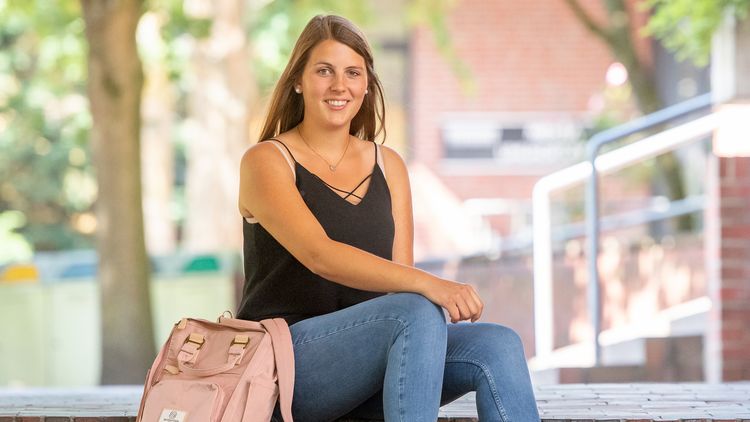
When Wiebke Otten began her studies at the University of Oldenburg, it was pretty much exactly as she had imagined. "I quickly got to know lots of fellow students and lecturers, swotted up in the library and explored Oldenburg's nightlife," she says. Wiebke has been studying elementary maths as well as Protestant theology and religious education to become a primary school teacher since October last year and originally comes from a village between Hamburg and Bremen. The choice of her new home was made early on. "I wanted to stay in Lower Saxony for my studies. Oldenburg is a very beautiful city and the university is the perfect size for me," says the 22-year-old.
A decision that she has not regretted - even if Wiebke first had to get used to the heavy study workload. "I attended every course in the first few months, but didn't work through the content thoroughly at home. That quickly paid off. You have to stay on the ball right from the start to avoid being overwhelmed by the course material afterwards," she explains. Her trick: create a timetable that clearly maps out all the tasks she has to do. "I'm good at organising which tasks need to be done straight away and which are less urgent. That makes a lot of things easier."
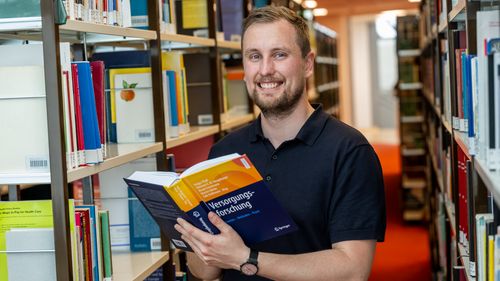
Of course, there is much more to starting your studies. "For example, you have to understand how the library lending system works and how to work with the Stud.IP campus management system - there are a few questions that come up," says Wiebke. The programmes offered by her student bodies were particularly helpful. For example, the mentoring programme, in which every first semester student is supported by an experienced student. "That was very helpful. Because so much is new and doesn't immediately make sense," says the student. Her advice to all first-year students: "Just take advantage of all the help available to you - then everything will work out."
And then came corona
Then came the pandemic and Wiebke's studies changed completely. Lectures were now recorded and uploaded by lecturers, and seminars and group work were organised via video conferencing systems. A major upheaval for lecturers and students. Wiebke had to get used to it first. "In maths in particular, it's important to discuss solutions directly with your fellow students. I really miss this face-to-face dialogue," she says. But there are also areas that she likes even better in the digital version. "I can pause videos of lectures briefly or go back to them. That's very useful, especially with complicated content," she says. She would be reluctant to do without this in the future: "I hope that lecture videos will continue to be posted online, even when face-to-face lectures are possible again."
Wiebke is also happy about her part-time job at the university's Student Service Centre, which she has kept even during the coronavirus crisis. Before her studies, she trained as an administrative assistant and worked in a job centre for a year. Qualifications that now benefit her. "The job gives me additional structure. There are still fixed days when I have to leave the house. This has allowed me to develop a new routine," she says.
Network with each other!
Despite everything going well, Wiebke still misses her "normal" studies: "Basically, I was only able to study 'normally' for a few months. Working with my study group in the library or relaxing with my fellow students on the Dobbenwiese - things that Oldenburg students normally do - are of course only possible to a limited extent. But of course we keep in contact!" Wiebke and her friends from university mainly use a messenger service for this. "It's important to us that we network well - regardless of whether it's corona time or not - you should do the same when you start your studies," Wiebke recommends to all first-semester students. "Also arrange video calls if you can't meet in person - you'll find out even more about the other person than in a chat." Her advice: "Network with each other!"