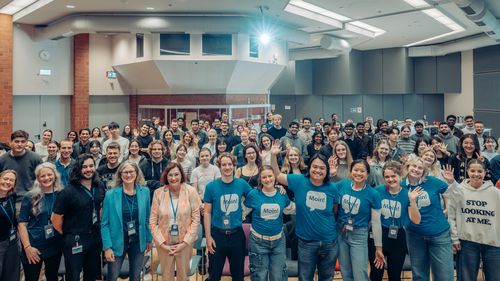


In June, the "forschen@studium" conference attracted 140 students from all over Germany to Oldenburg. They all wanted to present their research work and get feedback on it. One of them was Oldenburg student Anna Lyubina. Her topic: sustainable hotels.
Solar systems, paper recycling or food from regional companies: Hotel owners can do a lot to minimise the environmental impact of their operations. "The topic of sustainability is becoming increasingly important - for tourists too. That's why many hotels advertise it," reports Anna Lyubina. She studied the topic intensively for her bachelor's thesis. In doing so, the student recognised a problem: tourists are now more aware of sustainability when choosing a holiday destination and hotel due to climate change. However, there is no standardised seal of quality. How can interested parties recognise which hotels are sustainable and which only pretend to be? The "Sustainability Economics and Management" student went in search of clues and took a closer look at the hotels that have already been categorised as sustainable.
The website greenpearls.com, which describes itself as the "world's leading data source for sustainable hotels", served as a source. Of all the competitors, this portal is the most suitable. This is because: "They disclose their criteria for categorisation as a sustainable hotel and review all measures," reports Lyubina. "The operators had classified eleven German hotels as sustainable by May 2015, the date of my bachelor's thesis," Lyubina continues. By way of comparison, there are around 35,000 businesses in Germany that are categorised as "hotels", including hotels, inns and guesthouses. In order to be considered a sustainable hotel by greenpearls.com, the businesses have to fulfil many criteria, but these are far from sufficient or are poorly monitored, Lyubina found. "That's why I didn't just rely on the information on the portal, but also checked the hotels' websites carefully and contacted them individually," reports Lyubina. In order to compare the hotels' measures, she drew up her own checklist. "I defined three overarching categories, all of which must be met for hotels to be considered 'sustainable': The ecological dimension, the economic dimension and the social dimension."
In the ecological dimension, she recorded indicators such as energy consumption, waste management, architecture and interior design made from renewable raw materials. The economic dimension assesses how the local economy benefits from the hotel operation. "Among other things, I looked at whether the hotels source their food from local farms, for example, or buy it from the wholesale market," explains Lyubina. She feels that the third dimension is particularly important, but is the one that is most likely to be ignored. "It's about social responsibility towards guests, hotel employees and residents living near the hotel," says Lyubina. Her research revealed that Only one of the eleven hotels analysed is fully dedicated to the social dimension. "One hotel in Bavaria promotes social, local and cultural projects, sources its products from regional suppliers, offers rooms suitable for the elderly and disabled and demonstrates responsibility towards its employees with a "Diversity Charter"," reports the student. The charter is an initiative for more recognition and appreciation of one another and stands for a diverse corporate culture. "This hotel is truly exemplary when it comes to the social dimension. It shows how much hotels can do at this level," says Lyubina.
Lyubina's overall judgement of greenpearls.com is not very flattering. The ratings there are partly incorrect, as her analyses show: "Only five out of eleven hotels labelled as sustainable actually are," she sums up. The other six had each neglected at least one dimension. However, Lyubina points out: "These five hotels are certainly not the only ones that are truly sustainable. They are just the ones that are verifiable because they provide information about it." She therefore recommends: "If you are keen to stay in a sustainable hotel, you should check the hotels' websites carefully. Many measures are easy to understand there."
About the conference:
The "forschen@studium" conference, newly developed at the university, makes the findings of student research visible. Students present topics from their Bachelor's, Master's and seminar papers in lectures and poster presentations. The topics ranged from astrophysics to foreign language didactics. A total of 230 visitors took part. Conferences of this kind are already firmly established in the English-speaking world.