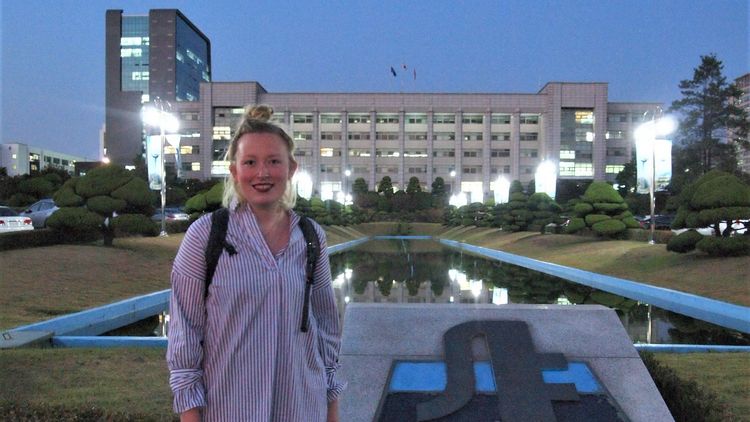
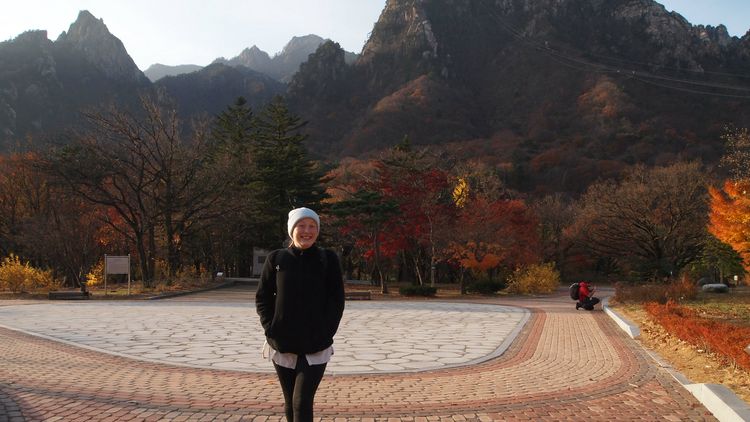
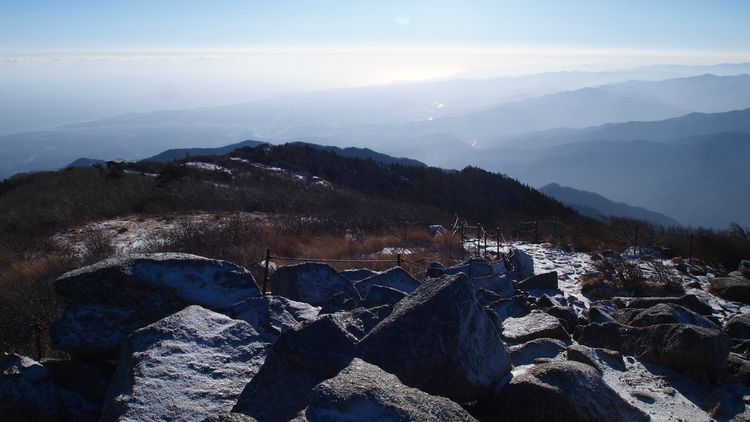


Getting to know a foreign culture with as little bias as possible - that was Elena Forschner's goal when she applied for a semester abroad in Asia. The Oldenburg student ended up in South Korea as hoped - and is delighted with the experience. When the news talks about South Korea, it's usually about big politics. Little is known about the culture, people and landscape in this country. Elena Forschner also knew very little about the divided peninsula when she travelled to East Asia for a semester abroad in the summer of 2017. The 23-year-old, who is studying Material Culture with a minor in Art and Media in Oldenburg, was all the more curious to look around the country. Even the accommodation was unusual: Forschner studied at INHA University, a partner university of the University of Oldenburg. INHA is located in the harbour city of Incheon, in the north-west of South Korea, not far from the capital Seoul. The Oldenburg student was accommodated in a four-person room on campus together with three other exchange students from Germany and Austria. "The building was huge, it had 13 floors and a total of 1,500 students lived there," she explains. From the kitchen window, she could see the newly emerging economic centre Songdo City in the distance, a futuristic planned city being built on a polder area. Differences in studies Forschner's impression is that studying in Korea is very different from studying in Germany. While cultural studies in Germany emphasise reflecting on and questioning issues, students in South Korea have to learn as much material as possible by heart. "There is no discussion at all in the seminars," she reports - a fact that she attributes to the strict social hierarchies. For young Koreans, it is unthinkable to contradict a professor because, in their view, he would then lose face. Even when one of Forschner's lecturers tried to engage the seminar participants in a discussion with provocative theses, it was mainly the exchange students who took part in the dialogue. The Korean fellow students, on the other hand, kept a low profile, says Forschner. The young Koreans were also under a lot of pressure to perform and the competition between them was fierce. Elena Forschner did take a language course at the university, but that was not enough for a conversation in the local language. "But the course was still very good," she says. The language gave her a deeper insight into society and a better understanding of social hierarchies, for example. She mostly used a smartphone app to communicate with the locals. "You speak into the mobile phone and the app translates, it works perfectly." Forschner does not necessarily recommend speaking to Korean students directly in English: "You're more likely to scare them off," she says. Many Koreans do understand some things, but hardly dare to speak English themselves. Trendsetter South Korea In South Korea, Forschner enrolled on the bachelor's degree programme in fashion design and also took courses in the subjects of economics and psychology, some of them in the form of online courses. "That was enriching. I was able to get a taste of other areas outside of my subject," she says. As a budding cultural scientist, she was particularly struck by the special features of fashion, pop music and food culture. "In my experience, Koreans are very progressive-minded. It's important for them to show that they have their finger on the pulse," she explains. International trends are quickly adopted there, but interpreted in their own way. The topic of sustainability, which plays a major role in Germany, is not at all on the agenda in South Korea. In addition to her studies, the Berlin-born student travelled a lot around the country, visiting Jeju Island in the south of Korea, for example, spending a few days in a Buddhist temple and hiking in several national parks. "South Korea is a rewarding destination," she reports. During her trips into nature, she also experienced the great willingness of the locals to help, for example during an overnight stay in a hut during a snowstorm. "The hikers were almost fighting over who could help us heat up the instant noodles we had brought with us," she says. "We were an attraction in this little hut and everyone wanted to take a selfie with us." Help from the ISO For younger fellow students who may still have doubts about whether they should go abroad, Elena Forschner has the following advice: "Don't be put off by the fact that there is a lot to organise." Firstly, she had to apply for financial support through a fellowship programme, and secondly, she had to apply for a place to study in Incheon. She also needed a visa, immunisations and much more. "The International Student Office helped me a lot with everything," she reports. Her conclusion: "Everyone should try to do a semester abroad during their studies, it's really enriching!" Anyone interested in studying abroad: From 16 July to 31 August, students can apply for exchange places in countries outside Europe, excluding the USA and Canada. Information on this can be found on the International Student Office website.
More on the topic
<link file:216650>Experience report by Elena Forschner</link>
Exchange opportunities outside Europe
Contact
Roman Behrens
International Student Office
Tel: 0441-798/4266
r.behrens@uni-oldenburg.de