Contact

Press & Communication

+49 (0) 441 798-5446

Information event

Online information event on the degree programme Health Services Research (M.Sc.)

Thursday, 9 June 2022, 13.00 to 14.00 hrs

To the registration

More

Degree programme website Health Services Research (M.Sc.)

Degree programme flyer Health Services Research (M.Sc.)

Contact

Dr Julia Gockel, degree programme coordinator

+49 441 798-2961(F&P)

Prof. Dr. Lena Ansmann, Head of degree programme

+49 441 798-4165(F&P)

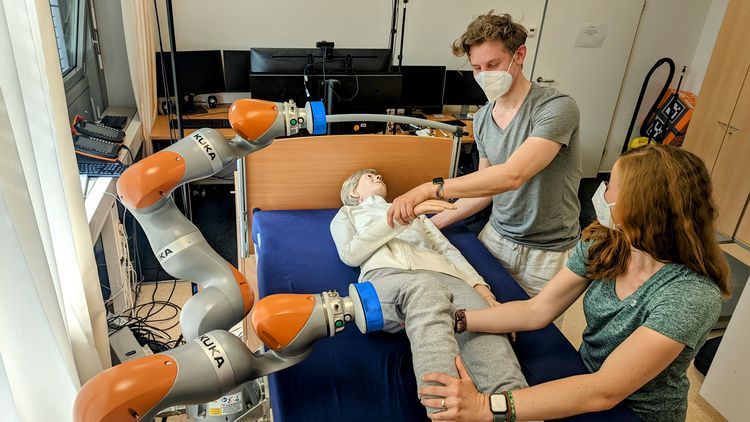
  • Two people stand at a hospital bed and position a dummy mannequin with the support of two robotic arms mounted next to the bed.

    Healthcare research is also dedicated to the question of what influence technical achievements can have on patient care - for example in nursing, where the positioning of patients costs staff a lot of energy. Photo: University of Oldenburg

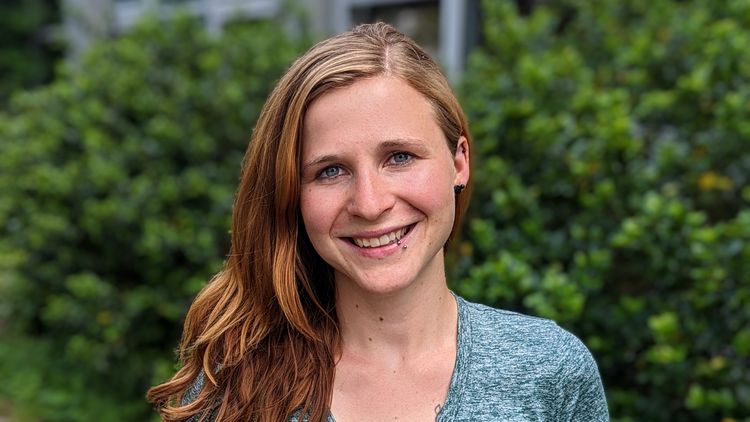
  • Kathrin Wandscher is a qualified healthcare and nursing professional. Before starting her Master's degree in Oldenburg, she studied health sciences at Charité Berlin. Photo: University of Oldenburg

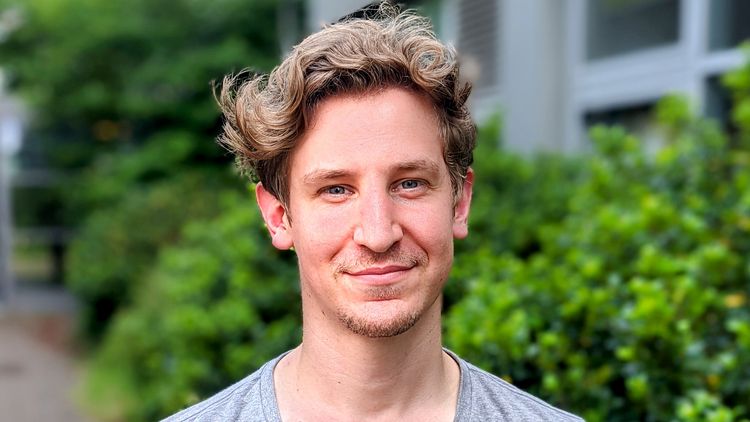
  • Frederik Pohlmann studied Health Sciences/Public Health at the University of Bremen and is now doing his Master's in Health Services Research. Photo: University of Oldenburg

New firsts every day

Kathrin Wandscher and Frederik Pohlmann are pioneers. The budding healthcare researchers tell us what it's like to study a subject that was newly created at the university.

Kathrin Wandscher and Frederik Pohlmann are pioneers. The budding healthcare researchers tell us what it's like to study a subject that was newly created at the university.

The first two semesters at the University of Oldenburg were certainly unusual for them. "Together we are 33 percent of our degree programme," says Frederik Pohlmann with a laugh, pointing to himself and his fellow student Kathrin Wandscher. Six students are currently on their way to completing a Master's degree in Health Services Research, which has only been offered in Oldenburg since last winter semester. They will be the first alumni.

Older fellow students and their helpful advice or written exams from previous years to prepare for exams - this does not yet exist in the Master's in Health Services Research. Instead, students and lecturers are experiencing new firsts every day: the first seminar, the first internship, the first research paper in the degree programme.

Wandscher and Pohlmann see the small cohort size as a stroke of luck. "We also had a lot of face-to-face events last winter semester," says Kathrin Wandscher, referring to the coronavirus situation. No problem with only six prospective healthcare researchers. And when this became more difficult as the pandemic situation worsened, the students quickly considered together with their lecturers which seminars could easily be held online and which content they would prefer to learn in person.

Both of them made a conscious decision to take the risk of becoming students from the very beginning. During her bachelor's degree in Berlin, her lecturers initially recommended Kathrin Wandscher to enrol on an already established healthcare research master's programme at another university. The newly qualified health scientist was promptly offered a place on the programme. "A fellow student, who knew that I was from Oldenburg, then told me about the Master's programme planned here and said that I should at least take a look at the information event," says the trained healthcare and nursing professional.

Her discussions with Prof. Dr Lena Ansmann and Prof. Dr Falk Hoffmann, who both teach on the degree programme, won the 29-year-old over. The same was true of her fellow student, who had applied for various Master’s degree programmes across Germany from Bremen – only to end up in neighbouring Oldenburg after all. He wants to familiarise himself with as wide a range of research methods as possible during his studies and found this opportunity in the curriculum of the Oldenburg degree programme. Among other things, students learn how to collect quantitative research data, for example through surveys of patients or healthcare staff, and they learn when qualitative methods, such as interviews, are better suited to achieving a research objective. The analysis of the data collected is just as much a part of the timetable as methods of evidence synthesis and the critical evaluation of study results.

Day-to-day life on this relatively new degree programme is characterised by close personal contact. “We’re on first-name terms with all our lecturers,” they both say. Pohlmann finds it helpful that Lena Ansmann and Falk Hoffmann both belong to the younger generation of professors. “They’re good at putting themselves in our shoes as students and are always approachable.” There’s also frequent interaction with those involved in organising the degree programme. “As there isn’t a student body yet, we all take on committee duties as well,” says Frederik Pohlmann, who sits on the examining board and the department council on behalf of the students, whilst Kathrin Wandscher is a member of the admissions committee.

From next semester onwards, this work will be shared amongst several people. That’s when the second class of students will start the Master’s programme. Meanwhile, for Kathrin Wandscher, Frederik Pohlmann and their four fellow students, there are still many ‘firsts’ to experience even in their final year of study – until they are finally presented with their Master’s certificates as the first graduates.

This might also be of interest to you:

Matej Kastelic / AdobeStock
Campus Life Studying

Highlighting excellent teaching

Students will often remember, even years later, lecturers whose teaching style had a particularly formative influence on them. Students at the…

more: Highlighting excellent teaching
First-year students, freshers, starting university, getting started, orientation
University of Oldenburg / Matthias Knust
Campus Life Culture Music

Plenty of music to round off the term

Just three weeks to go until the end of the term: anyone who’d like to liven up their final push in teaching and learning with some live music is…

more: Plenty of music to round off the term
Host Tobias Janßen walks through the audience, holding a microphone.
University of Oldenburg / Daniel Schmidt
Campus Life

Fun, Excitement, and Cutting-Edge Research!

The four Clusters of Excellence of the Northwest Alliance stand for internationally recognized, cutting-edge research and highly complex topics. An…

more: Fun, Excitement, and Cutting-Edge Research!
(Changed: 01 Jul 2026)  Kurz-URL:Shortlink: https://uol.de/p82n6220en
Zum Seitananfang scrollen Scroll to the top of the page

This page contains automatically translated content.