

Anyone wishing to spend part of their degree programme in North America must make up their mind a year in advance: the application deadline for exchange places is 21 November. Tina Grummel from the International Office offers some helpful tips.
Secluded Pacific beaches, vibrant cities or lush national parks – the USA and Canada are popular travel destinations for good reason. Studying at one of the many universities in these countries is also highly sought-after. In 2016 alone, around 12,000 students from Germany made their way to North America. Among them were several students from Oldenburg who, thanks to the university’s exchange programme, were able to spend one or two semesters on the other side of the Atlantic without having to pay the often high tuition fees.
There are 14 partner universities in the USA and four in Canada to choose from. The spectrum ranges from small universities, such as the University of Wisconsin, with just a few thousand students, to very large institutions, such as Florida State University, with around 40,000 students. “Every university has its own specialism,” says Tina Grummel. The English studies lecturer, who coordinates the North America programme at the International Office, advises interested students on one thing above all else – to make arrangements for a study abroad programme well in advance. “Many are surprised to find that they have to apply a year in advance,” she emphasises.
Allow for a higher budget
Anyone wishing to take the plunge across the pond in the coming winter semester should therefore make up their mind soon: the application deadline for the North America programme is 21 November. But which university in the US or Canada is the right one? Grummel advises students to find out as much as possible about the partner universities in advance – for example, whether they like the location and whether the range of subjects on offer fits in with their own course of study.
From her experience, the programme coordinator knows that universities in major cities or in California are particularly popular. Yet places that may not seem so attractive at first glance are often a good alternative. These could include small towns such as Rochester in Michigan and Laramie, home to Oakland University and the University of Wyoming. “Here, for example, the cost of living is significantly lower than on the coasts,” says Grummel.
In any case, students need to budget more than usual for their stay in North America – even if they don’t pay tuition fees. As is the case here, universities charge semester fees. Some universities charge application fees, food is more expensive, and rent alone can cost up to 500 dollars a month. On top of that, there are costs for international health insurance, a visa, a language test and, of course, the flight and local travel.
Students feel part of a community
In addition to Bafög for studying abroad or financial support from parents, those interested should therefore not hesitate to apply for a scholarship. These are not just for top-performing students, Grummel emphasises. “The criteria for being the best involve many factors – such as voluntary work or a particular level of motivation,” she adds. Anyone interested in a stay in North America should therefore enquire about funding options at an early stage.
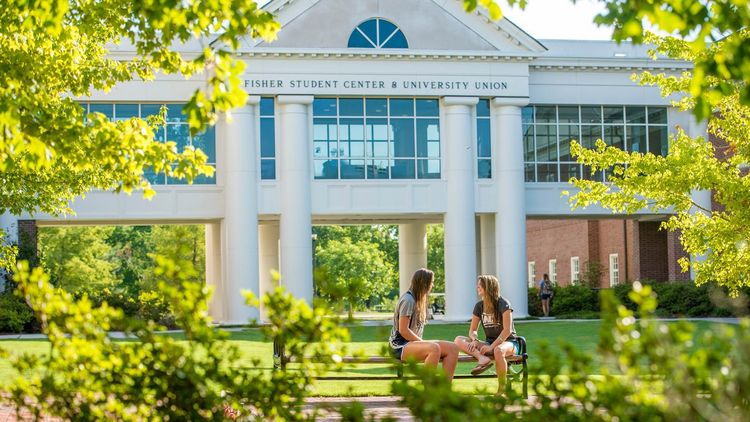
Once in the US or Canada, students quickly notice differences compared to life here: undergraduate students in particular usually live on the campus, often in twin rooms without a kitchen and frequently with a shared bathroom. “The independence we’re used to here doesn’t usually exist there,” says Grummel. Instead, the university campus offers everything young people need to live: cafés, food shops, cinemas and sports facilities. Students meet up in clubs and societies to play sport, get involved in community work, or take part in theatre or chess. “The students feel part of a community and identify strongly with their university,” emphasises Grummel.
Friendly and helpful lecturers
The structure of the degree programme is also different. The system is much more school-like; students often take just three to five intensive courses per semester. Tests take place every one to two weeks and the reading load – for literature students, for example – is substantial. At the same time, every student has their own academic advisor who is always available to talk to, as Grummel reports: “The students who return praise the friendliness and helpfulness of the lecturers.”
To get the most out of their stay, the programme coordinator advises students to be flexible in their course choices. Courses in economics, for example, are also popular in the US and are often oversubscribed. “Many are disappointed when they don’t get a place on their chosen course,” she says – for instance, because the university gives priority to home students. But rather than getting frustrated, exchange students should come up with a Plan B and switch to a different course.
Ultimately, those interested must decide for themselves whether the US or Canada is the right place to study abroad. “Every country has its treasures,” says Grummel. For those who do eventually apply for an exchange place in North America, however, the programme coordinator has some good news: “We can usually find a place to suit everyone.” (cb)