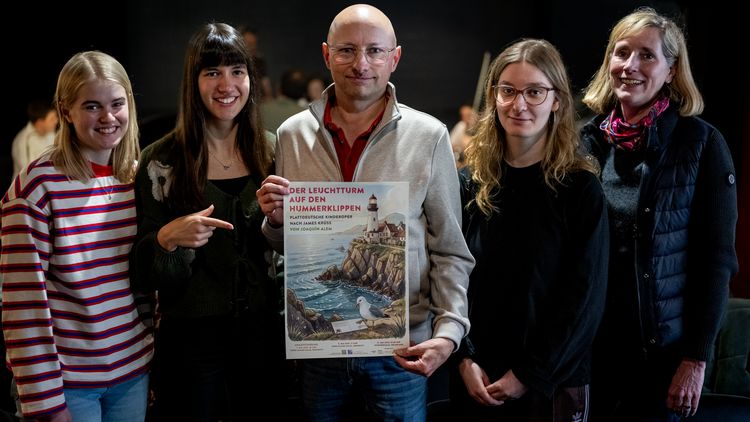


Oldenburg schoolchildren and a professional orchestra bring "Der Leuchtturm auf den Hummerklippen" by Joaquín Alem (composition) and Nils Braun (libretto) to the stage, together with students from the University of Oldenburg. A children's opera in Low German - a rare experiment.
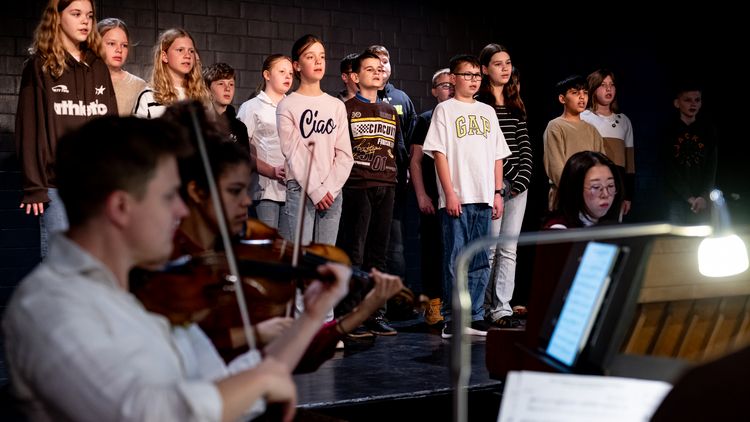
Children's voices can be heard on campus. 20 pupils from the Oberschule Edewecht secondary school sing tightly packed together on the stage of the Unikum university theatre. Piano, bandoneon, bassoon, violin, cello, double bass: a small professional orchestra with musicians from the Orchestra Academy of the Oldenburg State Theatre also performs, as do professional adult singers from the independent scene. In the background, university students are working on the costumes and set design: seagulls, a poltergeist, a lighthouse including a keeper and an aunt in a flower costume are all visible.
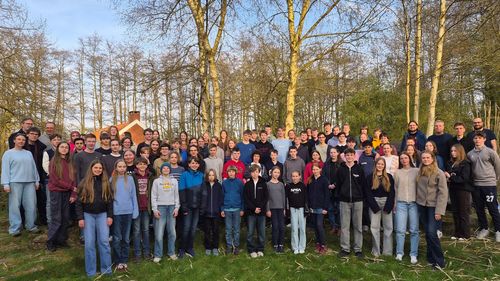
It is mid-April and the intensive rehearsal weekend is currently underway for two performances in May, in Edewecht and on the island of Helgoland. A total of around 40 participants will then present the children's opera "The Lighthouse on the Lobster Cliffs". The speciality: The children sing in Low German - although very few of them have any previous experience of the regional language.
Low German opera for children: a novelty
"It appealed to us to be active in a genre that hardly exists in this form," explains Volker Schindel, director and artistic assistant at the Institute of Music with a focus on "Music, Scene and Theatre". Project leader Nils Braun, who also wrote the libretto, emphasises: "We want to show that children's opera can also be performed in Low German."
"A web of stories and humour unfolds in a poetic, clear stage language that allows the past to breathe in the present," says Joaquín Alem, who composed the music for the children's opera. The performance was inspired by the children's book of the same name by German author James Krüss, published in 1956. He would have been 100 years old this year. The opera tells the story of a lighthouse that stands in the North Sea not far from the island of Heligoland. It promises orientation and a view that reaches further than the next storm. The themes: the sea, memories, loss and hope.
Students support the music project
Preparations have been underway since the start of the 2025/26 school year. Nine student teachers from the University of Oldenburg are supporting the production from the initial musical ideas to rehearsals and the performance. Among other things, they have been meeting once a week with the children from Years 5 and 6 at their school in Edewecht. On Tuesdays, in the 7th and 8th lessons, it was then a case of encouraging them to memorise the lyrics, rehearse their singing and rehearse their movements.
"It's really great to see the results here for the first time, to see the children standing on stage with professional musicians and singing confidently in Low German," says student Greetje-Theda Witzel, who was involved in the artistic creation process from the very beginning and also worked on the Low German choral version. Even though it's only the rehearsal weekend, she already has goosebumps, she says.
The Dr Hildegard Schnetkamp Foundation is the source of ideas and supporter of this special joint production. "It is important to us to combine contemporary musical endeavours with regional culture in northern Germany," says Managing Director Birgit Popien. At the same time, the aim is to get children and young people interested in music in general and opera in particular. For many of the pupils involved, this is their first intensive encounter with the genre.