
How can agricultural land be made more attractive to insects without reducing yields? Oldenburg biologists are investigating this in an EU project.
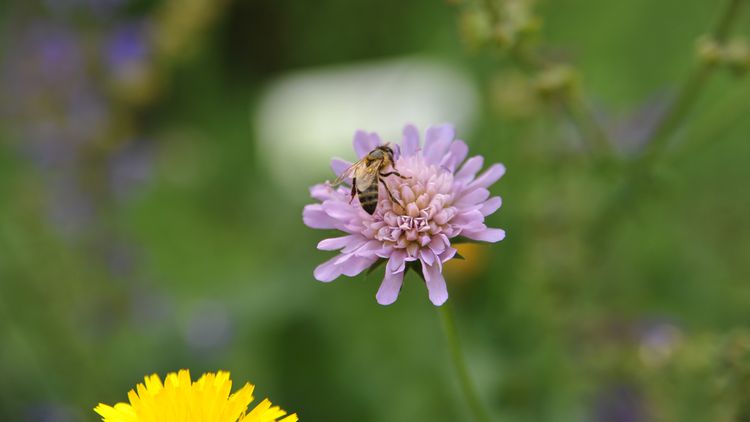
Pollination by insects is an important economic factor. However, the number of wild bees, bumblebees, butterflies and hoverflies is decreasing throughout Europe because there are fewer and fewer flowering plants. The EU project BEESPOKE (Benefitting Ecosystems through Evaluation of food Supplies for Pollination to Open up Knowledge for End users), in which biologists from the University of Oldenburg are also involved, aims to change this: The aim is to develop new methods, seed mixtures and recommendations for farmers so that insect diversity in fields and meadows increases again. The European Interreg programme "North Sea" is funding the project with 4.1 million euros over three and a half years. A total of 16 partners from six countries bordering the North Sea are involved, with the British Game & Wildlife Conservation Trust taking the lead.
The project centres on the question of how agricultural land can be made more attractive to insects without reducing yields. The project partners are carrying out around 70 field trials for numerous different crops. The German sub-project, which involves the University of Oldenburg and the Lower Saxony/Bremen Grassland Centre, is focusing on pastures and grassland. "We are investigating, for example, the influence of one more or one less cut per year, or how the genetic diversity of plant species in grassland affects pollinators," explains Prof Dr Dirk Albach, Head of the Biodiversity and Evolution of Plants working group and Director of the Botanical Garden. The team has 20 hectares of pastureland in the Oldenburg region at its disposal for the experiments, and experiments are also being carried out in the Botanical Garden. As a result of the project, improved seed mixtures, training material and guidelines are to be developed, for example. This approach should enable farmers to create resilient and more sustainable agro-ecosystems while also routinely promoting the well-being of pollinators.
The partner of the university and the grassland centre is the company Meiners Saaten in Harpstedt. The countries involved in the Interreg North Sea programme are Great Britain, Belgium, the Netherlands, Sweden, Denmark and Germany. The BEESPOKE project is part of Priority 3 "Sustainable North Sea Region". The programme is financed by the European Regional Development Fund (ERDF) of the European Union.