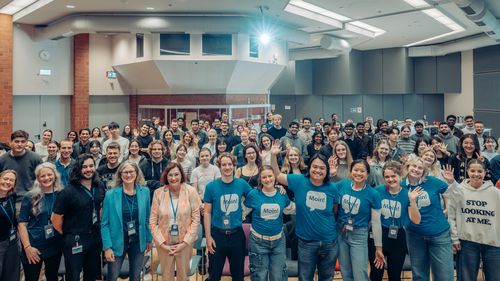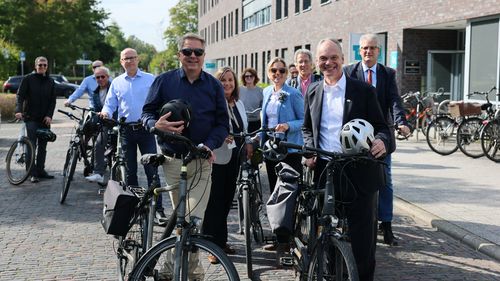


The "Studytutors" association offers free tutoring for children and young people from financially disadvantaged families. The members' main motivation: to create more educational equality.
30 euros and more for an hour of tutoring - that's the average price commercial tutoring schools currently charge for their services. However, many families cannot afford such amounts. "There are many children who need tutoring but can't get it for financial reasons," says Oliver Schmidt. The chemistry student wants to help these pupils: Together with four other students and alumni of the university, he runs the Oldenburg branch of the non-profit organisation "Studytutors". The donation-funded association, which operates in 54 university cities across Germany, sees its main task as organising free tutoring for children and young people from disadvantaged families, thereby ensuring more equal opportunities in the education system.
"It's important that such services exist," emphasises Schmidt, who himself tutored a ninth and later tenth grade student in maths and science for two years. The demand is high - especially in families who do not receive state support, but for whom traditional tutoring services are still too expensive. "We are filling a gap here," says PhD student Nick Wulbusch, who is also a member of the organisation's site management team.
However, the Oldenburg group founded in 2021 - in addition to Schmidt and Wulbusch, it includes chemical engineer Astrid Pistoor, educational and cultural scientist Anneke Jongebloed and Lisa-Marie Nuppenau, who is studying for a Master's degree in Marine Environmental Sciences - is currently urgently looking for new tutors. This is because the demand from pupils is great.
"We currently have five students who each give one hour of tutoring per week. Ten students are on hold, so to speak," says Schmidt, who is responsible for recruiting new tutors. The problem is that it can sometimes take several months before someone who would like to get involved can actually provide tutoring - which is mainly due to the fact that it often takes so long to obtain the necessary extended certificate of good conduct. The frequently voiced concern that there are costs involved is unfounded: "The tutors can be exempted from the fees by the organisation," explains Schmidt.
The ideal voluntary position
All students and doctoral candidates who would like to tutor are welcome to join - as well as other young people such as apprentices. "It is important to us that the age difference is not too great," emphasises Wulbusch. The five members of the site management team take care of finding suitable tutoring students. "The time commitment is just one hour per week - the ideal volunteer job for people who don't have much time," jokes Oliver Schmidt. It is a very meaningful activity, he adds. "My tutoring pupil simply needed someone to explain the material to her in a different way to the teacher. Her parents couldn't afford that," he reports. The girl's family was therefore very grateful for the lessons.
The organisation also provides financial support for school materials if required and awards scholarships for stays abroad to motivated young people. Joint activities between the "tutoring pairs" can also be subsidised, such as museum visits or excursions. "The idea is that students and pupils build up a good, friendly relationship and the young people gain new perspectives as a result," says Schmidt.
In addition to new tutors, the Oldenburg group is also looking for students who would like to get involved in the organisation's site management. For example, people are needed to conduct initial interviews with interested students, establish contact with parents or schools, collect donations or take on public relations work.