

How can raw materials be kept in the economic cycle for as long as possible and thus protect the environment? The new BMBF junior research group led by Alexandra Pehlken - who is working with one of China's leading recycling experts - is addressing this question.
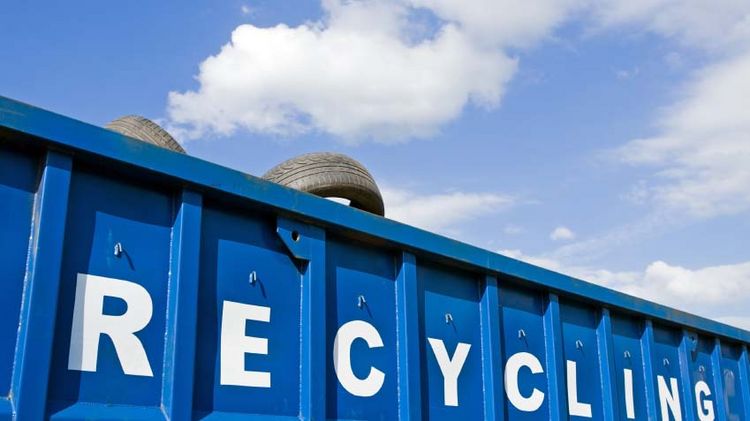
First car tyres, then insulating panels or shoe soles, and finally flooring - if a raw material such as crude oil, which is still the main component of car tyres today, is used several times and in several stages, it is referred to as "cascade use". This is exactly what a new junior research group at the University of Oldenburg is focussing on. Under the leadership of Dr Alexandra Pehlken, it has now begun its work.
"Cascade utilisation of materials for sustainable resource management" or "Cascade Use" for short is the name of the interdisciplinary junior research group. The Federal Ministry of Education and Research (BMBF) is funding it with almost 1.4 million euros over four years, or one year longer if required, as part of the "Global Change" programme. The group is based at the School of Computing Science, Economics and Law and consists of five members of staff.
"'Cascade Use' fits in very well with the research on sustainable society that scientists at the university are working on in a transdisciplinary manner in a wide variety of areas," said the University's Acting President, Prof Dr Katharina Al-Shamery, on the occasion of the BMBF's approval. Alexandra Pehlken's skilful cooperative approach is remarkable and exemplary for young researchers. "As a young scientist, she built up an excellent network early on - and is working on the Cascade Use project, for example, with Professor Chen Ming, one of China's leading recycling experts."
Close co-operation with Chinese recycling expert
Ming teaches at Shanghai Jiao Tong University, where one of the young scientists in Alexandra Pehlken's group also comes from. "Our close co-operation with the Chinese university will provide us with valuable impetus," says Pehlken confidently. Analyses of the exploding market in Asia would enrich the research. "We also hope that together we can contribute to making recycling more widely accepted in China."
The aim of "Cascade Use" research is to utilise raw materials in the economic cycle for as long as possible, thereby conserving resources and protecting the environment. "In addition to the ecological benefits, there is great economic potential here that has been underutilised to date," says Pehlken. The group is working on the question of how materials are integrated into product life cycles and when they are available again for either reuse or further utilisation.
To this end, it is developing a tool that will help decision-makers in business, administration and politics to recognise and evaluate the potential for optimal material use with the lowest possible environmental impact. To this end, the scientists are relying on material flow analyses with technological, ecological and economic references. They are developing a method for assessing the availability of materials across the life cycle and are also determining CO2 emissions within the recycling hierarchy, for example.
Special focus on rare earths
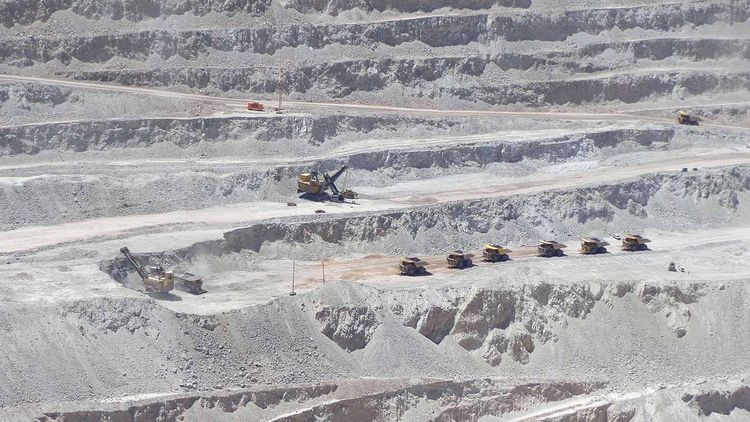
The group has a particular focus on primary raw materials such as iron, copper, aluminium and magnesium as well as on precious and sometimes critical metals known as rare earths. These include europium, which is used for fluorescent lamps and plasma screens, and neodymium, which is used in powerful, small permanent magnets, high-performance microphones, loudspeakers, wind turbine turbines and high-performance electric motors. Hardly any current key technology can do without rare earths.
----------------------------
----------------------------
About: Alexandra Pehlken
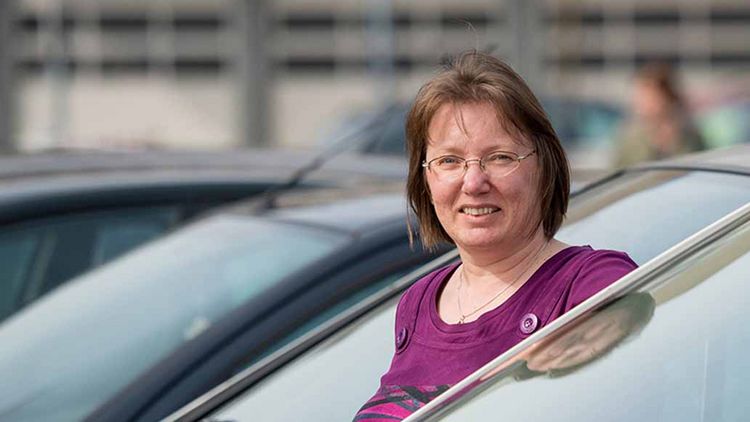
The head of the new junior research group, Alexandra Pehlken (42), studied mining at RWTH Aachen University, where she also gained her doctorate in 2002. Born in Oldenburg, she has conducted research in Germany, South Africa and China. A Lise Meitner scholarship also took her to the Natural Resources Canada research institute in Ottawa (Canada), where she worked on used tyre recycling.
Pehlken led several research projects, including a project on feed production at the Institute for Integrated Product Development (BIK) at the University of Bremen. Since 2012, the engineer has been working as a project manager in the scientific field of energy and society at the Center for Environmental and Sustainability Research (COAST) at the University of Oldenburg. Pehlken is involved in national and international committees. In 2011, she was appointed Associate Junior Fellow at the Hanse-Wissenschaftskolleg Delmenhorst (HWK).