
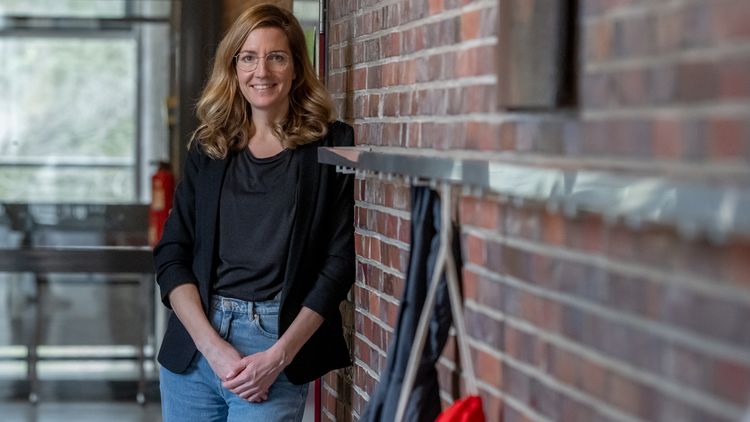

Researchers at the university are analysing mechanisms and forms of institutional racism. To this end, they will soon be scrutinising everyday life in six schools.
Children from immigrant families who start school later or are taught separately in special classes; young people who do not receive a recommendation for grammar school because their German language skills are not perfect; exam results that teachers assess differently, although only the name on the written exam differs, not the mistakes - there are many examples of institutional racism at school.
It is not always as obvious or has such a direct impact on children and young people's school careers as in these examples. "However, the more subtle forms in particular are part of everyday life for many pupils," explains educational scientist Prof Dr Anja Steinbach. "At the same time, we see that teachers or other school staff do not usually act in a deliberately racist way, but rather that processes have become established that lead to unequal treatment."
It is these mechanisms that Steinbach and her team will be investigating intensively over the next five years. The Federal Ministry of Education and Research (BMBF) is funding the junior research group she heads, "Continuities and Reformations of Institutional Racism in Schools" (KoNIR), with around 1.7 million euros. The research focuses on a survey at six schools in Lower Saxony and Bremen - conducted as a field study under natural conditions in everyday school life. The researchers want to observe the extent to which racist structures have become established and what they look like in classrooms, schoolyards, conferences and parent-teacher meetings.
This requires a great deal of sensitivity. "After all, schools are orientated towards maxims such as equal opportunities, justice, participation and democracy. This is obviously at odds with racist structures and practices," says Steinbach. Nevertheless, she is confident that she will find schools to work with. "There are many schools and teachers who are very interested in the topic of criticising racism and see our project as an opportunity," says the educationalist.
Previous studies, for example from Bielefeld, have already pointed to unequal treatment in the school context that is linked to the presumed origin of children and young people. A study on institutional discrimination showed that discrimination occurs primarily at the transition points in the school system, for example between nursery and primary school or during the transition to secondary school. However, actual or presumed origin can also be a reason for discrimination in everyday school life: In a Mannheim study, student teachers rated the dictations of fictitious pupils lower if they had a "foreign-sounding" name - even though they had made the same mistakes as the better-rated "Max", for example.
On the trail of unknown mechanisms
Anja Steinbach and her team not only observed, but also conducted interviews with various educational staff at the schools, including head teachers, teachers, social work specialists and school counsellors. "We are explicitly not interested in proving racism against individual schools or even individuals," emphasises the educational scientist. Rather, the focus is on questions such as: Where in everyday school life are distinctions made that are linked to the - sometimes only presumed - origin of pupils? And how are these embedded in the structures of the institution and in the routines of the people involved? Steinbach emphasises that it is still unclear what such situations and processes might look like in concrete terms. "For our ethnographic research, it is important not to have glasses on from the outset, but rather to track down previously unknown forms and mechanisms."
The findings of the Oldenburg researchers are to be incorporated into teacher training and further education programmes. The team is therefore also working with various regional educational institutions, including the Lower Saxony State Institute for School Quality Development, the Oldenburg University Training Centre and LidiceHaus Bremen. Together, the participants will further develop training programmes for educational professionals.
Steinbach has been preoccupied with the question of the role of racism in schools ever since she came to the university 20 years ago to study to become a teacher. "Back then, I already had the opportunity to engage academically with criticism of racism," she says. The idea of working as a teacher eventually gave way to an enthusiasm for research and an interest in a field that she believes affects everyone: "We all live in a world structured by racism, which means we all have to deal with racism - but people have very different experiences of it."