Contact

Press & Communication

+49 (0) 441 798-5446

More on the topic

Horst Janssen Museum

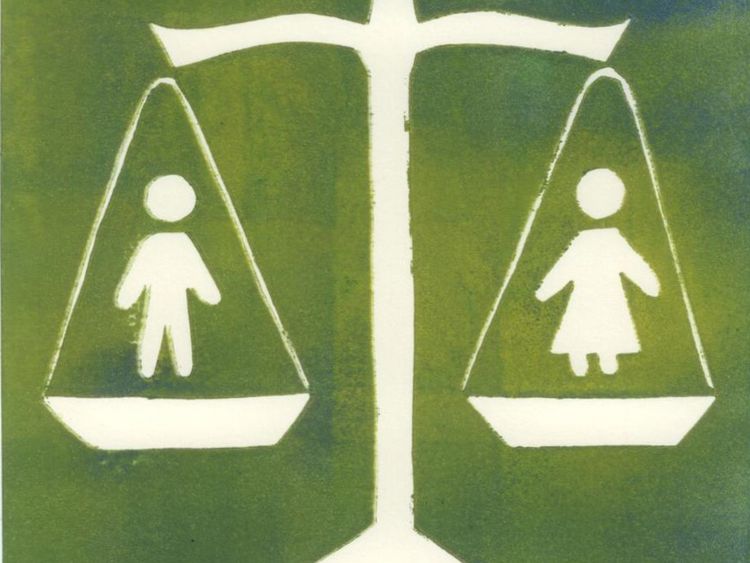
  • Women and men have equal rights: Pictograms like this can help with orientation in a different culture. Graphic: Svea Möller/revision: Teréz Fóthy

Students design pictograms for refugees

"Arriving" is the title of an exhibition by several students from the Department of Art and Media, which can be seen at the Horst Janssen Museum until 29 May. It shows pictograms designed to make everyday life in the region easier for refugees.

"Arriving" is the title of an exhibition by several students from the Department of Art and Media, which can be seen at the Horst Janssen Museum until 29 May. It shows pictograms designed to make everyday life in the region easier for refugees.

The students are showing their graphic works to the public for the first time. With the support of artist Teréz Fóthy, lecturer Katia Liebmann and the Diakonie refugee counselling service, they have developed pictograms that explain everyday life and regional characteristics of the Oldenburg region to refugees and other new arrivals.

The 64 pictograms in postcard format are designed as linocuts or woodcuts and were printed using a hand press. The motifs range from correct waste separation or bicycle lighting to equal rights, punctuality, the Kramermarkt and the city festival.

After the exhibition, the cards will be printed and bound together with a book screw to form a fan. "This way, individual cards can still be removed," explains Teréz Fóthy, adding: "This is important because the cards are intended to give people an opportunity to talk about living together in groups." The Argentinian of Hungarian origin, who lives in Oldenburg, has already tested whether the cards are understood in discussions with refugees and migrants. "We had very stimulating discussions," she reports. It is much easier to familiarise yourself when you have talked about the customs in your new home country.

The following students are involved in the "Arrive!" project:

Anke Baumbach, Paula Blindow, Maria Borgmann, Seyma Bülbül, Thea Drexhage, Katharina Emken, Constanza Maren Herrmann, Lea Hillmer, Svea Elena Möller, Sebastian Ott, Pauline Peters, Torge Schühle (M.A.), Naomi Layla Weiss, Marie Wilke, Annika Witten.

This might also be of interest to you:

Photo: University of Oldenburg / Gesche Bünker
Sustainability Campus Life Higher Education Policy

More transparency in climate protection

Twelve universities in Lower Saxony have developed a joint framework for their greenhouse gas balance under the leadership of Oldenburg. At the end of…

more: More transparency in climate protection
A snapshot of the workshop: participants are seated at U-shaped tables and are looking at a presentation. The two speakers are pointing at something on the projected image.
Campus Life

How to Pursue an Academic Career in Germany

How does the German research system work, and how can I successfully secure external funding? International researchers at the University of Oldenburg…

more: How to Pursue an Academic Career in Germany
Children stand on a stage and sing, with two violinists in front of them.
University of Oldenburg/ Matthias Knust
Campus Life Culture

"Children's opera can also be in Low German"

Pupils from Oldenburg and a professional orchestra bring "Der Leuchtturm auf den Hummerklippen" to the stage, together with students. A children's…

more: "Children's opera can also be in Low German"
(Changed: 12 May 2026)  Kurz-URL:Shortlink: https://uol.de/p82n1516en
Zum Seitananfang scrollen Scroll to the top of the page

This page contains automatically translated content.