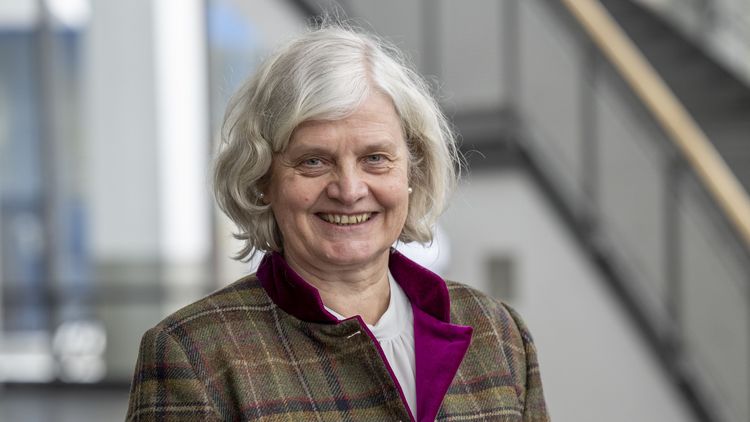

Gender equality is not yet a reality in universities. On the occasion of International Women's Day, the Vice President for Academic Careers, Equal Opportunities and International Affairs, Prof Dr Katharina Al-Shamery, talks about the change in academic culture that she believes is necessary to meet the challenges of gender equality.
In your view, why is International Women's Day still important for universities?
Unfortunately, equality in universities is still not achieved: the proportion of women holding professorships at our university is currently stagnating at just over 31 per cent. Elsewhere, the figures are even worse: the national average is 28 per cent. But it is in those subjects where women are still massively under-represented that the academic culture needs to change.
Where do you see a particular need for action?
Leadership models, for example: We need to move away from highly hierarchical structures to team-oriented, appreciative structures that demand more responsibility from individuals, but also offer more opportunities for development. There needs to be a renewed focus on the development of creative ideas, rather than the pursuit of success. There must be no room for discrimination, not only of a sexual nature, and we must take vigorous action against it. This will also help to improve the situation of TIN* people.
How can we increase the number of women in leadership positions, such as professorships and other senior positions?
Not only do we need to keep an eye on career transitions, but we also need to change the application process. One building block is active recruitment, for which guidelines have been in place at the University since October 2022. We still need to work on their implementation. In addition, calls for applications could include an appreciative team orientation, and committees need to be trained on different types of bias, i.e. unconscious bias. We should also develop alternative selection procedures that take into account criteria other than the so-called Hirsch factor - a measure of the frequency with which researchers and their work are cited in scientific publications. We should also encourage women to have the confidence to take on leadership roles - and, of course, work to ensure that they get those roles and are not just seen as sidekicks. Finally, we need to continue to develop reliable career paths - also to retain our talented people and to find solutions to the problem of dual careers.
Reconciling work and family life is still a challenge for women, but also for men.
So I think we need to develop a more family-friendly environment. This includes working hours and childcare facilities - not only during the working day, but also when attending conferences, for example. However, it is important not to equate equality with family friendliness. As I have said, the problems are much more complex and, in my view, can only be solved if we also change our academic culture towards a better way of working together that values performance in a variety of ways.
What's next for the university?
I have only touched on a few important points, there are many more. The Gender Equality Plan, which is currently being finalised and was developed together with a broad university public, will include many measures to support women in science, but also in all other areas of the university. There is still a lot to do.
Interview: Constanze Böttcher