

Organising an exhibition in times of corona - this was the challenge that students at the university were suddenly faced with. Their project "Fiction village? Between pixels and brushstrokes" is now being presented digitally.
Wide fields, shooting clubs and sluggishness - these terms are often associated with villages. But where do these images come from? Students from the Oldenburg Master's degree programme "Museum and Exhibition" approach this question in their exhibition "Fiction Village? Between pixels and brushstrokes".
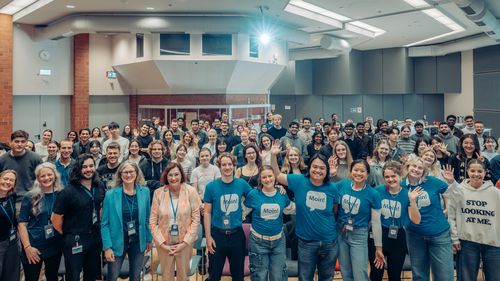
Researching background information, designing the exhibition, procuring exhibits, acquiring financial support, creating a website for public relations and setting up social media channels: The eleven students spent around a year working on their project, which is an integral part of their degree programme.
The result is a tangible exhibition that shows how different media - music, computer games or even graphics on dinnerware - stereotype villages. The students also designed a colourful accompanying programme to encourage visitors to reflect on their own ideas about villages.
Opening date postponed several times
However, the coronavirus crisis and the restrictions on public life since mid-March presented the students with completely new challenges: The State Library, which was intended to be the venue for the exhibition, was completely closed until 21 April. Access and utilisation options are still severely restricted.
The opening date of the exhibition therefore had to be postponed several times. "We were frustrated at first," says student Katja Kuhlmann. "We had put in a lot of work because the exhibition has become a real project close to our hearts," she reports. Due to the contact restrictions, the students were also unable to prepare many things as originally planned. "There was more individual work than would otherwise have been the case," reports student Tamara Brauns, who is also involved in the project. The last few weeks have therefore been very nerve-wracking.
In order to give the exhibition a chance at all, the group worked feverishly to make all the content digitally accessible. "We have created video content, recorded podcasts and developed digital quizzes," says Brauns. Due to the existing restrictions, it is now clear that there will be no hands-on exhibition in the library. "We can only present our project online," says Kuhlmann.
Revised programme
Part of the supporting programme will now also take place online. For example, a panel discussion will be held as a video conference and guided tours will take place digitally. However, the students had to cancel most of the planned events - such as a games evening, a poetry slam or improvisation theatre - with a heavy heart. "We don't want to put anyone at risk," emphasises Kuhlmann.
The students had also planned to use the Science Truck from the Innovative University of Applied Sciences Jade-Oldenburg! (IHJO) as an exhibition space. "It was important to us to appear in a public space - the truck is very suitable for a project like ours," says Kuhlmann. But the project team also had to abandon this idea. After all, they can use the content they wanted to present in the truck for their digital exhibition.
Good preparation for practice
It will now officially start on 14 May - online on the project's website. Small icons take visitors to the respective topics of the exhibition. There, the students present their content in a variety of ways, for example as a puzzle, podcast or video. In addition, an online design tour gives an impression of what the exhibition would have looked like in the State Library.
"An important design element was originally an abstract village square with a village oak and a market stall," explains Brauns. The "tree", which the students had designed from an advertising pillar from the Institute of History, can now be accessed digitally. "We added quotes from village literature to it and added a comment function for visitors below the image," reports Kuhlmann. The market stall with goods such as butter, beer and pretzels has also migrated to the online world. "We used the selected products to create collages that illustrate their village symbolism. In this way, we shed light on how this symbolism is used for advertising purposes and as a sales incentive," explains Brauns.
Despite the many sleepless nights, the students see the past few weeks in particular as good preparation for the practical museum work. "The entire degree programme is very intensive, practical and therefore unique in Germany," says Brauns. Working on the project, for which lecturer Anke Fischer had only given the theme 'village', offered a lot of creative freedom. And her fellow student Kuhlmann is certain: "Once we have organised this exhibition and brought it to digital, nothing will surprise us in our professional lives."
The exhibition "Fiction Village? Between pixels and brushstrokes" is open to the public between 14 and 30 May 2020 on the website https://fiktiondorf.weebly.com/ free of charge.