

Oldenburg scientists have worked with pharmacists and people with speech impairments to design a pictogram book that improves mutual understanding - even without speech. Simple pictograms provide information about complaints and medication.
A pharmacist from Wolfenbüttel got the ball rolling: During various consultations with customers with speech disabilities, she had noticed that there were problems with communication. Without further ado, she contacted the AAC counselling centre at the Institute of Special Needs Education and Rehabilitation at the University of Oldenburg. Her suggestion: work together to develop something that would make communication easier and help people to express their health concerns - even without speech. "I was immediately enthusiastic about the idea," recalls Andrea Erdélyi, professor and head of the advice centre.
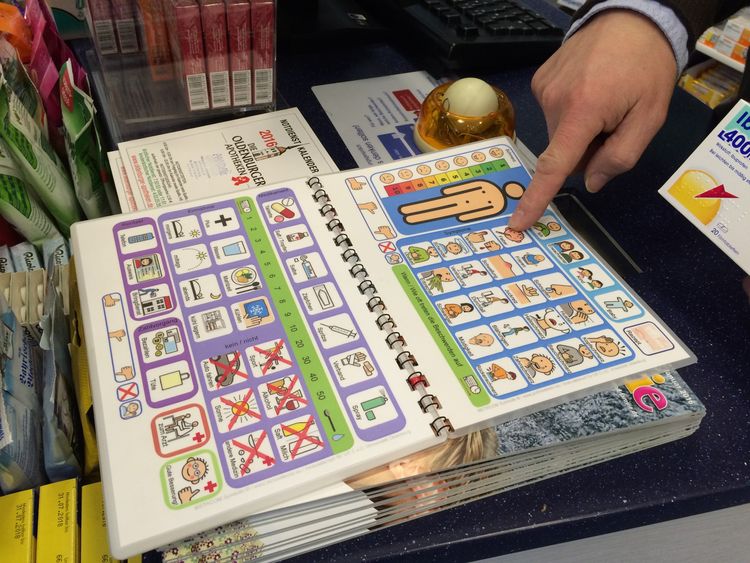
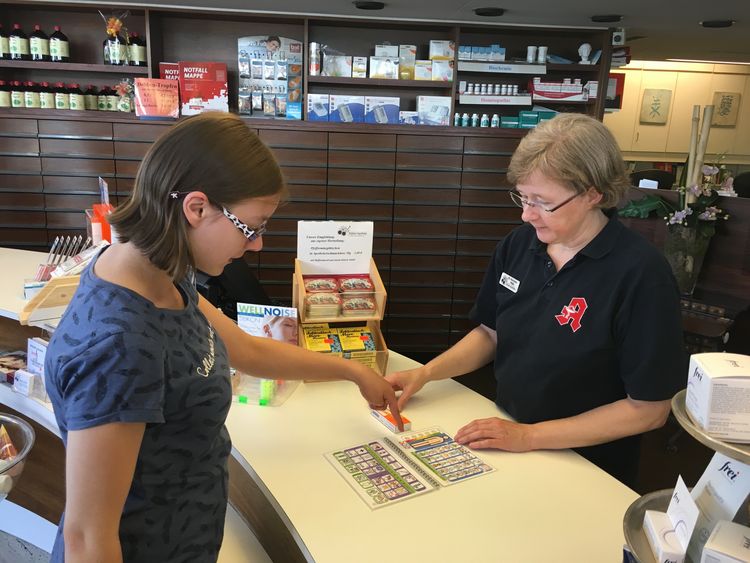
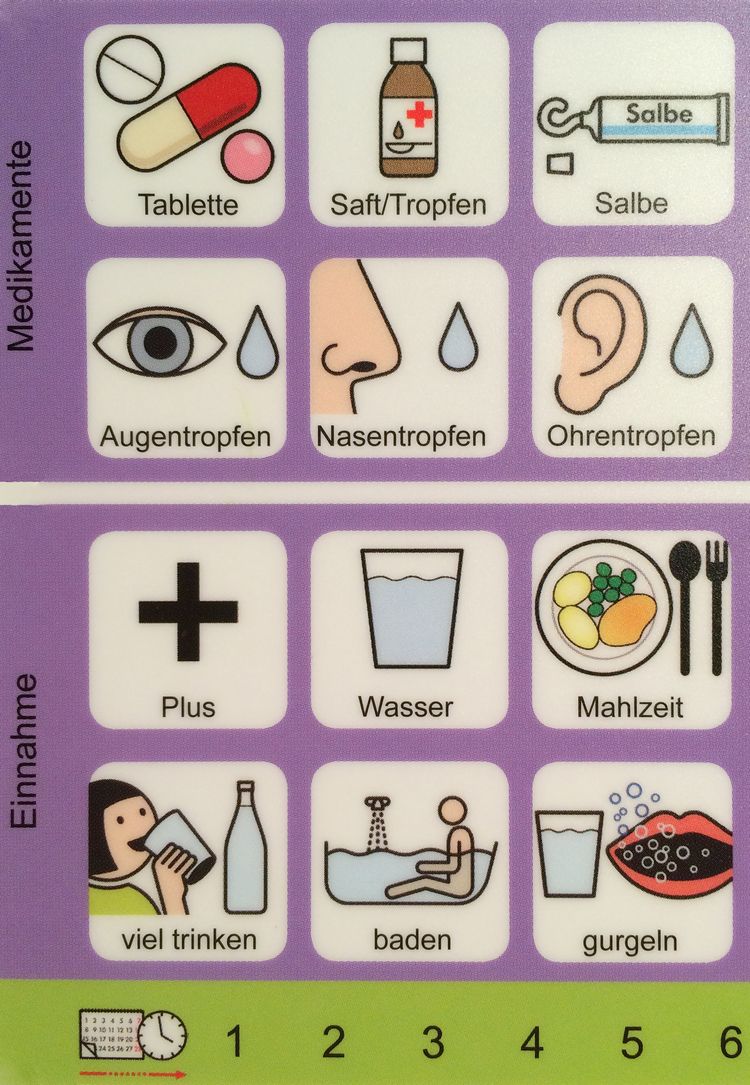
Four years and several Master's and Bachelor's theses later, a pictogram ring binder is available in all pharmacies in Lower Saxony: The communication folder "Augmentative and Alternative Communication in Pharmacies", or UKAPO for short, facilitates communication between pharmacists and customers with speech disabilities. On nine pages, complaints such as headaches, abdominal pain or diarrhoea are illustrated and explained using simple pictorial symbols that supplement or replace spoken language. Questions about how and when to take medication as well as tips and recommendations on health behaviour are also answered. "UKAPO can be used to conduct a complete consultation in the pharmacy, as the symbols are based on the counselling guidelines of the German Federal Chamber of Pharmacists," says Andrea Erdélyi. Pharmacists are thus able to provide meaningful support to people with hearing, mental or physical impairments, patients with incipient dementia, stroke patients and people with little or no German language skills. However, the pictogram boards could also facilitate communication in doctors' surgeries and Public Health Departments in the future and thus contribute to inclusion.
The four-year research project is an impressive reflection of how successful a project can be when scientists and those affected work hand in hand, when theory and practice are closely intertwined. "This dovetailing was very important to us. We worked together with pharmacists and users from the very beginning and drew on our scientific methods," explains Andrea Erdélyi.
At first, it was not at all clear how the Oldenburg team would manage the project. "We didn't have any additional resources at our disposal," says the professor. That's why students were involved, who drove UKAPO forward through their Bachelor's and Master's theses. The first step was to take stock of the situation: what is comparable at international level? "The results of the source research were sobering," summarises Andrea Erdélyi. After all, we now know that Australia is a pioneer in terms of barrier-free communication in the community, but the symbolism is less suitable for Germany. "We then started sending students to the participating pharmacies in Oldenburg to record customer conversations," explains the professor. They were asked to find out which words were used most frequently. Based on the word clouds, an initial communication board in DIN A4 format including a folder was created, which the pharmacies trialled in a test phase. Erdélyi's team brought employees with speech disabilities from the non-profit workshops on board for this purpose: "We asked them to make test purchases and share their experiences with us," says Andrea Erdélyi. It quickly became clear that the communication board was a help, but that the symbols needed to be even clearer.
The pharmacists re-registered students that they would like to be trained in how to use the boards and that the format was not very handy. Finally, a student revised all the results again in her Master's thesis: The symbolism was standardised, the layout reduced in size and the pharmacists were trained - with success, as the employees from the charitable workshops were satisfied when they made new trial purchases. The ring binders have now been available in all pharmacies in Lower Saxony since the middle of the year, and re-registering students have responded favourably. "First and foremost, however, it's about giving people the confidence to go out on their own," says Erdélyi. Her heart's desire is for UKAPO to be used nationwide. But there is also great interest in UKAPO in other areas: the professor is receiving enquiries from various sectors and the first follow-up projects are already emerging. For example, the Oldenburg scientists, who have since founded the Method Centre for Augmentative and Alternative Communication, are considering whether the symbolism can be further developed for the care sector.
The need for generally understandable representations in different contexts is also becoming increasingly important in the course of internationalisation. This was demonstrated in August in Toronto at the conference of the International Society for Augmentative and Alternative Communication (ISAAC), the largest conference in the field of AAC: the Oldenburg team presented their UKAPO communication folder to an international audience of experts - and received positive feedback all round. The Swedes, for example, signalled that they were interested in an adapted translation of the symbolism. "Colleagues from England, on the other hand, have already developed something similar for emergency admissions - we are now considering whether and how we can exchange ideas," says Erdélyi. For her, there is no question: "UKAPO still has a lot of potential."