
Stop-motion films that bring museum animals on display to life, and paper theatre productions in which animals set out in search of freedom – these student works are currently on display at the Landesmuseum Natur und Mensch.
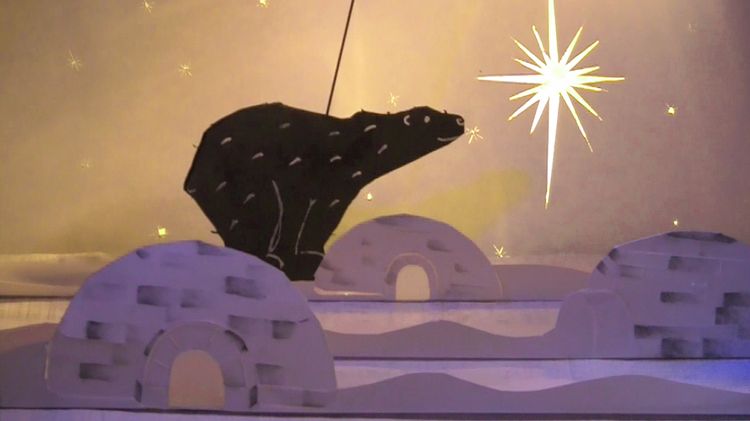
A kiwi that leaves its museum display case and flutters out of the building, a tortoise that sneaks its way out, or a polar bear that leaves its bars behind and makes its way to where it belongs: The quest for and longing for freedom are the themes of the paper theatre pieces and stop-motion films created by students on the Art and Media degree programme for the exhibition ‘Tell Me About Animals – Animals in Children’s Literature and in Nature’.
In doing so, the students – primarily trainee teachers – did not merely explore the theme from an artistic perspective. They also learnt about the challenges involved in, for example, developing narrative ideas and creating stop-motion films – thereby gaining practical insights that will be important for their future teaching practice.
To breathe life into the animals on display at the Oldenburg Cabinet using animation techniques, the students, under the guidance of art lecturer Thomas Robbers, made use of both analogue and digital technology: “First, each participant chose an animal, drew it on a tablet and then printed it out in enlarged form,” explains Kristina Wassiljew, who is studying Art and Media in her first semester.
The seminar participants stuck the printed animals onto cardboard and cut them to size. “And then it was a matter of making the animal crawl and scurry in front of the tablet’s camera and documenting its individual escape from the natural history cabinet,” says the art student. Admittedly, the craft work took longer than expected. But once the cardboard figures were finished, the students had a lot of fun coming up with new ideas, reports student Claas Hecker. “Through a lot of trial and error, we quickly got a feel for how movement looks relatively fluid within a single shot.”
Thanks to apps that were easy to learn and user-friendly, by the end of the seminar the students had created short film pieces lasting two to three minutes. “Although I hadn’t had any previous experience with digital illustration, I soon began to see results,” says Wassiljew. It is precisely this intuitive approach that makes it possible to apply what has been learnt in school lessons later on.
Under the guidance of art lecturer Sabine Wallach, another group of students had already developed paper theatre pieces during the previous summer semester, inspired by Patrick George’s wordless picture book *Lass mich frei!* (*Set Me Free!*). As they turn the pages, the book’s young readers can release animals – which have been kept or used by humans – back into the wild.
But how exactly do these animals gain their freedom? What happens between the two contrasting pages? This is the theme explored by the five paper theatre pieces, which are also on display in the exhibition. Anyone wishing to know the whole story can also watch the pieces performed on a screen.
For the students, working on the exhibition was inspiring: “The project definitely motivated me to explore digital illustration in more depth,” says art student Wassiljew. She might even go on to create more stop-motion films in the future.
The students’ paper theatres and films are on display as part of the special exhibition “Tell Me About the Animal” at the Museum of Nature and Man in Oldenburg until 28 April 2019.