

Fourteen teacher-training students from Oldenburg have now had the chance to experience school life in another country. They spent a day at a Dutch school – and discovered some fascinating differences.
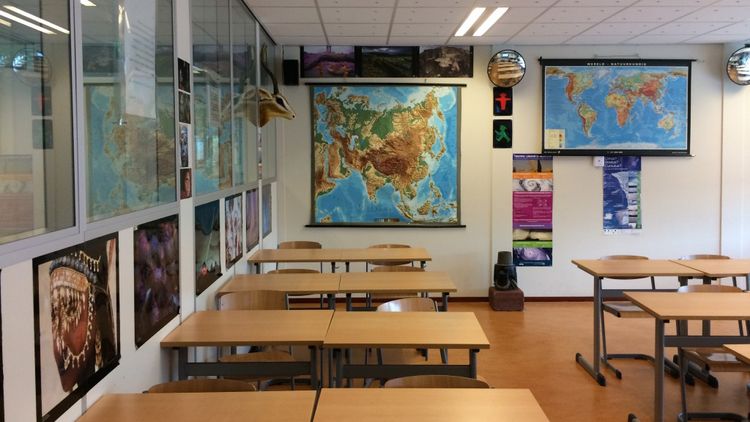
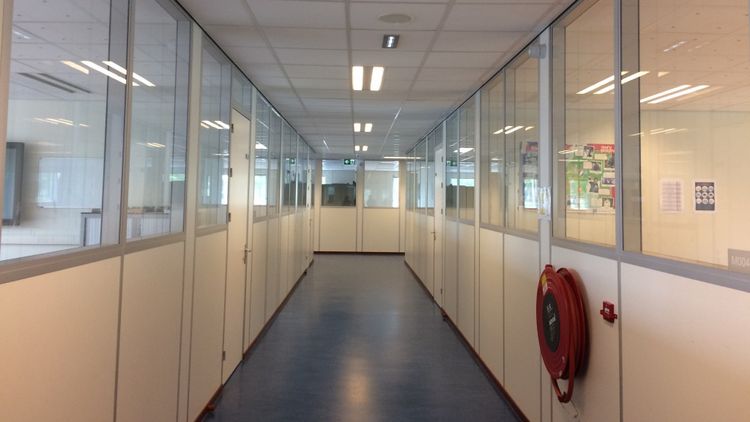
The modern technology, the good condition of the buildings, the electronic class register – there were quite a few things that Pia Riefert and Sina Biel would have liked to bring back with them from their visit to the Netherlands. But there were also aspects that the two teacher-training students found rather disconcerting. “It was often quite noisy in the lessons; I wouldn’t be able to stay calm as a teacher there,” says Biel, and Riefert adds: “The classrooms have a full-length glass front facing the corridor. On the one hand, this provides light and transparency, but on the other, it’s a distraction from the lesson when someone walks past outside.”
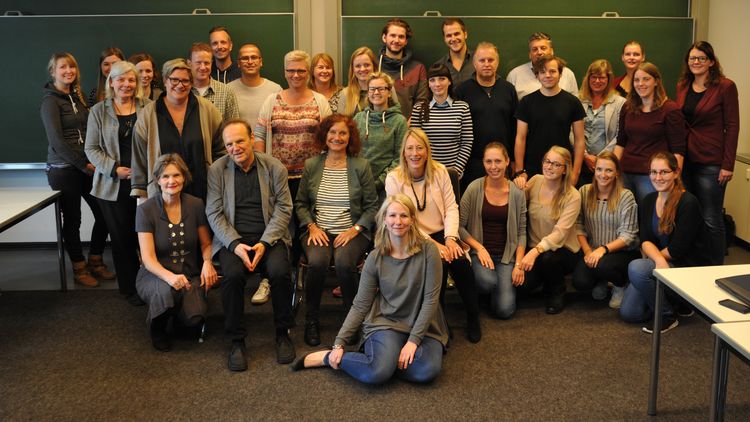
As part of a block seminar with a total of 14 participants, the two trainee primary school teachers spent a day in the Netherlands at the beginning of October. There, they sat in on lessons at two secondary schools in Emmen and Groningen. They were accompanied by Dutch fellow students who had organised the school visits to give the German students a real insight into their everyday school life. Back in September, the Dutch students – all of whom are German teachers – had been guests at the grammar school in Bad Zwischenahn and had, in turn, gained their own impressions of German classrooms.
“Engaging with other school systems, including in a practical setting, broadens the students’ personal and professional horizons,” says Dr Sylvia Jahnke-Klein from the Institute of Educational Sciences, who designed the intensive course for Master’s students together with her Dutch colleagues Annalien Prozée and Mathias Mitzschke from NHL Hogeschool. The actual field trip was preceded by two days of theory, which the groups partly undertook together. This is because the German and Dutch school systems are not easy to compare, says Jahnke-Klein. This is due, for example, to the federal structures in this country and the differing degrees of autonomy on either side of the border: in the Netherlands, schools generally operate more independently. The start of pupils’ school careers also differs. In the Netherlands, children start school as early as the age of four, primary school lasts eight years, and individual schools compete more directly with one another. “The technical facilities are much better there – every classroom has presentation screens or interactive whiteboards, and many schools provide tablets for lessons,” explains Jahnke-Klein.
Pia Riefert can certainly confirm this. She was particularly impressed by the electronic class register, which is widely used in the Netherlands. “Teachers enter everything there: who’s absent, what homework needs to be done. Even grades are recorded and can therefore be viewed directly by parents,” explains the student. In her view, a similar digital solution for managing day-to-day school life in German schools is long overdue – as is the digital transformation of classrooms. “The Dutch smiled when they saw overhead projectors in our classrooms,” adds Sina Biel.
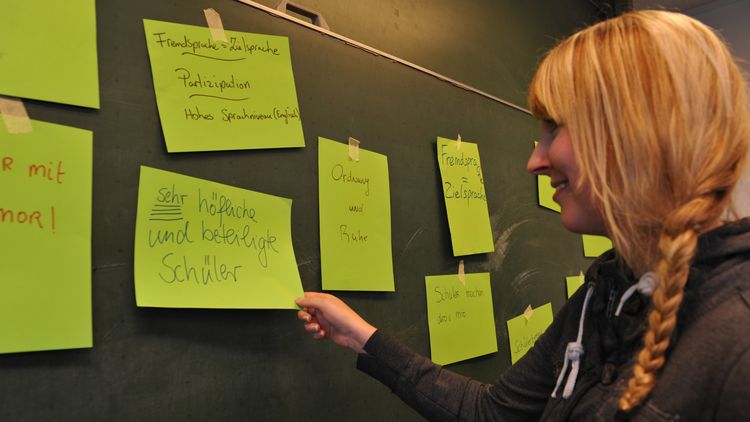
The cross-border seminar also highlighted differences in teacher training. Dutch students have been working in schools since completing their bachelor’s degrees and are studying for their master’s degrees whilst working – specialising in just one subject and with more intensive practical placements than in Germany. “In the Netherlands, you can already be a teacher at the age of 21,” says Jahnke-Klein. The students also explored the distinctive features of the Dutch school system through interviews with pupils, lecturers and school managers. In the Netherlands, it is the school managers who run the schools.
Despite all the differences, however, many similarities were also identified, and the German and Dutch students agreed that the quality of teaching ultimately depends on the professionalism of the individual lecturer. “Looking across the border to our neighbours has revealed new insights and cast our own familiar surroundings in a different light. This applies equally to Germans and Dutch people,” sums up Mathias Mitzschke.