2025
2025
Successful Kick-off Meeting of the Erasmus+ Project GREEN-Credentials
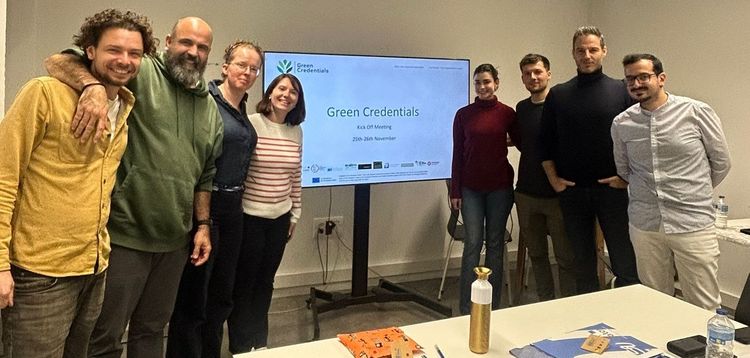
The kick-off meeting of the Erasmus+ project GREEN-Credentials took place on 25–26 November 2025 in Bilbao, bringing together representatives of all project partners to officially launch the 36-month initiative and to establish the foundations for effective collaboration. The University of Oldenburg, represented by the VLBA, is one of the seven European partners from the fields of academia and VET.
GREEN-Credentials aims to develop a digital training ecosystem for Vocational Education and Training (VET) with a focus on sustainability, agriculture, and forest management. A key objective of the project is to improve the inclusion and employability of migrants and other disadvantaged groups by providing access to recognised micro-credentials aligned with labour-market needs. Core project components include a digital learning platform, AI-based self-assessment tools, and an educational AI game designed to strengthen sustainability skills.
During the kick-off meeting, partners discussed the project structure, work packages, timelines, and key milestones, ensuring a shared understanding of roles and responsibilities. The University of Oldenburg plays a central role in Work Package 2, which focuses on developing the theoretical framework, defining priority topics, and establishing ethical guidelines for the use of artificial intelligence in VET. In addition, the university contributes to quality assurance activities and scientific dissemination.
The kick-off meeting provided a strong starting point for the project, establishing a common vision and a solid organisational framework for the international consortium’s collaboration until August 2027.
6. exchange of experience in municipal flood protection

A total of around 200 participants came together in the Heidmark Hall in Bad Fallingbostel to share their experiences and insights from the recent floods in Lower Saxony at the turn of the year 2023/2024. In addition to specialist presentations and plenty of room for personal exchange, the participants had the opportunity to familiarise themselves with a wide variety of mobile flood protection systems at an accompanying trade exhibition and to talk to state institutions and engineering offices. The event programme was complemented by a photo competition on the subject of flooding, which proved very popular and provided plenty of opportunity for discussions between the participants.
As part of a water management overview, Markus Anhalt (Head of the Water Management and Radiation Protection Division, Lower Saxony Water Management, Coastal Defence and Nature Conservation Agency) gave a hydrological review of the winter floods and also explained how this event should be classified in the context of climate change and what events we need to be prepared for in the future. Due to the expected changes in flood conditions in terms of height, intensity and frequency, forecasting options are also becoming increasingly important. This makes it all the more important to know about helpful web portals and how to deal with the warnings published there. This perspective was supplemented by a categorisation and a review from the perspective of civil protection. Pascal Drewes (Lower Saxony State Office for Fire and Civil Protection, Division of Civil Protection) showed the challenges faced by civil protection in this extraordinary situation and the steps taken in the follow-up to be able to respond even better to similar events in the future.
In his subsequent presentation, Lukas Czeszak (Lower Saxony Ministry of the Interior and Sport, Department of Civil Protection) gave an interim assessment and explained the future strategic direction of the state, particularly in light of the agreed ad hoc package to strengthen civil protection in Lower Saxony (2022-25). In particular, the needs and experiences at municipal level are key to strengthening civil protection from the ground up.
Prof Dr Klaus Röttcher (Flood Protection Academy / Ostfalia University of Applied Sciences) explained the requirements that mobile flood protection systems should meet in order to be able to defend themselves in an emergency. Challenges in the selection of suitable protection systems include the fact that they should generally be able to stand on soaked ground and that their construction should be tested before an emergency occurs.
With regard to the wide range of protection systems that the participants were able to marvel at live and partly in action at the trade exhibition, Beatrice Kausch (Kommunale UmweltAktioN) summarised that there were no better or worse products per se among the systems on display, but that all products are suitable for the respective application.
Carsten Niemann (mayor of the joint municipality of Ahlden), Peter Geisenhainer-Anhalt (head of urban drainage) and Uwe Bühning (managing director of the Obere Hunte maintenance association) reported on their very specific experiences with defence against the Christmas floods from the perspective of the joint municipality of Ahlden. In all three cases, it was shown that many things can and should be sensibly prepared in advance, such as the development of alarm and deployment plans as well as staff structures, information and communication strategies, the identification of particularly vulnerable areas and neuralgic points, as well as the responsibilities for waste disposal. All three speakers emphasised how important it is to learn from the experiences of this event and to create a common knowledge base on site, because "after the flood is before the flood". In the future, it not only makes sense to create a better data basis and forecasting capability (e.g. through additional water gauges), but at best also to give more space to water in the landscape.
The lecture programme was concluded by Reinhard (Riku) Vogt (aD HochwasserKompetenzCentrum e.V. Köln) with a plea for the use of modern mobile systems and presented their advantages over conventional sandbag solutions. He also emphasised the importance of learning from events, practising regularly and treating flood protection as an ongoing task based on observations and findings and constantly developing it further. As there is no absolute flood protection, he encouraged the participants in Cologne dialect to always hope for the best and at the same time be prepared for the worst.
To summarise, the 6th exchange of experience on municipal flood protection was a complete success. The event provided an excellent platform for the exchange of experiences and ideas, as well as for networking. The many positive re-registering students motivate us to continue organising this format in the future and thus make a contribution to flood protection in Lower Saxony.
Final Event of the CoLDa Project

After three years, a final joint meeting to mark the successful conclusion of the CoLDa project took place on Thursday, December 4, 2025, in Sankt Augustin. Participants included Prof. Jorge Marx Gómez, Prof. Frank Köster, Dr. Michael Karl, Dr. Oscar Ramirez Agudelo, Lars Steffens, Gerrit Schumann, Jan-Philipp Awick, and Leonie Etzold. The main topics of the meeting included the presentation of the 14 completed work packages and 18 milestones, the 11 publications and 6 supervised student theses, the presentation of the main functionalities of the demonstrator, and the finalization of the project documentation.
Third Project Meeting in the DISCO Project
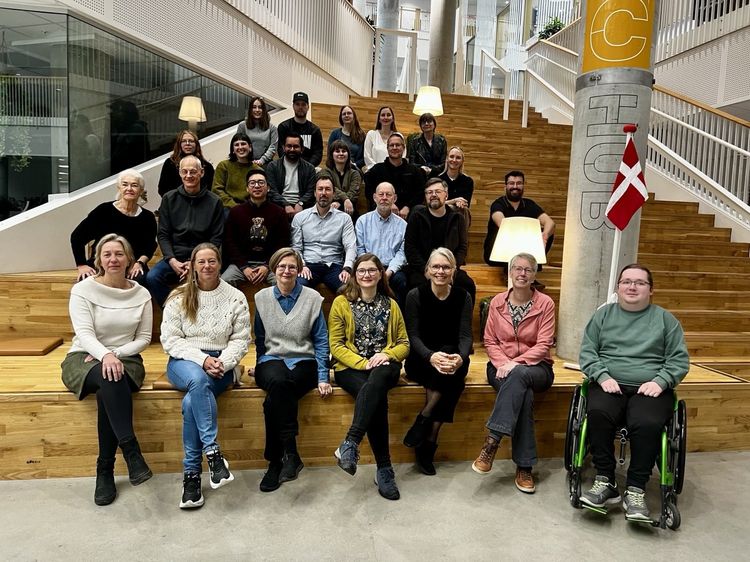
The Interreg North Sea project DISCO (Digital Solutions for Climate Adaptation) held its third project meeting from October 28 to 30, 2025, in Horsens, Denmark. All participating institutions—including municipalities, research institutions, and water associations—from Germany, Denmark, Belgium, Sweden, and the Netherlands were present. During the three days at VIA University College, the partners exchanged information in various workshops on the five pilot projects within the project, as well as other project-related topics. To gain a closer look at the pilot project of the Vejle Municipality, an excursion to the Vejle Fjord was also organized. VLBA is participating in DISCO as a research and development partner, together with the Oldenburg-East Frisian Water Association (OOWV), in the development of a digital twin of a rainwater retention basin for more effective use of rainwater.
23.09.2025: Expert Council supports transfer of the Water Laboratory of the Future
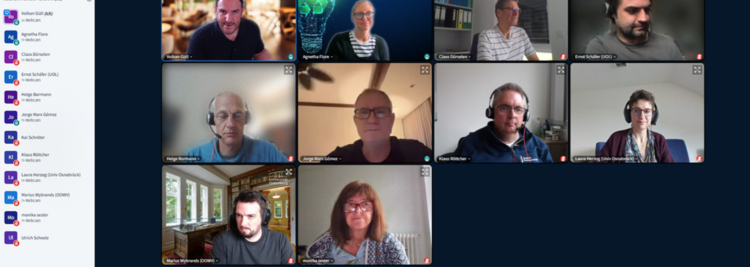
With the Expert Council, the Water Laboratory of the Future has gained an advisory body that will promote the transfer of innovation into practice. The council will provide impetus for research focuses and help to successfully put innovative solutions for digital water management into practice.
One of the central goals of the new Expert Council, which was founded in a constituent meeting on 10 September 2025, is to make the research of the Water Laboratory of the Future usable in practice. The Expert Council is made up of eight people from science and practice. Twice a year, they will discuss current research topics with the Future Lab, find approaches for transfer into practice and make suggestions for the future direction of the Future Lab. At the constituent meeting, Dr Agnetha Flore, August Wilhelm Scheer Institute, was elected Chair.
We will support the progress of the Future Lab project in an advisory capacity, contribute to the quality assurance of the research results and promote the transfer of innovation into practice. With our different perspectives, we will contribute valuable expertise from various regions of Lower Saxony and provide the Future Lab with independent and well-founded advice.
Dr Agnetha Flore
August-Wilhelm-Scheer-Institut, Site Director of the Centre for Digital GreenTech
The researchers from the Future Lab also took part in the meeting and presented their current work in compact form to make it easier for the members of the Expert Council to categorise their work. In future, the Expert Council will draw up a research roadmap with the Future Lab, which will contribute to the further development of the research focus.
The Expert Council provides us with valuable input from the field, which helps us to focus our research on the real challenges in the water sector. At the same time, the committee enables us to reflect independently on our work, thus strengthening the quality and relevance of our research. The different perspectives in the Council help us to further develop our focal points and point out new approaches.
Prof Dr Jorge Marx Gómez
University of Oldenburg, Very Large Business Applications (VLBA), Spokesperson for the Water Laboratory of the Future
8. and 9. September 2025: Visit the SAP ACC 2025 conference in Potsdam
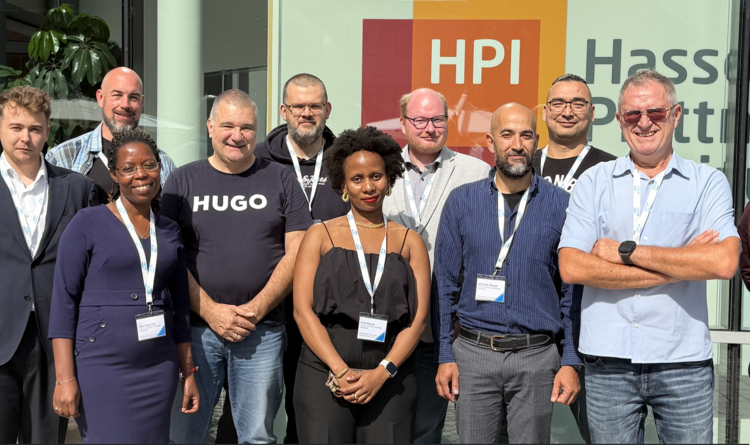
This year's SAP Academic Community Conference DACH took place on September 8–9, 2025, at the Hasso Plattner Institute at the University of Potsdam. Scientists from the VLBA presented a wide variety of contributions at the conference. This year's conference was held under the motto “Business Process Management drives Digital Transformation.” On September 8, 2025, Prof. Dr.-Ing. Jorge Marx Gómez organized and chaired the “International” track as track chair. VLBA partners from Tanzania at the Nelson Mandela African Institution of Science and Technology (NM-AIST) also participated in the conference online.
Presentation of the results of the Data Challenge 28.09.2025


On 29 August 2025, the results of this year's Data Challenge were presented at abat AG in Bremen. Seven student groups presented the results they had achieved over the past two weeks. Various approaches for the development of efficient computer vision systems for recognising and classifying industrial objects under realistic production conditions were developed and clearly presented. The VLBA congratulates all students on their creative results and would like to thank abat AG for its many years of support within the framework of the research co-operation!
04.09.2025: Guest from National Dong Hwa University Taiwan
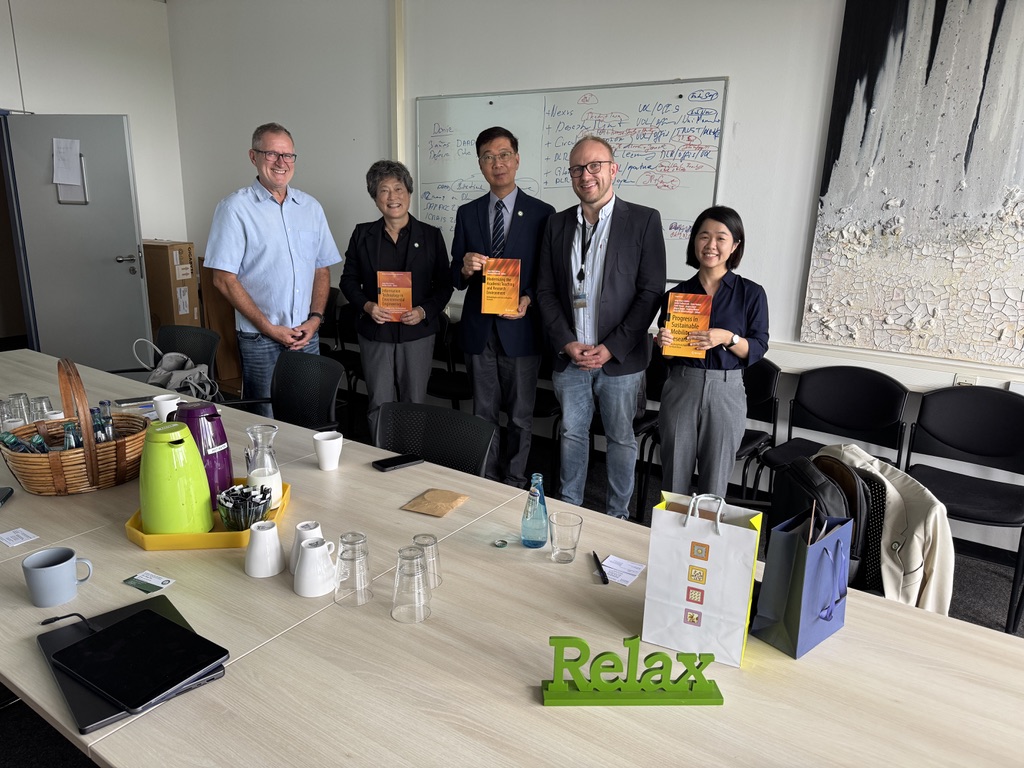
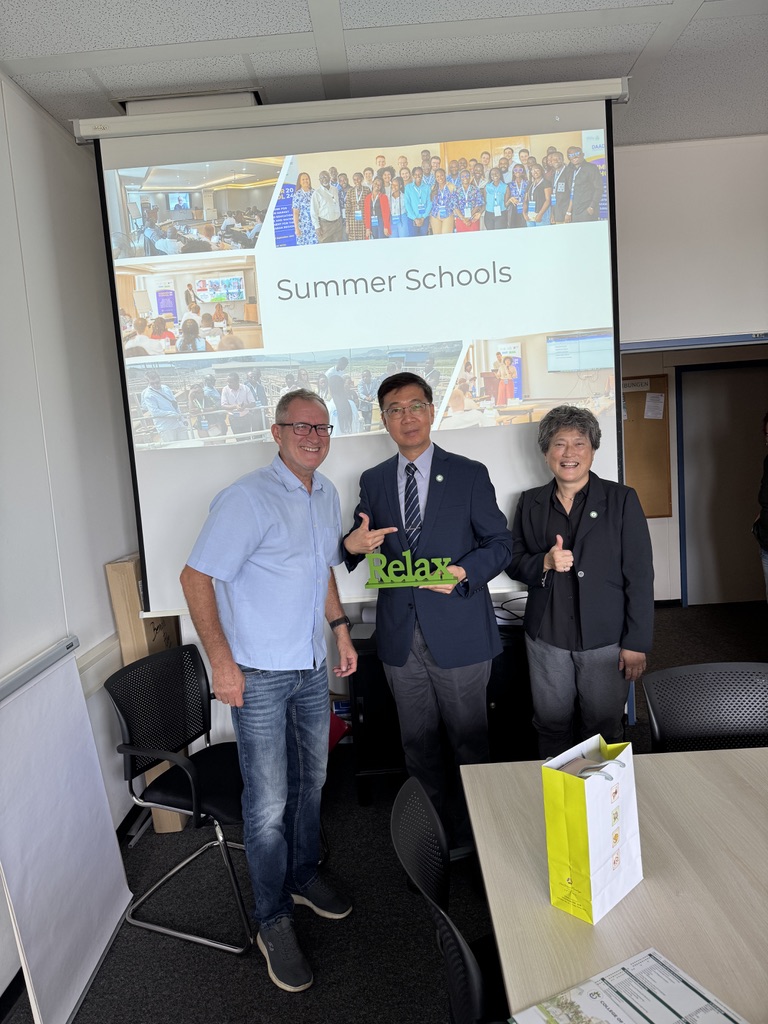
Today, we had the pleasure of welcoming three guests from a renowned university in Taiwan. During their visit, they gained valuable insights into our current projects and engaged in productive discussions with our colleagues about shared research interests.
The meeting focused on exploring opportunities for deeper research collaboration and new perspectives on student mobility between our institutions.
We are delighted about this inspiring exchange and look forward to taking the next steps in our partnership.
01.07.2001: Water laboratory of the future: Intensive exchange between research and practice
Two days of inspiring lectures, creative workshops and dynamic dialogue are behind the Future Lab Water: representatives from science and practice had an intensive exchange about research and research transfer in the water sector.
Digital solutions for intelligent and sustainable water management: this is what the Future Lab Water of the Centre for Digital Innovation Lower Saxony (ZDIN) is researching. Together with partners from the water industry, the scientists are investigating the potential of digitalisation for the sustainable use of water. The practical partners include regional water suppliers, authorities and public institutions, associations and interest groups as well as technology companies from the water industry. On 7 and 8 May 2025, the scientists of the Future Lab met with representatives from the field to discuss the research in the Future Lab and to deepen the cooperation. A total of around 50 representatives from science and practice took part in this networking meeting, which was held at the ecos workspaces in Oldenburg. Prof Dr Jorge Marx Gómez, spokesperson for the Future Lab, opened the event:
"Water is an essential topic, especially for the coastal state of Lower Saxony. We need innovative solutions to efficiently meet the current challenges of water scarcity on the one hand and flooding on the other. This is why joint research between science and practice is so important. We want to specifically promote this collaboration - with this networking meeting and with new transfer projects that have recently been launched at the ZDIN."
Prof. Gómez's welcome address was followed by a keynote speech by Prof. Dr Ralf Merz (Helmholtz Centre for Environmental Research) on the topic of "Innovative water strategies". He emphasised the importance of innovative solutions by highlighting the consequences of extreme rainfall. Many people have died in recent years due to inadequate disaster management, even in areas that were not considered flood zones. Floods are difficult to predict and reliable forecasts are needed.
Dr Patrick Elfert, Managing Director of the ZDIN, then gave an overview of the ZDIN's digitisation research and emphasised the special value of interdisciplinary research for Lower Saxony.
"Our future labs bring together various research disciplines under one roof - from the sociology of labour to Computing Science, mechanical engineering and much more. As a result, digital innovations are developed that meet the demands of different perspectives. Our central claim is the transfer of innovation: research is all the more effective if it is application-orientated and addresses specific practical challenges."
The scientists from the Water Laboratory of the Future then presented their current research topics:
- Determination of vegetation parameters and foreland roughness using satellite data
- Digital irrigation map for sustainable water resource management
- Digitalisation in the water management process: Efficient control with the help of modern technologies
- Development and implementation of image-based optical systems for analysing surface waters
- Indicator-based water and energy strategy for irrigation and drainage
- Intelligent, model-based system optimisation in urban water management
- Modelling the temporal and spatial spread of vertical saltwater intrusion
- Nowcasting of extreme precipitation
- Forecasting tool for assessing the risk of urban pollutants entering water bodies
- Real-time anomaly detection in aquatic systems
- Resilient water management by means of digitalisation
- 3D Gaussian Splatting
- Water Innovation Solution Management
A subsequent poster session offered the opportunity to discuss the research topics in more detail. This led to lively discussions with representatives from the field, who linked practical challenges and solutions to the research.
The second day of the networking meeting focussed on the strategic direction of the Future Lab. In the workshop "Setting up the Water Expert Council", the participants developed the objectives and structures of a new body. The subsequent discussion of the results showed how strong the synergies between research and practice already are.
The new ZDIN annual report provides further insights into the Water Laboratory of the Future.
26.06.2025: Former project group GENIUS defends title at the Department of Computer Science's boules tournament
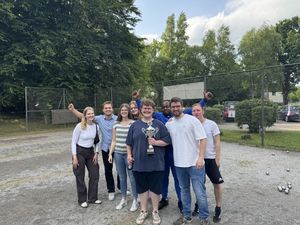
On June 25, our former project group GENIUS successfully defended its title at the 10th annual boules tournament for project groups from the Department of Computer Science. The team “KI Kugel Könige” won the exciting final against the team “Throw them Bouls” from the current project group SPARK (also VLBA, research cooperation TaDeA) and thus successfully defended the title from the previous year. Third place went to the OLDIES. If they win again next year, the team should keep the challenge cup forever. The VLBA department would like to congratulate both project groups on their success and thank Dr.-Ing. Dietrich Boles for organizing the anniversary tournament.
17.06.2025: LIHYP Partner Meeting (10-12 Jun) Highlights
We extend our heartfelt thanks to all partners involved in the LIHYP project for a productive meeting held in Brussels on June 11-12. This gathering served as a vital platform for collaboration and progress sharing among our diverse partners.
VLBA is actively participating as a knowledge partner in the LIHYP initiative, taking the lead in developing the data structure and architecture for the LIHYP platform. Our role is crucial in ensuring that the platform is robust, efficient, and tailored to meet the needs of all stakeholders.
During the meeting, partners from the Nordsee region, including representatives from France, Belgium, Denmark, and the Netherlands, provided insightful updates on their respective contributions and progress in the LIHYP project. Each partner, including the University of Oldenburg and VLBA, shared valuable information regarding the latest stages of development, highlighting the collaborative spirit and commitment to advancing our shared goals.
We look forward to continuing this journey together and achieving great milestones in the LIHYP project!
13.06.2025: Successful BUIS Days 2025 - Smart and Sustainable Infrastructures in Oldenburg
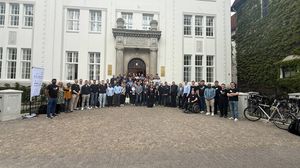
The 14th BUIS Days 2025, which took place from 5 to 6 June 2025 at ecos work spaces in Oldenburg and focused on the use of operational environmental information systems in smart and sustainable infrastructures, highlighted the handling of environmental information in an increasingly digitalised world.
With over 60 participants and 32 accepted presentations on the topics of environmental protection, sustainability and energy efficiency in the context of established or future infrastructures, it is clear that science and practice are facing up to the challenges. We are delighted with the positive re-registering students from the community, who show that such a conference is a popular forum for contact and discussion.
We are also delighted with the support from the field for three Best Awards and the feedback from conference visitors when voting for the awards. The awards are supported by the Centre for Digital Innovation Lower Saxony (ZDIN) and the Oldenburgisch-Ostfriesischer Wasserverband (OOWV).
Best Paper Award of the 14th BUIS Days 2025
Timothy Musharu and Jorge Marx Gómez
Paper: "AI and Open Data for GBV Prevention Among Youth: Ethical Governance and Policy Frameworks in the EU"
The Best Student Paper Award was awarded twice due to the quality and re-registering student feedback.
Best Student Paper Award of the 14th BUIS Days 2025:
Timmy Schwarz, Yannick Elias Gerling and Jürgen Knies
Contribution: "Civic potential: stakeholder identification and activation in the heat transition - updating the Sinus-Milieus® for Bremen"
Hannes Kath, Thiago S. Gouvêa and Daniel Sonntag
Contribution: "A Look Under the Hood of the Xprize Rainforest Competition System"
We would like to thank all our supporters and sponsors. Without you, a conference like this would not be possible. We look forward to meeting you at the upcoming BUIS Days and discussing your ideas with you.
BUIS Days 2025, Organisation Team
Organisation team
Prof. Dr.-Ing. Jorge Marx Gómez
University of Oldenburg
Prof. Dr Volker Wohlgemuth
Berlin University of Applied Sciences
Dr Alexandra Pehlken
OFFIS e.V. - Institute for Computing Science
Malena Ripken
Centre for Transformations and Sustainable Futures
Ali Akyol
University of Oldenburg
Dr Volkan Gizli
University of Oldenburg
Barbara Rapp
University of Oldenburg
Dr Andreas Solsbach
University of Oldenburg
You can reach us by email at: buis.tage.2025@uni-oldenburg.de
The Best Paper Award of the BUIS Days 2025 for innovative research in the field of digitisation and transfer is sponsored by the ZDIN - Centre for Digital Innovation Lower Saxony.
We would like to thank worldiety GmbH, ecco ecology + communication Unternehmensberatung GmbH, BTC Business Technology Consulting AG, OFFIS e.V., abat AG, embeteco GmbH & Co KG and Oldenburgisch-Ostfriesischer Wasserverband for their support.
15.05.2025: A Day of Learning and Discovery with HEI-Blue Erasmus+ in Seychelles
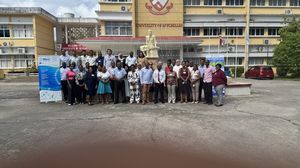
On 15 May, participants of the HEI-Blue Erasmus+ project gathered at the Seychelles Maritime Academy (SMA) for a day of inspiring presentations and immersive learning. The group explored SMA’s academic programmes and gained valuable insights into the Academy’s pivotal role in advancing the blue economy in Seychelles.
Following the presentations, the delegation visited the Seychelles Fishing Authority’s aquaculture facility and the Anse à la Mouche project, funded by SeyCCAT and UNDP. These visits showcased innovative approaches to sustainable agriculture and marine resource management—key drivers of the thriving blue economy.
Through these hands-on experiences, the Training of Trainers participants broadened their understanding of the blue economy’s wide-ranging impact beyond professional centres, emphasizing its interconnectedness across multiple sectors.
The project partners look forward to building on the successes of the HEI-Blue Erasmus+ initiative as it fosters innovation and sustainability throughout the Indian Ocean region.
The project "HEI-Blue" is an Erasmus-funded initiative aimed at strengthening higher education institutions (HEIs) in sustainability and innovation, particularly within the blue economy sector. It seeks to foster international collaboration, enhance research capabilities, and develop practical solutions for environmental challenges. Apart from the academia, represented by 7 South-West Indian Ocean and 3 European universities, the consortium also brings together 2 macro-regional actors from key industry and decision-making bodies. University of Oldenburg is one of the European partners, with the implementation being carried out by VLBA.
24.04.2025: Second project meeting in the DISCO project

The Interreg North Sea project DISCO (DIgital Solutions for Climate Adaptation) gathered for the second project meeting from 22.04.2025 to 24.04.2025, this time in Oldenburg. The participating institutions - including municipalities, research institutions and water boards - from Germany, Denmark, Belgium, Sweden and the Netherlands were also present. During the three days at the Jade University of Applied Sciences, the partners exchanged views on the research projects in the field of climate adaptation in various workshops. In addition to the five pilot projects, important topics included the digital innovation capacity of cities and municipalities, the involvement of citizens through digital means and the dissemination of DISCO results. An excursion also gave the project partners an insight into water management in Oldenburg.
The VLBA is participating in DISCO as a research and development partner together with the OOWV, the Oldenburgisch-Ostfriesischer Wasserverband, to develop a digital twin for a rainwater retention basin. This will be used to control the retention basin in future, e.g. to actively use collected rainwater for irrigation instead of allowing it to seep away.
11.04.2025: Final presentation of the GENIUS project group shows successful development of a digital assistant
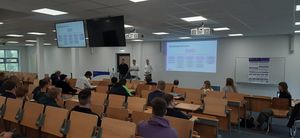
On April 10, 2025, the GENIUS project group presented its project results at a public university event. The one-hour presentation offered comprehensive insight into the functionalities of the digital assistant developed.
The students began by demonstrating the system's core functions and proceeded to explore more specialized areas of application. A particular focus was placed on the innovative evaluation concept, which enables flexible evaluation of the RAG (Retrieval Augmented Generation) application and its individual components. This concept serves as a central instrument for ensuring a high response quality of the digital assistant in a business context.
The project group expressed its special thanks to the practice partner abat AG, on whose example the system was developed.
04.04.2025: 2nd Consortium meeting on Sustainability and Technical Workshop for Open Web Search (OWS) in Passau- 26th-28th March 2025


The 2nd consortium meeting for sustainability and technical workshop for Open Web Search (OWS) project held between 26th to 28th march 2025 at Passau the project under the Horizon 2020. Under the direction of Prof. Jorge Marx Gomez project who is project coordinator for 3rd party call project NORDLINK , the project mitarbeiter MSc. Khurram Shehzad took participate in person and MSc Sreedhar via online video link.
With respect to the last consortium meeting which held in November 2024 in which project NORDLINK under the supervision of Prof. Jorge Marx Gomez took part for the very first, the initial idea of project NORDLINK shared. This time MSc Khurram Shehzad presented the recent ongoing work which is to integrate the Universität Oldenburg locally available Data storage infrastructure and computing resources under project group VLBA of Prof. Jorge Marx Gomez with the OWS infrastructure in order to have locally available infrastructure for the purpose of education and research.
In this meeting sustainability workshop also took place to discuss the scope of OWS project as a sustainable project with long term partnerships with all the project partners. On 28th march the technical workshop took place in which details of infrastructure provided under project NORDLINK presented and discussed with other project partner how to use NORDLINK infrastructure for their workflows in the coming months for OWS project.
04.04.2025: Closing a Chapter: The Impact of the dSkills@EA Project

After three years of empowering young professionals with digital expertise, the Digital Skills for an Innovative East African Industry (dSkills@EA) project is set to conclude on March 31, 2025. A collaborative effort between the Inter-University Council for East Africa (IUCEA) and Deutsche Gesellschaft für Internationale Zusammenarbeit (GIZ), with support from the German government, the initiative has been a driving force in enhancing digital capabilities across the East African Community (EAC). The University of Oldenburg represented by the Department of Business Information Systems (VLBA) served as the Academic Coordinator for dSkills@EA and its predecessor project CENIT@EA.
Through dSkills@EA, over 4,000 young East Africans have gained essential digital skills, strengthening connections between academia and industry. More than 100 universities and 300 private sector partners have contributed to this thriving ecosystem, fostering innovation and entrepreneurship. The program has directly impacted individuals like Rebecca from Tanzania, who supports agricultural advancements; Keith from Uganda, who developed a stroke detection tool; and Malek from South Sudan, who established an ICT school to equip future generations.
Among its many success stories, Ivan Koojo, a graduate of the program, now works on Africa’s first electric bus in Uganda. “This initiative has transformed lives. The investment in digital education is paying off, and we are applying our knowledge in meaningful ways,” he shared.
The project has also strengthened academic programs, particularly the MSc in Embedded and Mobile Systems at the Nelson Mandela African Institution of Science and Technology (NM-AIST). With 164 students enrolled, 124 scholarships granted, and a 90% employment rate among graduates, the initiative has established a strong foundation for the region’s digital future. Notably, 20% of graduates now teach at universities, passing on their expertise.
The success of dSkills@EA reflects the strength of regional collaboration, with contributions from EAC institutions, NM-AIST, the German Academic Exchange Service, the University of Oldenburg, and industry partners. As the project ends, its legacy will continue to shape the digital landscape of East Africa.
03.04.2025: Project Workshop KPI4HE – Workpackage 2 in Genova

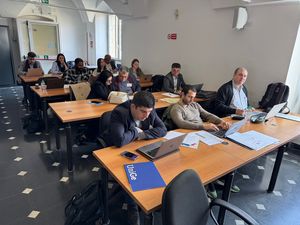
From March 24th to March 28th, a workshop on Workpackage 2 was held at the University in Genova as part of the KPI4HE project. The workshop aimed to elaborate on the findings discussed by project partners from Armenia, Italy (genau), and Dresden during their meeting in Oldenburg in September, and to translate these insights into defined work packages.
Key Details
- Dates: March 24th – March 28th
- Location: University in Genova
- Topic: Workpackage 2 in the KPI4HE project
- Previous Meeting: Project partners from Armenia, Italy, and Dresden met in Oldenburg in September.
During the workshop, detailed analyses and strategic planning sessions were conducted. Participants contributed specialized knowledge that supported a systematic development of the project objectives. The interdisciplinary and international cooperation facilitated a structured and practical approach to the subject areas.
Outlook
The results obtained during the workshop form the basis for the next phases of the KPI4HE project. Continued collaboration among the international partners is considered a key factor for the further advancement of the project.
02.04.2025: Erfolgreicher Auftakt der Master-Projektgruppe „SPARK“
an der Universität Oldenburg

Am 2. April 2025 startete an der Universität Oldenburg offiziell die Master-Projektgruppe „SPARK – Wissensmanagementsystem mit Large Language Models im Kontext der Steuerverwaltung“ mit einem feierlichen Kick-Off-Event. Im Mittelpunkt des Projekts steht die Nutzung von Large Language Models (LLM) – der Schlüsseltechnologie hinter modernen KI-Chatbots wie ChatGPT – zur Optimierung des Wissensmanagements in der Steuerverwaltung. Zum Teilnehmerkreis der Auftaktveranstaltung gehörten zwölf engagierte Masterstudierende, das betreuende Team aus der Abteilung VLBA (Very Large Business Applications) sowie Gäste des Praxispartners Landesamt für Steuern Niedersachsen, mit dem die Projektgruppe eng zusammenarbeitet. Ziel des Projekts ist die Entwicklung einer intelligenten Anwendung, die verstreute Informationsquellen („Informationsinseln“) zu einer zentralen, strukturierten Wissensbasis zusammenführt. Auf dieser Grundlage sollen kontextbezogene Fragestellungen mithilfe von LLM effizient und präzise beantwortet werden können. Die Projektgruppe läuft über einen Zeitraum von zwölf Monaten und orientiert sich an den Abläufen realer IT-Projekte. Die Studierenden übernehmen dabei die Rolle eines Projektteams und bearbeiten praxisnahe Aufgaben im Rahmen einer simulierten Auftraggeber- Auftragnehmer-Beziehung. Neben der technischen Umsetzung stehen Themen wie Teamorganisation, agiles Projektmanagement und die Entwicklung innovativer Lösungsansätze im Fokus. Die erarbeiteten Ergebnisse leisten einen wichtigen Beitrag zur Forschungskooperation „Tax Defense Analytics“ zwischen dem Landesamt für Steuern Niedersachsen und der VLBA- Abteilung der Universität Oldenburg. Mit viel Motivation und Neugier blicken die Studierenden auf die kommenden Projektphasen und freuen sich darauf, das Vorhaben in den nächsten Monaten mit Leben zu füllen.
31.03.2025: GENIUS project group presents results at abat
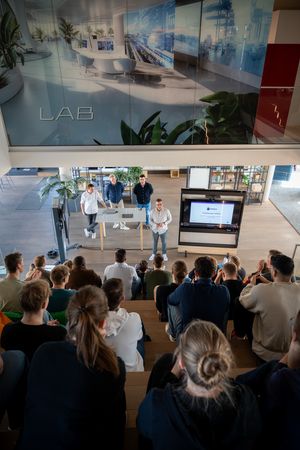
On March 27, 2025, the GENIUS project group shared its exciting final results on the integration of generative AI into business processes at abat in Bremen. The event was a wonderful example of how academic research can lead to practical applications.
At the heart of the project is an innovative digital assistant that uses both commonly available and company-specific data, all in compliance with data protection guidelines. The implemented RAG (Retrieval Augmented Generation) technology ensures that even complicated queries about internal documents or company guidelines can be answered precisely. In their final presentation, the students not only addressed the technical architecture — from data connections and vectorization models to large language models — but also placed particular emphasis on practical effectiveness. They talked about how AI agents are used in the real world, how to make ranking procedures more effective, and security ideas to make it easy to integrate it into the systems we already have.
Everyone was really interested, the exchange was lively, and it was clear that everyone was excited about the topic. If you're interested in the project and want to learn more about using generative AI in a corporate context, you're welcome to attend the final university presentation of the project group on Thursday, April 10, 2025:
Time: 1:00 p.m. - 3:00 p.m.
Room: V03 0-D002 at the University of Oldenburg.
21.02.2025: Data Challenge 2025

Once again this year, you have the chance to put your data analysis skills to the test! We cordially invite you to the Data Challenge 2025 - this time in cooperation with abat AG. Take on an exciting challenge and work on it as part of a two-week block course during the lecture-free period.
In addition to ECTS, there is also something to win! Our cooperation partner will award the best three teams with a total of €2000 in prize money, which will be divided between places 1-3. Take the opportunity to gain valuable practical experience, network with other students and win attractive prizes!
You will receive all the details about the process at our information event.
When? 15.04.2025, 1:00 pm
Where? A04 3-319 (meeting room of the VLBA) or online for participants of Emden University of Applied Sciences
We look forward to your participation!
28.01.2025: Multiplier Event: "The Ethical Challenges of Artificial Intelligence in the Education of Adolescents"

On January 28th, our successful Multiplier Event titled "The Ethical Challenges of Artificial Intelligence in the Education of Adolescents" took place online. Over 100 interested participants attended the event, where we presented the results of our Work Package 2, "Ethics and Policy."
This event was part of the EU project AI@Smile under the Erasmus+ program. It provided a platform for discussing the ethical challenges and policies surrounding the use of Artificial Intelligence (AI) in the education of adolescents. During the event, renowned experts from various partner universities shared their research findings and analyses:
- “Desk research on the application of Artificial Intelligence in education”
Ethical guidelines on the use of AI and data in teaching and learning for educators
Manuel Torrecillas Martínez, Universidad de Alicante - “Ethical and legal aspects of gathering sensitive data from minors to apply in AI tools”
A Focus Group Report
Giovanni Zorra, BIRA - “Development of an Ethical dossier based on the findings of Activity 1 and 2 per each country of the partner universities”
Dr. Uglješa Stankov, University of Novi Sad
The presentations sparked intense discussions and provided participants with valuable insights into the ethical and legal frameworks for implementing AI in educational contexts. Special emphasis was placed on the need for clear ethical guidelines, the protection of minors' sensitive data, and country-specific challenges in implementing AI-powered educational tools.
We sincerely thank all the speakers and participants for the engaging discussions and valuable exchanges. The insights from this event will contribute to the further developments of our project and help in creating ethically grounded solutions for the use of AI in education.
23.01.2025: In-Person Kickoff Meeting EduAid


This meeting marked the official start of the Erasmus+ program, and it was a significant milestone for the project.
The event was attended by 12 official project partners from across Europe, representing a diverse group from Spain, Portugal, Netherlands, France, Italy, Serbia, and Germany. The collaborative interactions between these partners were truly fruitful, and we had meaningful discussions about the direction and goals of the project.
The project officially began on November 1st, 2024, and is set to run for three years, concluding on October 31st, 2027. We are proud to have University of Oldenburg as the coordinator for this initiative, with Prof. Dr. Jorge Marx Gómez leading the project as the coordinator. He expressed his excitement and commitment to being a part of this impactful project.