
Lectures
Lectures
There is an infinite amount to explore in the world. This year at the KinderCampus you can find out how birds keep finding their way, how we learn a language and why we should fly to the moon. Three exciting lectures await you in the Audimax - our largest lecture theatre. Please register for the individual dates. The lecture theatre belongs only to you children. If the events are already fully booked, it's still worth dropping by. There may still be a place available. The lectures will be broadcast in the library lecture theatre. Your accompanying adults and siblings can also follow the lectures there.
There will be three different lectures. Afterwards, the children's band "Die Blindfische" will play a short concert.
11.30 a.m. "From here to Africa and back again! How do migratory birds do it?"
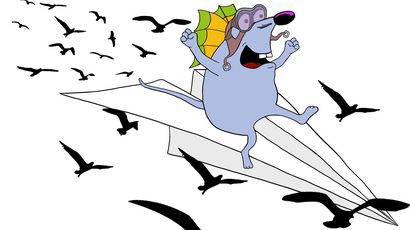
by Prof Dr Heiko Schmaljohann, Institute of Biology and Environmental Sciences
Most of us are somehow familiar with the nightingale from stories, books and tales. The birds are about the size of your hand and weigh only 20 g, the same as a lollipop. Excitingly, nightingales, like many other songbirds that breed here in summer, spend the winter in sub-Saharan Africa. What is even more exciting is that the songbirds travel all alone without their parents, siblings or conspecifics, and only at night! We will playfully find out how the birds manage to arrive at their winter quarters, what special skills they have for this and also what problems they have to overcome on their journey.
1.30 pm "How does language get into your head?"
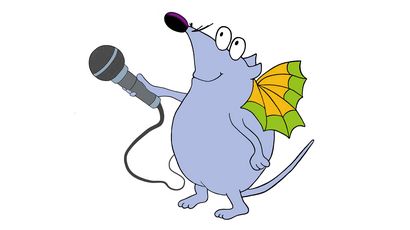
by Prof. Dr Esther Ruigendijk, Institute of Dutch Studies
Everyone has a language, whether it is German, Dutch, Arabic, Ukrainian or sign language. But where does it actually come from and how do we learn language? Babies make noises, but they don't speak. By the age of four or five, most children can already speak a lot. Often even in more than one language. As adults, it is really difficult to learn another language. So how is it that children can do this so quickly and so well? This is a question that has long occupied scientists. Children seem to be very special linguistic geniuses and it is very exciting to investigate this.
3.00 pm "Who wants to fly to the moon?"
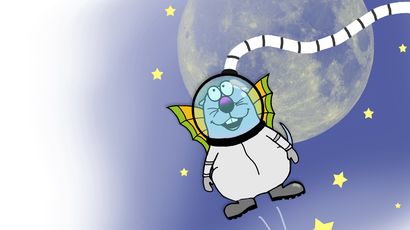
by Prof Dr Andreas Engel, Institute of Physics
Our Earth is surrounded by space, in which there are an immeasurable number of stars, planets, asteroids and gas clouds. Most of them are very far away from us. However, some are also close to us, such as the moon. A normal commercial aeroplane could reach it in about two weeks. However, aeroplanes are not suitable for flying to the moon. But how do you get there? And when you arrive, can you just get out and walk around? No, that's not so easy either. So why go there at all? There are a number of good reasons for this. What are they? You'll find out in the lecture.