

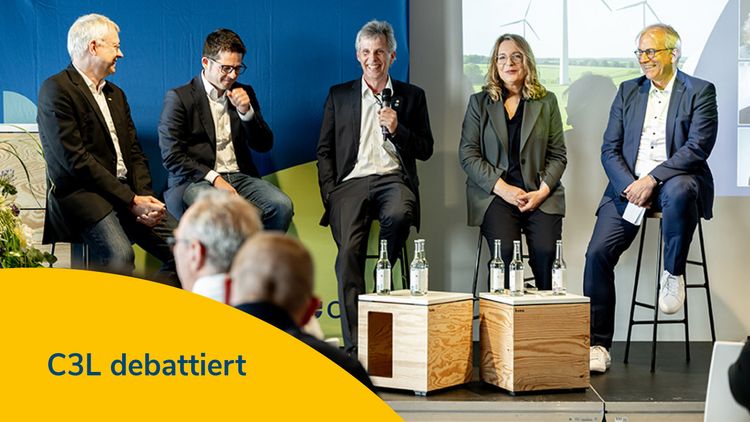

With rising energy prices, ambitious climate targets and geopolitical tensions, our energy future is being put to the test. Lower Saxony, in particular, as Germany’s leading energy-producing region, plays a key role in this: with its strong position in renewable energy and as a central hub for infrastructure, it will help determine the success of the energy transition. But who will ultimately bear the costs of this transformation – the private sector, the state or society? And how can Lower Saxony’s special responsibility be reconciled with economic competitiveness and social justice?
The event will present the pros and cons of key issues in the form of a structured debate and enable the audience to gain a deeper understanding of the facts surrounding the energy transition through integrated masterclasses.
Programme

from 1.00 pm: Arrival and check-in
1.30–2.00 pm: Welcome and opening address by Tim Zentner, Managing Director of C3L
Opening remarks by
- Prof. Dr Sebastian Lehnhoff, University of Oldenburg, OFFIS e.V., Chair of the TEN.efzn Steering Committee
Roland Hentschel, City of Oldenburg, OLEC e.V.
2.00–2.45 pm: Show debate on the question:
Should current security of supply take precedence over mitigating long-term climate impacts?
with students from the Hamburg and Münster debating societies
15:00–16:00: Parallel masterclasses on the following topics:
Masterclass 1:
Electricity on demand: What security of supply really means in the age of renewables
Dr Marius Buchmann, EERA consulting GmbH
The energy transition is fundamentally changing the electricity system. Periods of low wind and low sunlight make it clear that renewable energies alone cannot guarantee security of supply. This masterclass examines the four key components of a resilient system: firstly, the electricity grid as the physical backbone, which is facing its biggest ever modernisation, requiring several hundred billion euros in investment. Secondly, controllable power stations – in particular H₂-capable gas-fired power stations – as an indispensable backup in a system dominated by renewables. Thirdly, battery storage, whose rapid fall in price is opening up new possibilities without overcoming the physical limitations of seasonal storage. Fourthly, demand flexibility through smart consumers, variable tariffs and dynamic grid charges – the sleeping giant of the energy transition. Markets link these building blocks as a coordination and investment mechanism. Security of supply is achievable – but it won’t happen by itself.
|
Masterclass 2:
Hydrogen as a building block of a resilient energy system
Dr.-Ing. Geert Tjarks, EWE HYDROGEN GmbH
The debate on the hydrogen market in Germany has its roots in climate policy – yet its importance for security of supply is often underestimated. In an energy system increasingly characterised by volatile renewable energy sources, hydrogen plays a central role in the storage, transport and temporal decoupling of energy supply and demand. Hydrogen storage, in particular, enables the seasonal storage of large quantities of energy and can bridge supply gaps during periods of low solar and wind output. At the same time, hydrogen infrastructure and domestic production strengthen the resilience of the energy system and reduce geopolitical dependencies. The Master Class examines the systemic role of hydrogen across the entire value chain – from electrolysis and imports, through transport and storage, to its use in industry and power stations – and discusses the contribution hydrogen can make to security of supply in the energy transition. |
Masterclass 3:
The energy system of the future: between progress and the need for political action
Dr Alexander Bedrunka, Lower Saxony Climate Protection and Energy Agency
A mission statement for the energy system of the future is important because it provides guidance for all stakeholders. It defines goals and values and offers a framework for a sustainable, secure and affordable energy supply. It also promotes cooperation between the political sphere, business, academia and society, and ensures balanced development from an environmental, economic and social perspective. As part of the Master Class, a mission statement will be presented on the basis of key propositions. Project examples demonstrate that the transformation is already underway and highlight where further action is needed. |
Masterclass 4:
Shaping energy justice
Dr Sophie Berg, University of Oldenburg
This masterclass explores the vision of a just energy system. Using the example of offshore wind expansion as part of the energy transition, the perspectives and ideas of various societal stakeholders will be discussed. How can effective solutions be designed for the energy transition that ensure distributive justice, procedural justice and recognition justice? Offshore wind provides a good example for illustrating the complexity of the energy transition. The majority of offshore wind development takes place far out at sea and is barely visible, if at all, from land. Nevertheless, the regions along the North Sea coast are affected by its impacts. Cable landings, grid expansion, as well as harbour extensions and infrastructural changes encroach upon natural and social habitats, which must be negotiated in light of a wide variety of objectives and values. It is not uncommon for climate protection and nature conservation, in particular, to find themselves in conflict with one another in this context. In the Master Class, participants will learn about various aspects of energy justice and will jointly develop and discuss different visions for a just energy transition. |
4.30–5.30 pm: Fishbowlexpert discussion ‘Clean energy and global security – the right to a good and just future’
- Dr Alexander Bedrunka, Lower Saxony Climate Protection and Energy Agency
- Dr Sophie Berg, University of Oldenburg
- Dr Marius Buchmann, EERA consulting GmbH
- Bärbel Heidebroek, President of the German Wind Energy Association
- Roland Hentschel, City of Oldenburg, OLEC e.V.
Dr Geert Tjarks, EWE HYDROGEN GmbH
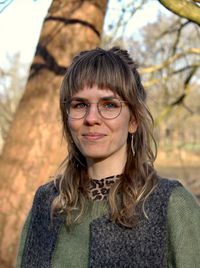
moderated by Greta Stangner, freelance journalist and presenter
5.30–6.00 pm: Advanced scientific training for specialists and managers on the energy transition in Lower Saxony, Dr Ruggero Capperucci, efzn ACADEMY, C3L
From 6.00 pm: Networking and discussion
Who is this event aimed at?
The event is aimed at
- Experts from business, academia and politics who are actively shaping the energy transition
- Alumni and participants of previous C3L further education programmes in the field of energy and sustainability
- Anyone interested in finding out about current developments and future prospects.
You can find the full programme here.
Our partners and sponsors
 |  |  |  |  |
|---|
 |  |  |  |
|---|