-
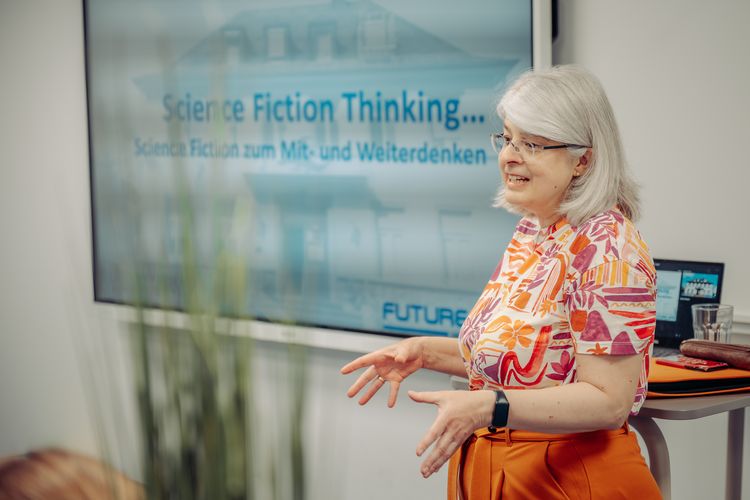
Klaudia Seibel leitete den Workshop für Studierende. University of Oldenburg / Marcus Windus
-
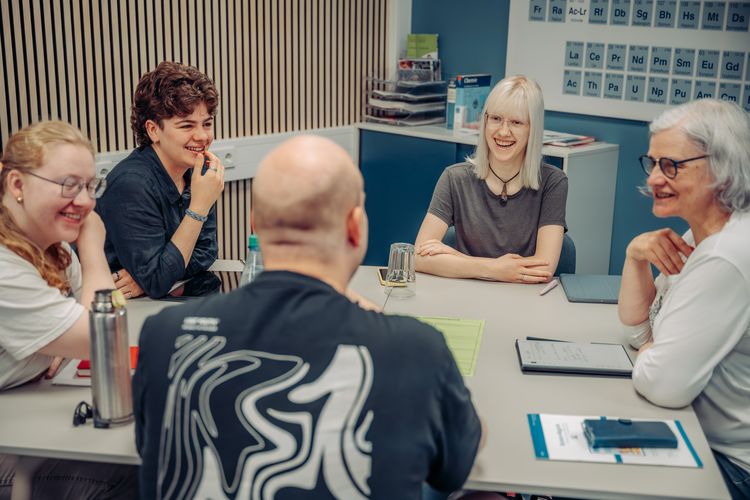
Gemeinsam Zukunftsszenarien entwickeln: Kursteilnehmer*innen des Workshops „Science Fiction Thinking" University of Oldenburg / Marcus Windus
-
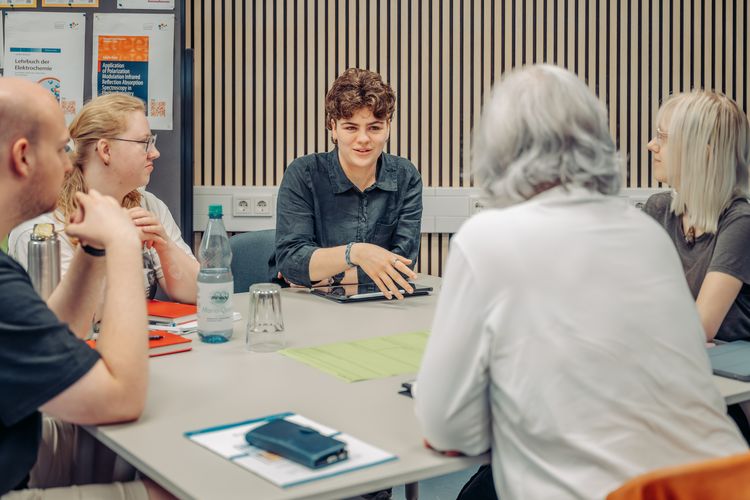
Gemeinsam Zukunftsszenarien entwickeln: Kursteilnehmer*innen des Workshops „Science Fiction Thinking" University of Oldenburg / Marcus Windus
-
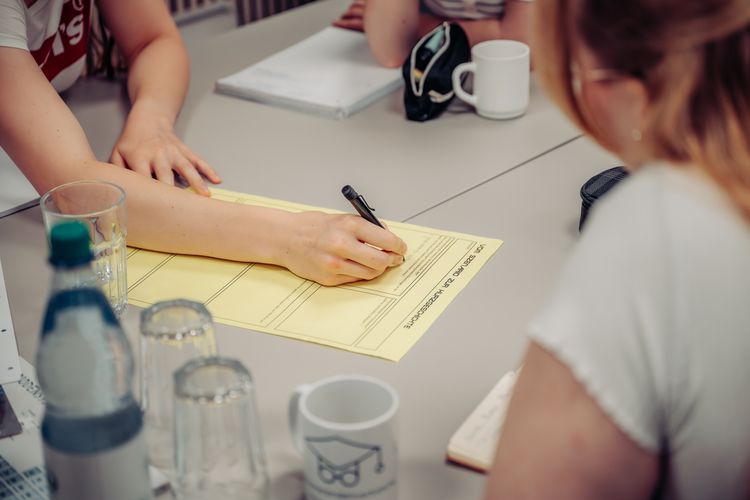
Presentation Skills; Course V, IfC, Workshop: ‘Writing Fictional Short Stories’. 19 June 2026 University of Oldenburg / Marcus Windus
-
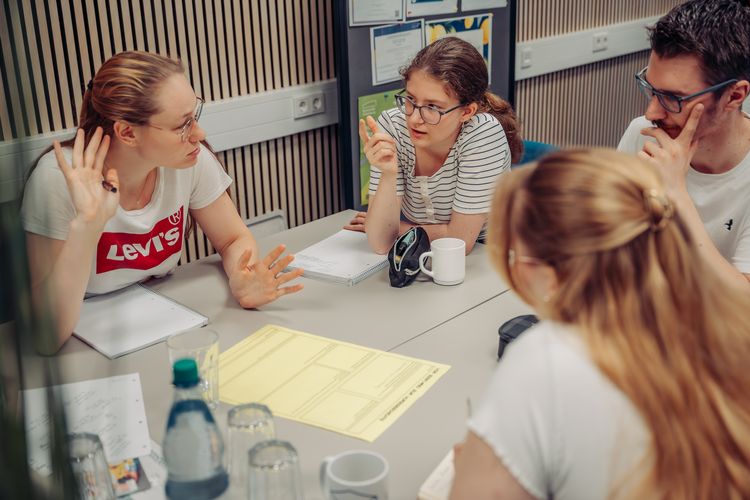
Gemeinsam Zukunftsszenarien entwickeln: Kursteilnehmer*innen des Workshops „Science Fiction Thinking" University of Oldenburg / Marcus Windus
-
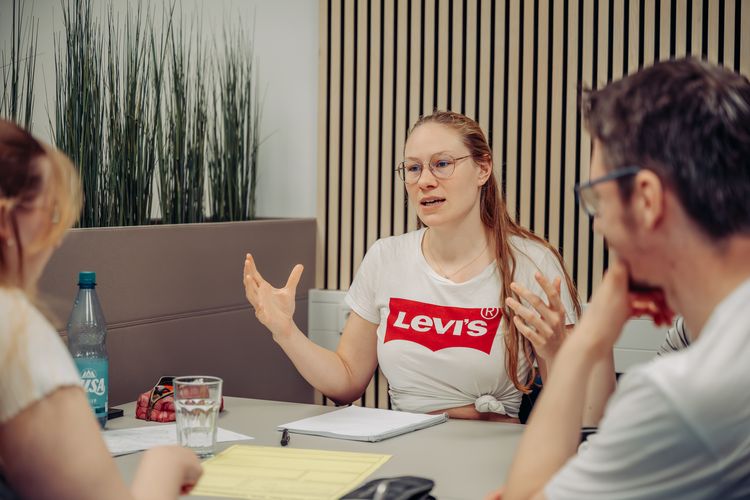
Gemeinsam Zukunftsszenarien entwickeln: Kursteilnehmer*innen des Workshops „Science Fiction Thinking" University of Oldenburg / Marcus Windus
„Science Fiction Thinking“- Workshop für Studierende
On the 19th of June, an innovative workshop for students was organised and held at the Institute of Chemistry. The workshop was organised by Prof. Dr. Katharina Al-Shamery, Professor of Physical Chemistry, who has been delivering the thermodynamics lecture this academic year, and was led by Klaudia Seibel, a graduate in English Studies and Head of Department at the Phantastische Bibliothek Wetzlar. Klaudia Seibel introduced students to the world of science fiction texts and sent them on a journey of discovery into the realms of possibility within scientific endeavour. The workshop focused on active experimentation. Students were specifically prepared to use complex phenomena – such as the laws of thermodynamics – as the foundation for their own fictional short stories.
Science is based on and relies on facts—but to shape the future, it also needs imagination.
For Prof. Katharina Al-Shamery, formats such as the “Science Fiction Thinking” workshop are standard features of vibrant and forward-looking science communication.
While developing short story scenarios, the participants learned just how strongly today’s research can influence tomorrow’s reality. The writing exercise fostered a deep awareness of the responsibilities—but also the fascinating opportunities—inherent in research work. The participants left the room not only with their own initial drafts but, above all, with a keener sense of the social relevance of their work.
For Prof. Katharina Al-Shamery, it was a great pleasure to plan this workshop, actively help shape it, and participate in it herself—especially because the students’ enthusiasm and obvious enjoyment of the creative work were contagious!
The method of “Science Fiction Thinking” serves as a tool, methodology, and way of thinking for scientists, utilizing narratives and concepts from science fiction literature to imagine alternative futures. Instead of relying solely on data-driven predictions, radical ideas, technologies, and societal models are explored to shape innovation, strategic planning, and transformation processes in the real world. Through this creative approach, the often abstract theories of science are translated into vivid scenarios.


