
Climate Action Fund

Climate Action Fund
A climate action fund was established at the University on 1 January 2025. The additional funds in the fund are intended to finance the implementation of climate action and sustainability measures at the University of Oldenburg. The fund is financed by revenue from the CO2 levy, which is levied on air travel. Decisions on how the funds are to be used will be made anew each year through a participatory process.
Background to the CO2 surcharge
On 1 January 2025, the University of Oldenburg’s policy on climate-friendly business travel came into force. In addition to regulating short-haul flights, the policy introduces a CO₂ surcharge on air travel. This surcharge is paid into an internal climate action fund. The climate action contribution is calculated during the application procedure for the business travel settlement. The statutory CO2 price per tonne (in 2025: €55 per tonne) applies as the minimum price benchmark for the surcharge. For short-haul flights covering a distance of up to 1,000 km, a flat-rate amount of €50 per flight is also charged.
Financial scope
The size of the Climate Protection Fund, and thus the financial scope for action, depends directly on the revenue from the CO2 surcharge. This, in turn, depends directly on employees’ travel habits. The CO2 surcharge is collected on an ongoing basis throughout the year. For this reason, the size of the Climate Action Fund can only be estimated in advance.
For 2025, €34,845.82 has been paid into the fund, including the doubling by the Presidential Board.
Use in 2026
The following measures were approved for funding from the 2026 CO2 levy at the Sustainability Sounding Board workshop:
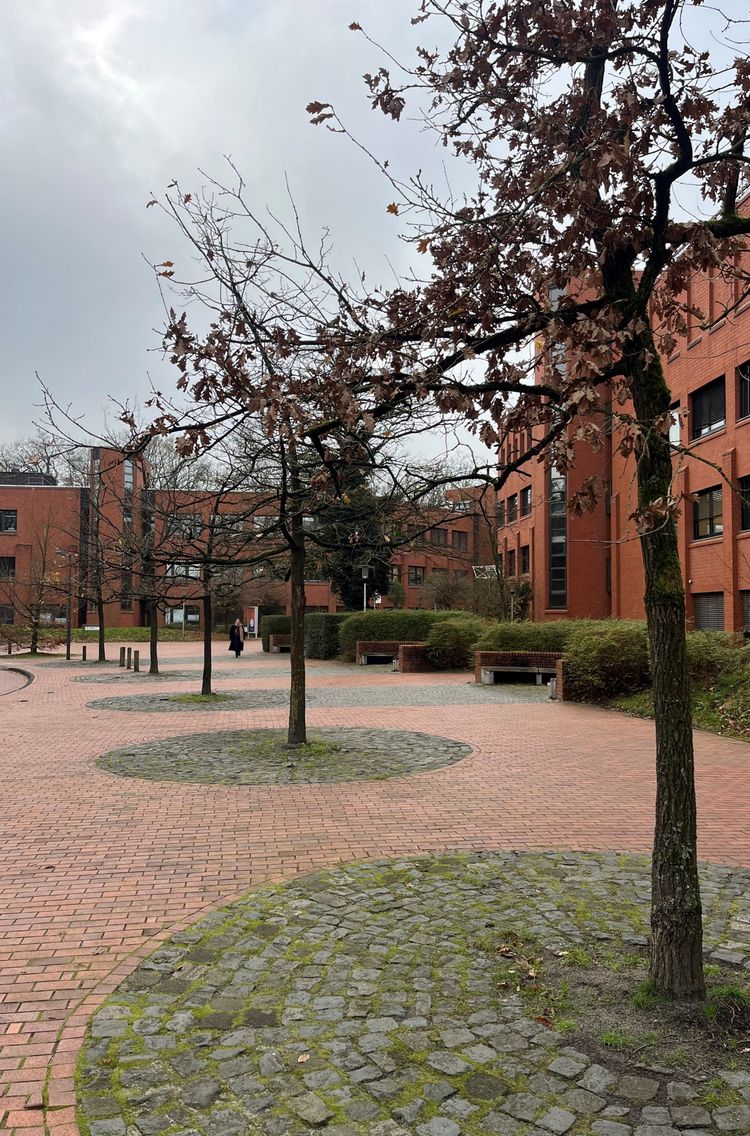
- Tree replacement at the Wechloy main entrance including unsealing
- PEOE further education programme for university employees
- Sustainable laboratories LEAF certification at the Institute of Chemistry
- Provision of nesting boxes at the Haarentor and Wechloy sites
- Repair of bicycle stand Wechloy
- Visibility of repair services (Joker suggestion)
The order of the measures represents the prioritisation in their implementation, depending on the size of the budget at the end of 2026.
Use in 2025
Key project: Campus bikes
Funds from the Climate Action Fund for 2025 will be allocated entirely to the purchase of service bicycles. As many bicycles as possible, and in some cases cargo bikes, are to be procured on a decentralised basis within the organisational units and the central vehicle fleet. The university-wide call for tenders in spring 2026 met with a pleasingly high level of interest. The bikes are now to be purchased by the departments by summer 2026.
More information on campus bikes
The stakeholder workshop on the intended use of the 2025 funds concluded that the Climate Action Fund should primarily be used this year to support everyday mobility. The introduction of (decentralised) job bicycles was given the highest priority.
A say in how the funds are used
As the CO₂ surcharge – and thus the Climate Action Fund – is generally financed from decentralised budgetary resources, staff should have the opportunity to help shape how these funds are used. The results from the participatory formats are subsequently summarised by Climate Action Management and submitted to the Presidential Board or the Vice-President for Administration and Finance for a final decision. To date, the measures developed have been adopted by the Presidential Board exactly as they were drawn up by the participants.
2025
On 13 March 2025, the first workshop was held to determine how the 2025 funds would be allocated. Participants from various departments across the university first developed the criteria against which decisions on the implementation of measures would be assessed. The group opted for ‘effectiveness’ and ‘access for all university members’. In addition to proposals for greening buildings and financial support for the Green Team, measures relating to cycling mobility were the main focus.
The results of the workshop were compiled by the Climate Action Management team. At the meeting on 1 April 2025, the Presidential Board approved the use of the Climate Action Fund for the measures as developed in the workshop.
2026
The use of funds from 2026 was discussed at the Sustainability Sounding Board. In the “Wi$h List” workshop, participants from various areas of the university were able to discuss and rank proposed climate action management measures. They also had the opportunity to put forward their own suggestions. For the final vote, participants were able to use play money equivalent to the estimated value of the actual fund to evaluate and prioritise the measures.
The final list of measures has been approved by the Vice-President for Administration and Finance and can now be implemented.