DiOLL on the ear (Podcast)
DiOLL on the ear (Podcast)
Digitalisierung, informatische Kompetenzen, Lehrkräftebildung - im Bildungskontext gibt es heutzutage einige wichtige Aspekte zu bedenken. „DiOLL aufs Ohr“, ein Podcast des Projekts Digitalisierung in der Oldenburger Lehrerinnen- und Lehrerbildung (DiOLL), bringt Licht ins digitale Dunkel. Hierbei werden mit verschiedenen Akteur:innen des Bildungssektors spannende Themen aus den Bereichen Digitalisierung und Bildung diskutiert sowie Konzepte und Ideen vorgestellt.
Sie haben Themenvorschläge oder möchten selbst etwas bei uns vorstellen? Sprechen Sie uns gerne an! Übrigens sind die Podcastfolgen auch auf Spotify, Google Podcasts, Apple Podcasts und RadioPublic zu finden.
-

In the first episode, Alina Großmann and Karen Vogelpohl from the DiOLL project talk to the initiators of kits.blog, a project for language education with digital media. Tim Krieger and Timo Ihrke present their work and explain how consistent language education with digital media can succeed today, what it takes and how the whole thing can be implemented profitably and, above all, with a low threshold. kits.blog will even support you with your project idea! How? - Have a listen! Music in the intro and credits: Microship by CavalloPazzo is licensed under an Attribution-ShareAlike Licence. -
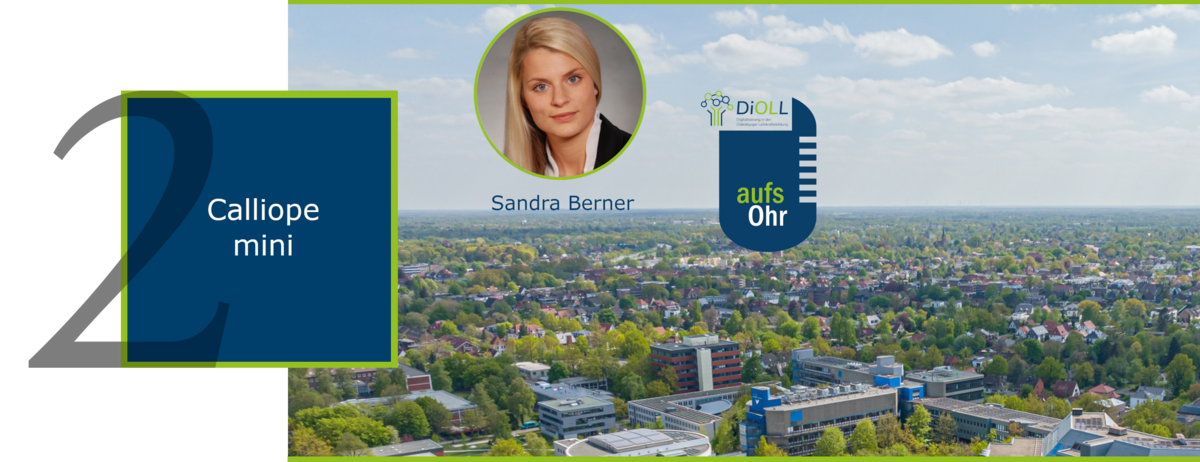
In the second podcast episode, Sandra Berner and Nadine Dittert from the DiOLL project share their experiences of working with the Calliope mini microcontroller. They give an insight into their previous work with primary school pupils and secondary school pupils and also discuss working with microcontrollers from a scientific perspective. You can listen to the opportunities, challenges and tips that the scientists have identified when working with the Calliope mini here! Music in the intro and credits: Microship by CavalloPazzo is licensed under an Attribution-ShareAlike Licence. -
The current podcast episode deals with questions about data protection in the school context. Ira Diethelm and Karen Vogelpohl from DiOLL talk to Barbara Thiel, State Commissioner for Data Protection in Lower Saxony, and Stefan Mörschel, Data Protection Officer at schools, universities and local authorities. The data protection professionals answer specific questions about data protection in schools and provide recommendations for practical everyday school life, for example in dealing with declarations of consent, the recording and publication of images and sound from lessons or data protection risks for teachers. Music in the intro and credits: Microship by CavalloPazzo is licensed under an Attribution-ShareAlike Licence. -
The current podcast episode is about everyday tips on technical data protection for teachers. Ira Diethelm talks to Peter Leppelt, an expert in data security and technical data protection. In a relaxed conversation, Peter Leppelt gives tips on what you can and should set on your own devices to increase the security of your data on your private devices and that of your students on your work devices. Topics include phishing, emails, encryption, browsers, ad blockers, tracking, the Tor browser and the darknet. Music in the intro and credits: Microship by CavalloPazzo is licensed under an Attribution-ShareAlike Licence. -
In the fifth episode, Alina Großmann from the DiOLL project talks to Heidi Hallier-Haselmann about the use of Instagram as a textbook. Heidi explains how she uses Instagram in her subjects as a teacher, what advantages the medium offers for teaching and what skills it can promote on the part of the learners. She also gives practical tips on how social media can be used profitably in the classroom and what needs to be considered when doing so. Take a listen and get some inspiration for your lessons! Music in the intro and credits: Microship by CavalloPazzo is licensed under an Attribution-ShareAlike Licence. -
In the sixth podcast episode, Nadine Dittert talks to media educator Anja Roß about podcast production in the classroom. In a relaxed conversation, they talk about what is special about podcasts, why they have become an integral part of young people's lives and how the production of podcasts can be meaningfully integrated into lessons. The discussion will also cover media skills, free audio editing programmes and downloading royalty-free music. The question is also whether podcasts can also be produced in PE lessons and if so, how? Listen for yourself and be inspired! Music in the intro and credits: Microship by CavalloPazzo is licensed under a Attribution-ShareAlike. -
In the seventh episode of the podcast, Timo Feierabend talks to his physics and maths colleague Mario Reimer about 3D printing in schools. After a brief technical introduction, the two talk about the many possible applications in lessons and extracurricular projects. Mario explains how he came to 3D printing and how intensively he now works with the 3D printer. Of course, the two also talk about limitations and problems. Finally, Mario naturally presents his favourite projects. If you are curious about 3D printing, then listen in! Music in the intro and credits: Microship by CavalloPazzo is licensed under an Attribution-ShareAlike Licence. -
In the eighth episode, Kirsten Gronau and Karen Vogelpohl from the DiOLL project talk to Tim Krieger and Jannik Streek from kits.blog (Kompetent in Technik und Sprache) about OER (Open Educational Resources) and open source in schools. Kits.blog is funded by the NLQ (Lower Saxony's State Institute for School Quality Development) and follows an OER and open source strategy in the development of its applications. In this episode, you can find out exactly what this looks like and what advantages and disadvantages OER and open source have for teachers. Music in the intro and credits: Microship by CavalloPazzo is licensed under an Attribution-ShareAlike Licence.


Episode 1: Language education with digital media
In the first episode, Alina Großmann and Karen Vogelpohl from the DiOLL project talk to the initiators of kits.blog, a project for language education with digital media. Tim Krieger and Timo Ihrke present their work and explain how consistent language education with digital media can succeed today, what it takes and how the whole thing can be implemented profitably and, above all, with a low threshold. kits.blog will even support you with your project idea! How? - Have a listen!
Music in the intro and credits: Microship by CavalloPazzo is licensed under an Attribution-ShareAlike Licence.
Episode 2: Calliope mini
In the second podcast episode, Sandra Berner and Nadine Dittert from the DiOLL project share their experiences of working with the Calliope mini microcontroller. They give an insight into their previous work with primary school pupils and secondary school pupils and also discuss working with microcontrollers from a scientific perspective. You can listen to the opportunities, challenges and tips the scientists have identified when working with the Calliope mini here!
Music in the intro and credits: Microship by CavalloPazzo is licensed under an Attribution-ShareAlike Licence.
Episode 3: Data protection in schools
The current podcast episode deals with questions about data protection in the school context. Ira Diethelm and Karen Vogelpohl from DiOLL talk to Barbara Thiel, State Commissioner for Data Protection in Lower Saxony, and Stefan Mörschel, Data Protection Officer at schools, universities and local authorities. The data protection professionals answer specific questions about data protection in schools and provide recommendations for practical everyday school life, for example in dealing with declarations of consent, the recording and publication of images and sound from lessons or data protection risks for teachers. Music in the intro and credits: Microship by CavalloPazzo is licensed under an Attribution-ShareAlike Licence.
Episode 4: Technical data protection
The current podcast episode is about everyday tips on technical data protection for teachers. Ira Diethelm talks to Peter Leppelt, an expert in data security and technical data protection. In a relaxed conversation, Peter Leppelt gives tips on what you can and should set on your own devices to increase the security of your data on your private devices and that of your students on your work devices, including phishing, emails, encryption, browsers, ad blockers, tracking, the Tor browser and the darknet. Music in the intro and credits: Microship by CavalloPazzo is licensed under an Attribution-ShareAlike Licence.
Episode 5: Instagram as a textbook
In the fifth episode, Alina Großmann from the DiOLL project talks to Heidi Hallier-Haselmann about the use of Instagram as a textbook. Heidi explains how she uses Instagram in her subjects as a teacher, what advantages the medium offers for teaching and what skills it can promote on the part of the learners. She also gives practical tips on how social media can be used profitably in the classroom and what needs to be considered when doing so. Take a listen and get some inspiration for your lessons! Music in the intro and credits: Microship by CavalloPazzo is licensed under an Attribution-ShareAlike Licence.
Episode 6: Producing podcasts in the classroom
In the sixth podcast episode, Nadine Dittert talks to media educator Anja Roß about podcast production in the classroom. In a relaxed conversation, they talk about what is special about podcasts, why they have become an integral part of young people's lives and how the production of podcasts can be meaningfully integrated into lessons. The discussion will also cover media skills, free audio editing programmes and downloading royalty-free music. The question is also whether podcasts can also be produced in PE lessons and if so, how? Listen for yourself and be inspired!
Music in the intro and credits: Microship by CavalloPazzo is licensed under an Attribution-ShareAlike Licence.
Episode 7: 3D printing at school
In the seventh episode of the podcast, Timo Feierabend talks to his physics and maths colleague Mario Reimer about 3D printing in schools. After a brief technical introduction, the two talk about the many possible applications in lessons and extracurricular projects. Mario explains how he came to 3D printing and how intensively he now works with the 3D printer. Of course, the two also talk about limitations and problems. Finally, Mario naturally presents his favourite projects. If you are curious about 3D printing, then listen in! Music in the intro and credits: Microship by CavalloPazzo is licensed under an Attribution-ShareAlike Licence.
Episode 8: OER and Open Source
In the eighth episode, Kirsten Gronau and Karen Vogelpohl from the DiOLL project talk to Tim Krieger and Jannik Streek from kits.blog (Kompetent in Technik und Sprache) about OER (Open Educational Resources) and open source in schools. Kits.blog is funded by the NLQ (Lower Saxony's State Institute for School Quality Development) and follows an OER and open source strategy in the development of its applications. In this episode, you can find out exactly what this looks like and what advantages and disadvantages OER and open source have for teachers. Tips for further reading
Links to OER:
OER strategy - BMBF
OER-Wordpress
OER-Twillo
OER-Hoou
Links for source code: Mindwendel , Kitsteam , Jannik Streek
Miscellaneous:
Strategy paper on education in the digital world
WirLernenOnline
Music in the intro and credits: Microship by CavalloPazzo is licensed under an Attribution-ShareAlike Licence.