
Prof. Dr. Schüler
Prof. Dr. Schüler
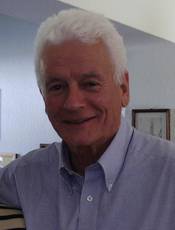
Professor of Empirical Economic Research and Econometrics
Email:
School II - Computing Science, Economics and Law
Department of Computing Science, Economics and Law
University of Oldenburg
Professor of Empirical Economic Research and Econometrics
P.O. Box 5634
26046 Oldenburg
Mission statement
Empirical economic research and econometrics have made it their mission to bridge the gap between economic theory and reality. At the beginning of this century, this task was initially carried out mainly outside the universities in newly founded empirical economic research institutes. These analysed current economic problems - usually in the form of state-funded contract research -, prepared forecasts of economic developments and advised decision-makers on how to intervene in the development process. With the reform of the higher education system, the methods and procedures developed by empirical economic research increasingly found their way into the job descriptions and curricula of some universities. The professorship for Empirical Economic Research and Econometrics at the University of Oldenburg was filled for the first time in 1981
Subject matter
The basic concerns of the subject area are taught to all students as part of the compulsory subject (general) Economics for Magister, Diplom and teacher training students in the undergraduate and postgraduate programmes. They learn about the scientific theoretical foundations of empirical work, deal with the collection and processing of economic data and become familiar with the simple methods of empirical economic research (regression analysis, time series methods) as well as their institutions (economic research institutes, Council of Economic Experts, etc.). Interested students can deepen this knowledge in the compulsory elective subject Empirical Economic Research and Econometrics. In particular by learning econometric methods for estimating and testing economic relationships and familiarising themselves with computer programmes to support empirical research work.
Research |
In the field of empirical economic research, there are currently two focal points in Oldenburg: firstly, the development, estimation, analysis and application of a macroeconomic model with a sectoral breakdown of production for the German economy on the basis of empirically estimable productivity gap structures ("vintage" models); secondly, an MIT model of the Indian economy was modified in cooperation with employees of the Indian National Council of Applied Economic Research. This model was used to investigate the effects of the liberalisation policy there on employment, production and distribution. The project was carried out together with Dr Khushi Khan from the German Überseeinstitut Institute in Hamburg.
Cooperation with Prof Wang Tongsan from the Chinese Academy of Social Sciences (CASS) and academics from Tsinghua University in Beijing and SMU University in Shanghai began in 2000, with five young Chinese academics completing their doctorates at the EWF in Oldenburg on topics relating to European-Chinese economic relations.Since 2002, a co-operation project has been carried out with the Normal University in Wuhu / China, the main component of which to date has been an adaptation of "Economics Education Online" for the training of young Chinese academics, funded by the MWK Lower Saxony.
Publications
| Dankwerts, R-F., Goldrian, G., Schäfer, H., Schüler, K., Seasonal Adjustment Using the ASA-II Method, 1970, Essen, in: Bulletin of the Rhineland-Westphalian Institute for Economic Research, Schüler, K., The Problem of the Full Employment Guarantee, Expert report commissioned by the Commission for Economic and Social Change, IFO Institute, Munich 1975 |
Hillinger, C., Schüler, K., Macroeconomic Models of the Business Cycle, 1997, Tübingen, in: Albach, H. (ed.): Quantitative Economic Research – Wilhelm Krelle on his 60th Birthday, pp. 321–344 |
Ketterer, K.-H., Schüler, K., An Explanation of Cyclical Share Price Movements from the Perspective of Modern Monetary Theory, 1976, Munich, in: Contributions to Share Analysis, pp. 5–18 |
| Schüler, K., Regional Data and Territorial Changes (with Werner Hahn), 1975, Munich, in: Ifo Studies, pp. 119–172 Schüler, K.W., Economic Growth in the Federal Republic of Germany – A Test of the ‘Learning-by-doing’ Hypothesis, Berlin–Munich 1980 |
Schüler, K., The Effects of Investment-Induced Technological Progress on Macroeconomic Growth, 1978, Munich, in: Ifo Studies, pp. 43–106 |
Schüler, K., New Paths to Full Employment: A Discussion of a Book by H.-J. Rüstow, 1985, Munich, in: Ifo Studies |
Schüler, K., ‘Results of Privatisation and Liberalisation’, 1988, Frankfurt, in: Gewerkschaftliche Praxis, supplement to issue 5 |
| Schüler, K., Employment Prospects in the GDR, 1991, Marburg, in: Backhaus, J. (ed.): How Do Systems Change? – Theory and Experience |
| Schüler, K., (in collaboration with W. von Bülow, K. Khan, German Overseas Institute, Hamburg, and A. Sinha, NCAER, New Delhi): Macroeconomic Effects of India’s Economic Liberalisation on Growth and Foreign Trade, 1997, Research Report to the Volkswagen Foundation Schüler, K.W., On the Competitiveness of Developing Countries, in W. von Bülow et al., Globalisation and Economic Policy, Marburg 1999 Schüler, K.W., Wage Restraint and Economic Development, in KH-G, Oldenburg 2000 Schüler, K.W., Macroeconomic Productivity Differentials and Balanced Regional Development, Chongqing 2000 |