
The rock carvings of Valcamonica
The rock carvings of Valcamonica
The rock carvings of Valcamonica - by Mathias Müller



The rock carvings of Valcamonica - by Mathias Müller
Monday, 2 May 2016
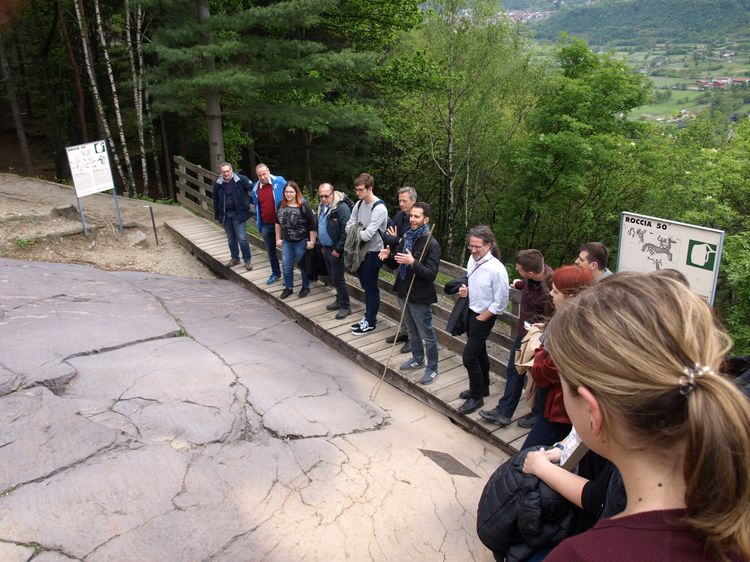
Valcamonica, a valley in the Italian Alps crossed by the River Oglio, is home to a large number of diverse and widely distributed rock carvings that have been recognised as a UNESCO World Heritage Site. These special petroglyphs can be admired in a total of eight rock art parks scattered throughout the valley and the first stage of our excursion was a visit to one of these parks, the Parconazionale delle incisioni rupestri di Naquane near the village of Capo di Ponte, together with our Italian hosts and the other excursion group from Klagenfurt.
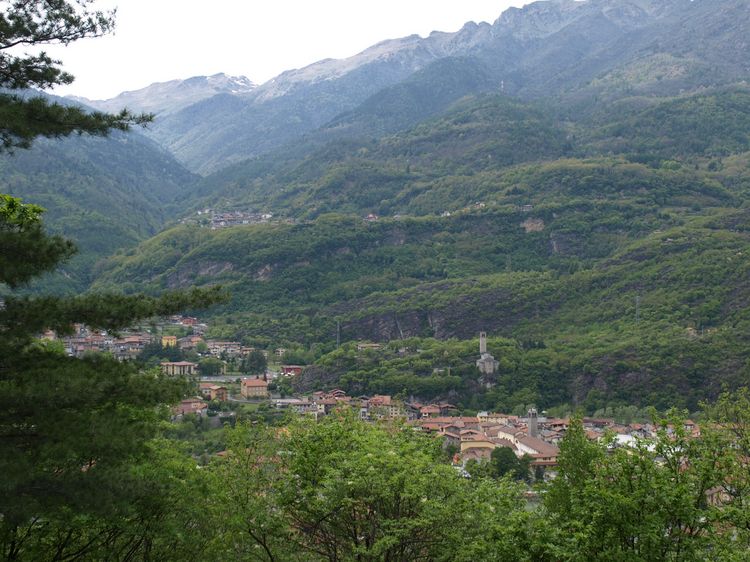
Once our bus had reached its destination, we had to walk a short distance on the outskirts of the village up to the entrance of the park. Here we were able to enjoy the view of the surrounding landscape and take it in. The imposing rock formations surrounding the valley gave a good impression of the isolation in which this area and its inhabitants may have once been, and which also formed the basis for this country's own regional culture in the distant past. The rock carvings in the valley were to bear witness to this ancient regional culture.
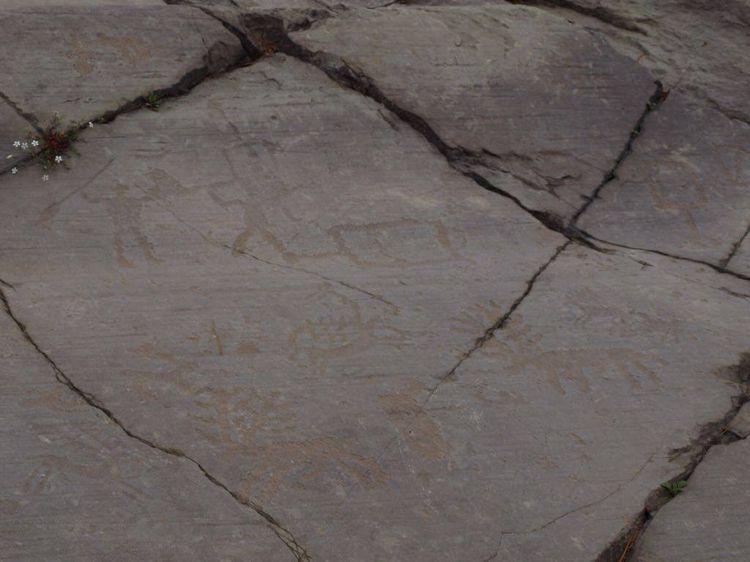
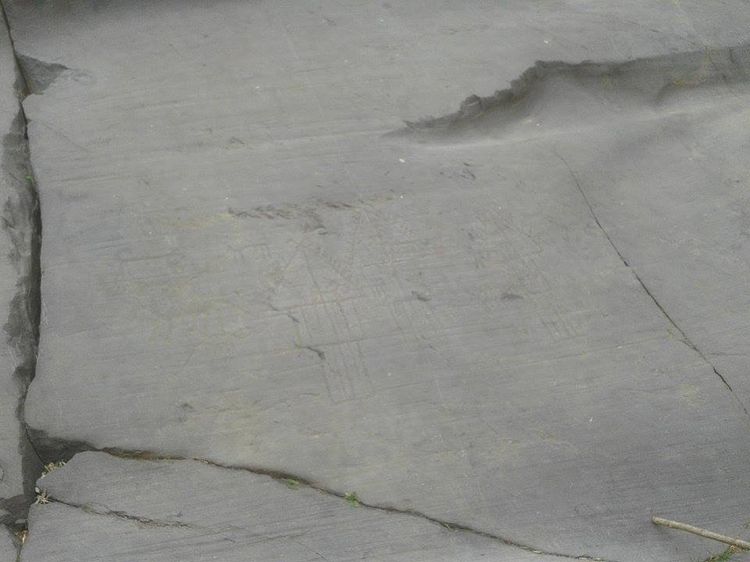
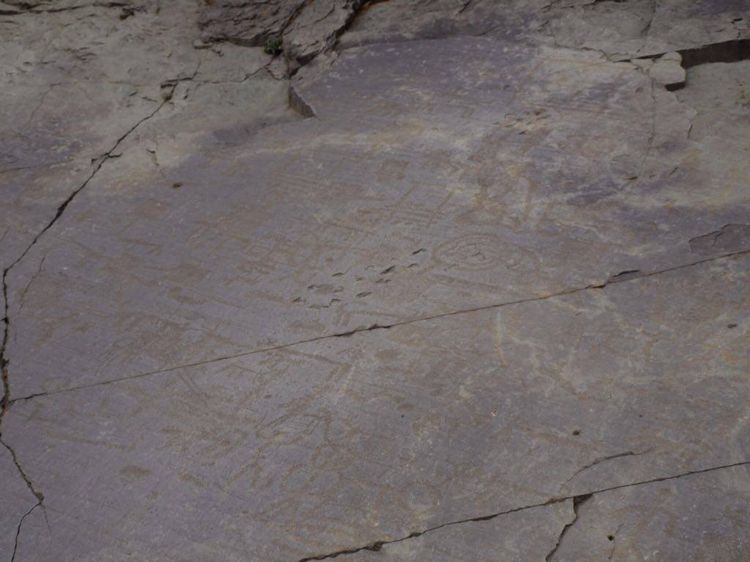
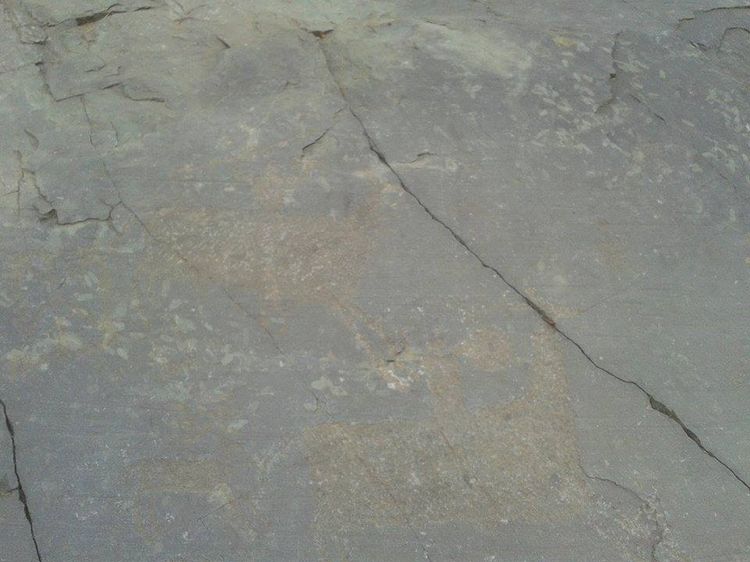
When we arrived at the park, we realised that the engravings were not always equally clear to see at first; the park's archaeologist, who was leading our tour group, pointed out that in sunlight, the diverse patterns and symbols would really shine out at the viewer; unfortunately, however, the sky was covered in clouds on the day of our visit. But after quickly learning what to look for on the smooth sandstone formations, it was still quite easy to find the corresponding images. The archaeologist's informative explanations, which were translated for us by our German-speaking lecturers, were also helpful.
It turned out that the various engravings can be dated very differently and that engravings from different periods sometimes overlap on the same stone. Overall, they were probably scratched into the dark sandstone of the Alpine foothills surrounding the valley by the local population from the end of the Würm Ice Age to the Roman Empire. Due to this temporal range, the rock carvings also provide a good insight into the cultural changes that took place in the region over the course of time, which ultimately also became tangible in the form of the Romanisation of the regional population.
Probably the earliest drawings can be interpreted as stylised depictions of people and animals. Some of the rock engravings found in Valcamonica date back to the 4th millennium BC and thus testify to the very long continuity with which the former inhabitants of the valley practised scratching depictions into the rock of the area.
However, the vast majority (80%) of the engravings date from the Iron Age or the period from the 8th century BC to the first century AD. This main group of rock carvings includes many large-scale hunting scenes in which figures equipped with spears and bows sometimes chase large groups of animals, which can probably be interpreted as deer due to their antlers. It was pointed out to us that the depictions of these animals could possibly also be regarded as abstract representations of food in general and could therefore also be evidence of an early hunting and fertility cult.
Other engravings from the same period showed us scenes from the everyday social and economic life of the population at the time. There were drawings of houses and livestock and a horse-drawn cart could also be found on the stone.
There was also a scene that was initially difficult for us to categorise due to objects that were difficult to interpret, but which is probably a depiction of people at their looms and could therefore be interpreted as a depiction of local trades. It is quite conceivable that the people of the time not only created the rock carvings for ritual purposes, but also wanted to make their everyday life and their social and economic life tangible in the drawings and thus leave them behind for posterity. These illustrations would therefore have the character of tradition, which makes them all the more interesting for us in the study of history.
The drawings also soon included battle scenes of many figures equipped with helmets, shields and all kinds of weapons. In conjunction with the previous illustrations, this allows us to understand the picture of a multi-layered society that was probably originally focussed on hunting, but was also relatively differentiated both technically and socially and also seems to have engaged in warfare.
Another interesting rock drawing was that of a labyrinth. It is assumed that this engraving refers to the ancient myth of the Labyrinth of Minos. In this way, the rock engravings of Valcamonica are an astonishing testimony to how widespread this myth was in the ancient Mediterranean, apparently as far as the Alps.
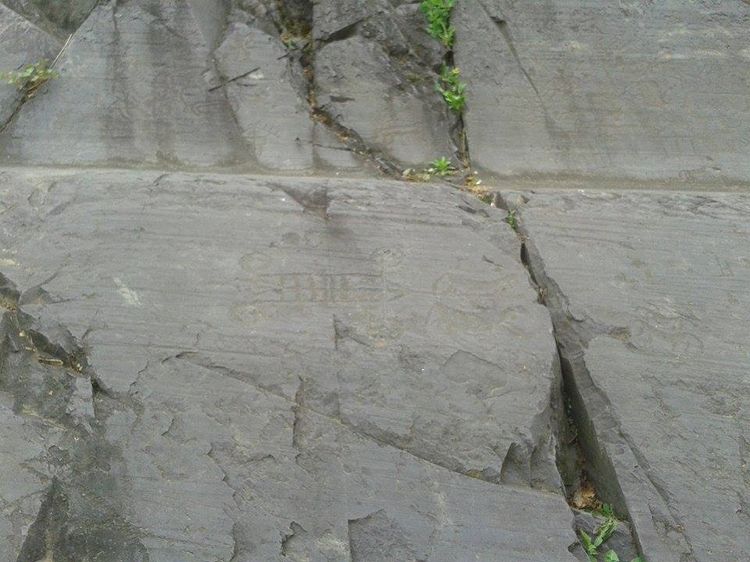
Finally, our guided tour through the rock carving park ended with the observation of an image containing the name of a person in clear Roman letters. In retrospect, this fact was already a sign of the major theme of the first stops on the excursion: the Romanisation of the northern Italian regional culture to which the petroglyphs also belong. And with the increasing Romanisation of the Valcamonica, the custom in this valley of using rock carvings as a means of cultural transmission soon disappeared.
After an exciting afternoon in a magnificent mountain setting, we finally made our way back down to our coach and headed for our next destination - our accommodation in the nearby town of Breno.