

Granite
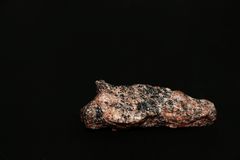
Granite
Granite
Colour, properties: | light to dark grey, yellowish, bluish, brownish or reddish, fine- to medium-grained texture (rarely coarse-grained). The different colours stem from the composition of the feldspars; the dark minerals never account for more than 20 per cent. ‘Feldspar, quartz and mica – those three I’ll never forget’ is a simple way of describing the composition of granite.
• Light-coloured minerals: 80–100 per cent Of which: Feldspars: 80–100 per cent -Alkali feldspar: 35–100 per cent -Plagioclase feldspar: 0–65 per cent
• Dark minerals: 0–20% • Minor constituents: biotite, augite, hornblende, muscovite, apatite, zircon, magnetite
Granite has high abrasion resistance and weathering resistance.
|
Formation: | Through the very slow cooling of molten rock, or magma, deep within the Earth’s crust, always overlain by massive rock layers several kilometres thick. As the overlying strata are subsequently eroded away, the granite eventually reaches the Earth’s surface. Granite occurs in large rock complexes as well as in dikes and veins. |
Locations: | Black Forest, Odenwald, Harz Mountains, Fichtelgebirge, Bavarian Forest, Ore Mountains, Central Alps, France (Vosges, Brittany), Sweden, Finland, Canada, USA (Rocky Mountains) |
Products: | Building and facing stone, decorative stone, gravestones, floor and façade slabs, paving stones and kerbstones
|