
Sub-project 1 - High-risk babies
Sub-project 1 - High-risk babies
V4 - Risk Birth Understanding, Predicting, Caring, Preventing: Immunological perspectives in the extended maternal-fetal context
The term "high-risk birth" is used to describe pregnancies for which there is an increased risk to the health of the mother, parents and/or child before, during and/or after birth. As a significant form of high-risk birth, >60,000 births per year in Germany are affected by premature birth. High-risk births represent one of the greatest challenges in medicine and their consequences are particularly relevant to society due to their medical and socio-economic consequences.
In order to prevent high-risk births or to be able to accompany their occurrence in such a way that their negative consequences can be reduced, the risk of a potential health risk occurring must be assessed at an early stage. The aim here is to better understand the complex interplay of maternal, parental and child factors as a unit and to characterise them beyond the boundaries of a single specialist discipline.
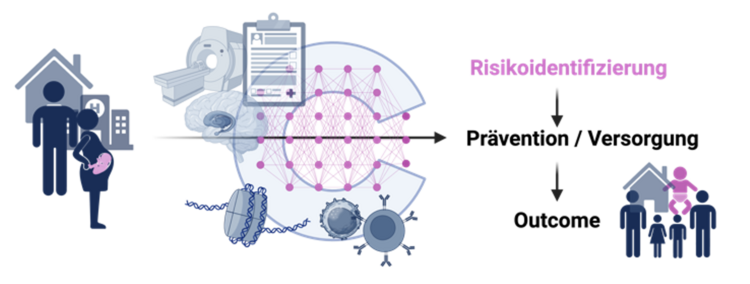
In sub-project 1 of the overall INGVER study project, we are pursuing the goal of identifying risk markers for the development of diagnostic, preventive and therapeutic strategies to improve the outcome of high-risk births in an interdisciplinary team of experts using state-of-the-art techniques. Important clinical and scientific disciplines involved in the extended "pregnancy and birth" process are included in order to integrate pre-, peri- and postnatal (epi-)genetic analyses and immune profiles into the clinical-neuropsychiatric and psychosocial phenotyped risk constellation, including image-based information using artificial intelligence methods.
In the expanded INGVER consortium, we are drawing parallels with adult and ageing patients in order to understand the significance of the identified risk factors even more comprehensively in the context of relevant immune and ageing processes.