
Department of Internal Medicine - Oncology and Haematology
Department of Internal Medicine - Oncology and Haematology
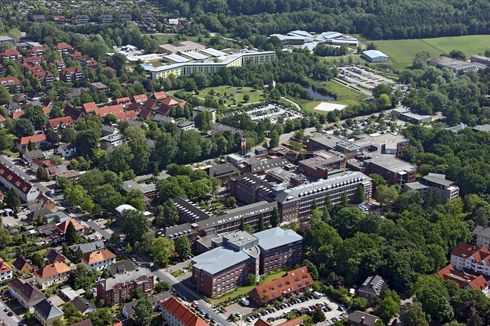
The university hospital consists of an outpatient clinic with a day clinic and three wards and treats around 1,500 patients a year. It covers all tumour and blood diseases of adulthood - with immunological, hormonal, cytostatic, CAR-T, immune and stem cell therapies. As a leading centre for clinical trials in Germany and Europe, it conducts molecularly stratified studies for patients undergoing therapy, supported by an interdisciplinary molecular tumour board and liquid biopsy diagnostics. AI is integrated into research and patient care to enable specifically tailored therapies. The clinic is a member of the Regional Tumour Centre Weser-Ems e.V. and cooperates closely with university hospitals; radiotherapy, for example, is carried out at the Pius Hospital in Oldenburg.
One focus is on translational research for young colleagues: They are intensively involved in the development of innovative studies - from new drugs and diagnostic procedures to molecular methods. The aim is to improve the quality of training and involve patients in pioneering therapies at an early stage.
Teaching
We offer a wide range of teaching and training opportunities for students of medicine and the life sciences, with a strong focus on clinical oncology and translational cancer research:
- Structured training during the clinical rotation year (PJ)
Dedicated PJ programmes offering an introduction to the various areas of practice within haematology and oncology (outpatient clinic, inpatient ward, day clinic, clinical trials clinic, palliative care, molecular diagnostics). - Elective modules in translational cancer research
Elective modules providing an introduction to the fundamentals of translational cancer research and its translation into clinical practice – with practical components in the research laboratory, as well as in the oncology outpatient clinic and on the ward. - Introduction to oncological diagnostics
Courses involving active participation in cytological diagnostics and flow cytometry, including an insight into the interpretation of findings, quality control and the clinical classification of results. - Introduction to the Molecular Tumour Board (MTB)
Structured course on the organisation, procedures and interdisciplinary decision-making within the Molecular Tumour Board, including participation in MTB meetings; concludes with a certificate awarded jointly with the University of Lübeck. - Supervision of final-year dissertations and PhDprojects
Collaboration on and supervision of Bachelor’s, Master’s, MD and PhD projects covering topics in the field of translational cancer research (e.g. liquid biopsy, immunotherapy, molecular diagnostics) and clinical research (e.g. study concepts, health services research, early-phase clinical trials).
We are happy to tailor the content and focus to students’ individual levels of training and interests.
Contact for final-year dissertations and PhD projects:
Research & Publications
Research focus: Translational cancer research and precision oncology
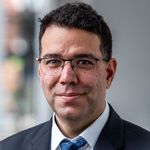
Prof. Cyrus Khandanpour's research group investigates the molecular basis of haematological and solid tumours with the aim of rapidly translating findings from basic research into clinical applications.
A central focus is on clonal haematopoiesis (CH/CHIP) and its influence on inflammation, tumour progression and therapy response in solid cancers.
Using multi-omics analyses, artificial intelligence (AI) and functional models, the team is developing new personalised therapy approaches that incorporate the molecular signature of the tumour, the immune system and the metabolism into a holistic concept of integrated precision medicine.
