
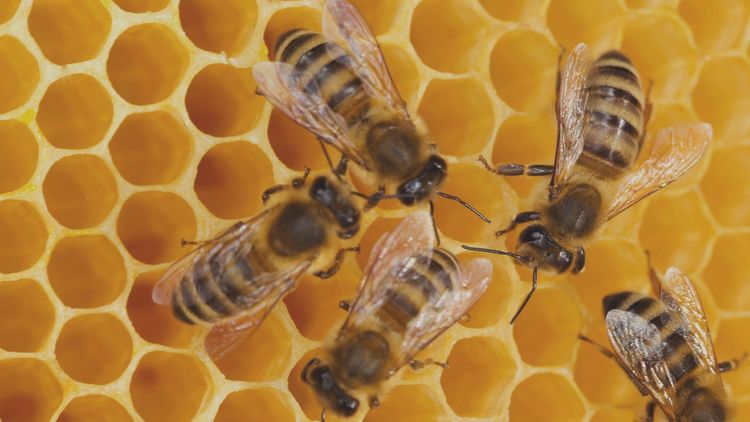

How do small energy sources become networks? To answer this question, researchers in the "SmartNord" project are taking their lead from state-forming insects. An interview with spokesperson Prof Dr Michael Sonnenschein and energy computer scientist Prof Dr Sebastian Lehnhoff.
What is the aim of the "SmartNord Intelligent Grids North Germany" research network?
Sonnenschein: Our electricity supply system is undergoing a major transformation: the supply from a few large power plants is gradually being replaced by supply from many smaller power plants such as wind turbines, PV systems or combined heat and power plants. However, this will make it necessary for our electricity grids to become "intelligent" in the medium and low-voltage range as well. A basic prerequisite for a stable electricity supply is that electricity consumption and generation match as closely as possible at all times, as the electricity grid cannot store electricity.
This is where future intelligent grids, so-called "smart grids", come into play.
Sonnenschein: Exactly. They will have to take on this balancing task of stabilising the supply, which was previously carried out by large power plants - and that with fluctuating and unpredictable electricity feed-ins from wind energy or photovoltaics. This requires new information and communication technology processes to coordinate the many new players in the electricity grid and analyses of the electricity grids in terms of their supply stability. This is the main goal of SmartNord.
How can completely different energy sources be combined to create a stable electricity grid?
Lehnhoff: In the SmartNord network, we are investigating ways of combining many small energy sources into networks in which the uncertainties in the electricity generation of individual sources compensate each other as far as possible - so that the network can provide a reliable supply on an electricity market from individual plants that can initially be planned with uncertainty. This applies both to the so-called active power made available and to the short-term provision of power contributions to support the stability of the grid. A good behavioural forecast is a key prerequisite for this.
Is that enough ?
Lehnhoff: No, not yet. Procedures must also be developed to compensate for short-term deviations by other players if a generator does deviate from its forecast behaviour. This also requires the integration of storage systems and the control of consumers.
What role does the university's 30-year tradition in the field of renewable energies play in your current research?
Sonnenschein: Energy research is an outstanding research focus at the University of Oldenburg and has enjoyed high quality, international visibility and relevance for many years. In addition to "classic" topics such as wind energy, photovoltaics, fuel cells, energy economics, energy storage and sustainability management, Oldenburg's expertise in energy research also includes energy informatics and, in particular, the research and development of smart grids. The systemic approach to the topic of "future smart energy supply systems" provided by energy informatics is greatly favoured by the diversity of research disciplines in this area at the Oldenburg site.
You are increasingly focusing on nature-analogue approaches in the "SmartNord" project. What does this mean?
Lehnhoff: Nature provides excellent examples of how very complex systems can be coordinated and controlled. Nature-analogue approaches attempt to transfer such mechanisms, which can be found in complex biological systems for example, to technical systems. This is usually not possible on a 1:1 basis, but it is more about transferring the basic ideas than the concrete realisation in nature. One such idea is swarm formation. Here, a large number of individuals display highly coordinated behaviour in order to achieve a common goal - for example, to reduce the amount of energy required for locomotion or to protect themselves from predators. And all this without centralised supervision or leadership. We want to learn from this!
What do state-forming insects have to do with the energy supply system?
Lehnhoff: State-forming insects such as bees or ants have developed very efficient mechanisms to work together on a complex task such as supplying an ant colony with food, without the individuals having to be very intelligent to do so or without central coordination. Such self-organisation processes are precisely what we want to investigate in SmartNord with regard to the coordination of many small power generators. Here, too, we have a huge number of decentralised electricity consumers and producers that are pursuing a common goal, namely a secure and reliable electricity supply. Even today, it is only possible in exceptional cases to centrally record the global system status of the electricity grid, let alone take it into account during operation. So the question is, what rules of conduct can these decentralised systems use to coordinate each other without a central authority coordinating everything so that together they can keep the power grid stable?
What are the next steps for you in the research network?
Sonnenschein: "SmartNord" is itself a complex system. The research network is divided into six sub-projects that look at different aspects of the problem. Each of the sub-projects has very clearly defined work packages in which specific investigations are carried out. For example, two work packages deal with the mechanisms of producers forming alliances to offer different products on the market. However, hardly any of the work packages can be successful independently of the others: quite intensive cooperation is required, especially between Computing Science and electrical energy technology, in order to properly understand the problems and develop adequate solutions. We often rely on simulation techniques when developing new processes: New methods are first tested on the computer in various scenarios.