
Sustainability research has a long tradition at the University of Oldenburg - two new projects have now been approved: The interdisciplinary project "TransGem", led by Thorsten Raabe, explores the power of collaborative action. The "Dilemmata" project focuses on the concept of sustainability and its diverse meanings. Both projects were awarded funding as part of the "Science for Sustainable Development" funding programme of the state of Lower Saxony and the Volkswagen Foundation. Over the next three years, the project "Transformation through community. Processes of Collective Subjectivisation in the Context of Sustainable Development" (TransGem) will receive more than one million euros in funding over the next three years. Almost 400,000 euros in funding will go to "Dilemmata", which is being realised under the leadership of the University of Lüneburg and in which Prof. Dr Karsten Speck and Prof. Dr Bernd Siebenhüner from Oldenburg are involved. "I am delighted that Oldenburg's sustainability research was once again able to impress in a high-calibre call for proposals," said University President Prof. Dr Dr Hans Michael Piper on the occasion of the approvals. He went on to say that the approvals were an appreciation of the work done so far and at the same time an incentive to continue to contribute to shaping a sustainable society through sound research. Paths to a new economy and way of life
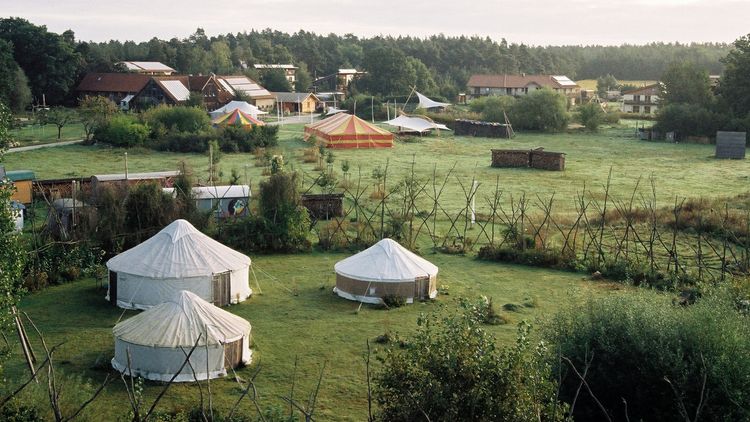
In the "TransGem" project, an interdisciplinary consortium is investigating the extent to which sustainability initiatives such as ecovillages or agricultural production communities can pave the way to a new economy and way of life. To this end, it is focussing on three communities based in Lower Saxony: the gASTWERKe living and working community, the Solidarische Landwirtschaft Oldendorf association and a number of initiatives that are networked in the Oberndorf village community. "We are particularly interested in the extent to which these communities develop a transformative power and what social and political consequences are associated with this," says Raabe. To this end, the researchers are investigating, among other things, what role social discourses - such as climate change - play for the sustainability initiatives and whether they only initiate change within themselves or in society as a whole. Other studies are focussing on the tension between the individual and the group. What requirements must individuals fulfil in order to become part of the group? What separates the members from each other and what brings them together? "It is possible that the joint practice leads to the initiatives recognising themselves as a unit of action and being perceived as such from the outside - as a collective subject that develops a common intention and a shared sense of responsibility," says Raabe. Based on these questions, the aim is to develop a deeper understanding of how and to what extent such communities develop creativity and creative power in the search for a sustainable future. In addition to the spokesperson Prof. Dr Thorsten Raabe, the Oldenburg team includes the historians Prof. Dr Thomas Etzemüller and Dr Nikolaus Buschmann, the sociologist and subjectivation researcher Prof. Dr Thomas Alkemeyer, the economist Prof. Dr Stephanie Birkner, the educational scientist and discourse researcher Dr Steffen Hamborg and the environmental scientist and praxeologist Dr Jedrzej Sulmowski. The research team also includes industrial and organisational psychologist Prof. Dr Karsten Müller from the Institute of Psychology at Osnabrück University. Dilemmas of the concept of sustainability In addition to the TransGem project, Oldenburg scientists are also involved in another project of the "Science for Sustainable Development" funding programme. In the project "Dilemmas of sustainability between evaluation and reflection. Justified criteria and guidelines for sustainability knowledge" under the overall management of the University of Lüneburg, Oldenburg economist Prof. Dr Bernd Siebenhüner and educational scientist Prof. Dr Karsten Speck are researching the programme- and project-specific meanings of the term "sustainability". The aim is to understand how specific funding programmes and ends of projects deal with the challenges of sustainability and influence social practice. The result should be criteria and guidelines that can help in the development and assessment of research projects and programmes in this field. Sustainability research has a long tradition at the University of Oldenburg - the first projects in marine and coastal research and in renewable energies date back to the 1970s. The ecological focus has been anchored in research and teaching in Oldenburg's economic sciences for over 20 years. With the "Science for Sustainable Development" programme, the state of Lower Saxony and the Volkswagen Foundation support projects that pursue interdisciplinary approaches in order to solve the problems of the future. Four projects were selected in the current - final - round of proposals. The funds totalling almost four million euros come from the Lower Saxony Advance.
More on the topic
Research on sustainabilityContact
TransGem:
Prof. Dr Thorsten Raabe
Tel: 0441/798-4176
Dilemmas:
Prof. Dr Karsten Speck
Tel: 0441/798-2174
Prof. Dr Bernd Siebenhüner
Tel: 0441/798-4366