

Many students have innovative business ideas. But what do you need to turn your idea into reality? InProSens is a good example.
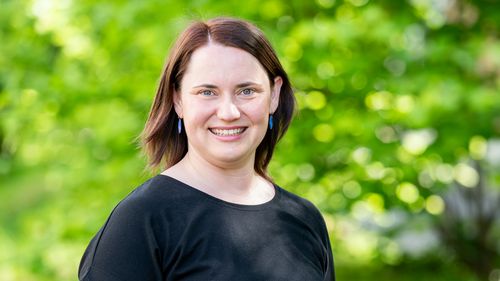
It all started about six years ago. The then chemistry student René Ungermann, now 35 years old, had the idea for a new type of measuring device at the end of his studies. He envisioned an automated sensor system that could precisely measure dissolved substances in liquids - such as heavy metals, sweeteners or pharmaceuticals - in order to detect them directly in the production process. This would enable manufacturers in the beverage, food and chemical industries to optimise processes and detect the presence of impurities at an early stage.
Sticking to the idea
In the meantime, the idea has matured into a tangible product: the "InProLyzer". "We are presenting an innovative system that has never been seen before on the process analysis market," says Ungermann. "We" - that also includes electronics engineer Philip Kliszat, chemist Alexandra Ungermann and business IT specialist Thore Stratmann. With the exception of Kliszat, who was an apprentice in the university's electronics workshop before founding the joint spin-off InProSens, they all studied in Oldenburg. Their path to becoming a start-up was rocky at times: "This was mainly for financial reasons, because we are in a high-tech field and further developments are cost-intensive," says Ungermann. But the inventors stuck to their idea and continued to work meticulously even in uncertain phases. "We learnt a lot and received professional support."
The university's <link giz/>Gründungs- und Innovationszentrum (GIZ)</link> - the central contact point for start-ups at regional universities - was the main source of help. "From the initial idea to the present day, I've always received helpful support there," says Ungermann. The GIZ helped him in the discovery phase of his idea, as well as with pitch training and the Entrepreneurship Summer School, where he was able to further develop his business idea under the guidance of professionals. He is still particularly grateful today for the help he received with the complicated application process in order to benefit from funding and corresponding start-up grants. The chemist is still very close to his university lecturer at the time, Prof Dr Katharina Al-Shamery, who supported him as a scientific mentor and encouraged him in his business idea.
There's no such thing as impossible
The spin-off is currently being funded by the Federal Ministry for Economic Affairs and Energy with the EXIST start-up grant totalling 130,000 euros. This has already enabled the four inventors to start actively marketing their new analyser - for example at a stand organised by the university at the Hannover Messe. The next milestone is the founding of InProSens GmbH in June. The first major project in which InProLyzer will be used has also already been finalised: InProSens will soon be working with 26 other regional partners in the MEDUWA Vecht(e) consortium to curb emissions of human and veterinary pharmaceuticals as well as multi-resistant bacteria in soil, food, water and air.
Ungermann's tip for other inventors who want to do the same: "Stay persistent, build up a good network of contacts and - most importantly - develop the right attitude: There's no such thing as can't."