
During the coronavirus crisis, pupils with special educational needs have been overlooked, says Oldenburg special needs teacher Clemens Hillenbrand. There is now an urgent need to develop new forms of distance learning for them and to equip teachers for this.
It is mid-March when the heads of state governments decide to close schools across the country due to the coronavirus pandemic. In the hastily drafted decrees and ordinances, those responsible in the Federal States regulate, for example, emergency care, the duties of teachers and, very roughly, so-called home schooling. What they clearly do not have in mind are the needs of children with special educational needs.
"These are hardly taken into account in the documents available on the websites of the Ministries of Education and Cultural Affairs," says Prof Dr Clemens Hillenbrand. Together with colleagues from the universities of Hanover and Wuppertal, the special needs teacher has systematically analysed the official documents - with sobering findings: "Those responsible have simply forgotten about special educational support and left it to the commitment of the teachers," he says.
Losers of this time
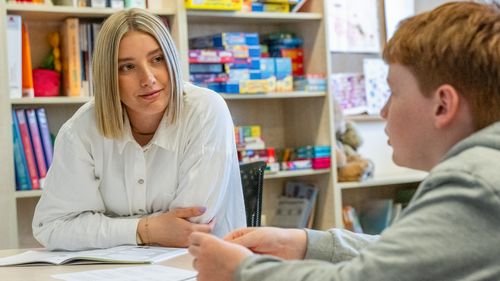
The group of children in need of support is large - around seven per cent of all pupils in Germany require special educational support. They range from children with learning difficulties or mental disabilities to those with behavioural disorders and children with physical and motor impairments. "These adolescents need more intensive support than others," emphasises Hillenbrand. Above all, this means direct, personal interaction that enables structured and good guidance in learning and direct feedback.
But it is precisely this - structure, support or socialising with peers - that has been lost due to the school closures. Those who need support, especially in the areas of emotional-social development or learning, are now finding it particularly difficult, explains Hillenbrand. "These families are often unable to provide their children with adequate support - including in terms of technology," he emphasises. "We scientists and the major professional associations are therefore very concerned that these children are the losers of this time."
Too little digital help on offer
The researchers conclude one thing above all from their assessment: special needs teachers need to be better equipped for the current challenges as soon as possible. "We have to assume that we will continue to need distance learning," says Hillenbrand. However, there are still too few support programmes for this type of special educational support, such as digital platforms provided by the Federal States.
This is where the scientists come in: To find out whether and how special needs teachers are already using digital tools, Hillenbrand and his colleagues launched a nationwide survey in April, in which around 700 teachers took part within a very short space of time. According to Hillenbrand, it was encouraging that around half of those who took part in the survey used messenger services to maintain contact with children during school closures. A good half of those surveyed also use digital tools, albeit mainly to send learning materials.
Low self-efficacy
Conversely, this means that the other half of the teachers involved in the survey are not yet using digital tools. The researchers want to find out why this is the case. For example, which digital tools are accessible without barriers - both for teachers and pupils? Hillenbrand explains that one technical barrier is that existing, sophisticated learning programmes are only available on CD-ROM but not online - for example, because they are subject to publishing restrictions.
The lack of expertise of many teachers also often stands in the way of distance learning: the researchers know from various studies that special education teachers usually perceive themselves as very self-effective when dealing with children in need of support. This means that they can successfully solve problems in direct contact, such as difficult situations in the classroom, explains Hillenbrand. However, this is not the case when dealing with digital learning. "The respondents often feel that they are not self-efficacious."
Crisis is also an opportunity
One reason for this is that there is too little professionalisation - both in the training of teachers and in further training, says the university lecturer self-critically: there are individual elements of this kind in training. For example, prospective teachers learn about digital tools with which they can diagnose and analyse the learning process or use individual programmes that promote learning in the areas of reading, writing and arithmetic. But this is far too little for this particular situation, emphasises Hillenbrand. "This reveals future tasks for teacher training and further education."
Together with colleagues from other subjects, the special needs teachers now also want to address the question of what good digital learning actually looks like for the target group. For example, how should learning materials be designed so that pupils with learning difficulties can also make progress or consolidate what they have learnt? "Only when we know more about this can we design distance learning appropriately for children with special needs," says the special needs teacher. From this perspective, the current crisis is also an opportunity, as it draws attention to these questions and reveals weaknesses.
Hillenbrand not only draws conclusions for research, but also for education policy, which he believes has a duty. For example, it is imperative that the professional associations and teacher representatives are more closely involved in future decisions. And more decision-making authority must be transferred to those responsible in schools, emphasises Hillenbrand. This is the only way to find individualised solutions for children with very different support needs. For him, this is "a question of human dignity and participation in the education system."