
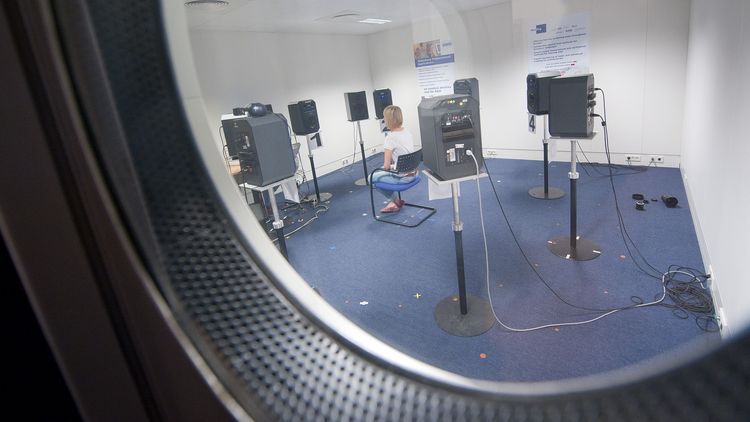


With its research, it represents the technological core of the Hearing4All cluster of excellence: the "Individualised Hearing Acoustics" research group. The German Research Foundation is now funding it for a further three years with a sum of almost two million euros.
Improving "hearing for all" with the help of technical and psychoacoustic solutions has been the goal of the "Individualised Hearing Acoustics" research group coordinated by the University of Oldenburg since 2012. The German Research Foundation (DFG) is now funding this research group for a further three years with a sum of 1.95 million euros based on unanimously positive recommendations from reviewers.
"The work and results of the research group are among the world leaders in hearing acoustics," says the DFG's letter of approval. In addition to the Department of Medical Physics and Acoustics at the University of Oldenburg, the HörTech Center of Competence and the Jade University of Applied Sciences in co-operation with the Fraunhofer Project Group for Hearing, Speech and Audio Technology are also involved. The group's research work represents the technological core of the "Hearing4all" cluster of excellence. The cluster of excellence, led by Oldenburg, brings together hearing researchers from the University of Oldenburg, Hannover Medical School and the University of Hannover.
"With its work, the DFG research group is making an unparalleled contribution to the well-being of hearing-impaired people. The continued funding from the German Research Foundation recognises the high national and international importance of hearing research in Oldenburg," explains Prof. Dr. H.-Jürgen Appelrath, Vice President for Research at the University of Oldenburg.
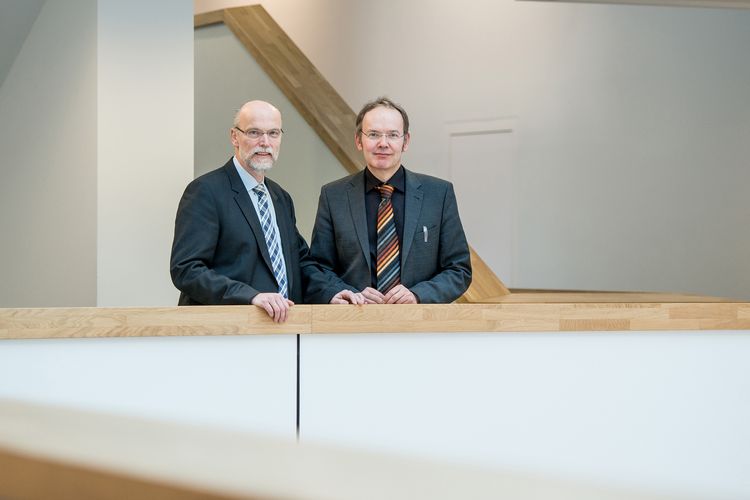
The scientists are working on developing customised and extremely powerful hearing systems that reproduce binaural hearing as accurately as possible. After all, the number of hearing-impaired people is constantly increasing; in Germany, almost one in five people is affected. The research work is focussed on a solution for people who do not yet need a conventional hearing aid, but whose own hearing is not sufficient to enable them to take part in a conversation in acoustically demanding situations - such as in a busy café. The new technology is intended to make acoustic perception predictable and controllable in as many situations as possible for a large number of individual user profiles in order to optimise them. "We are pleased and proud that we have impressed the reviewers with our scientific and technological advances and can continue to pursue our vision of a hearing aid of the future," says Prof Dr Dr Birger Kollmeier, who heads the DFG research group together with his colleague Prof Dr Volker Hohmann.