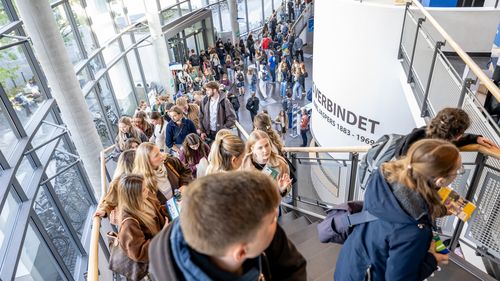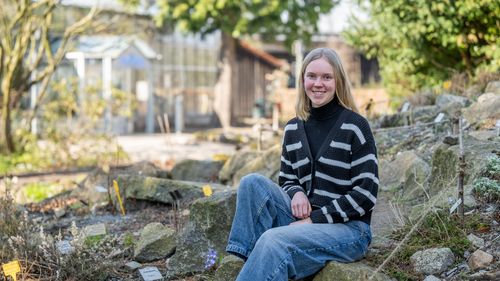
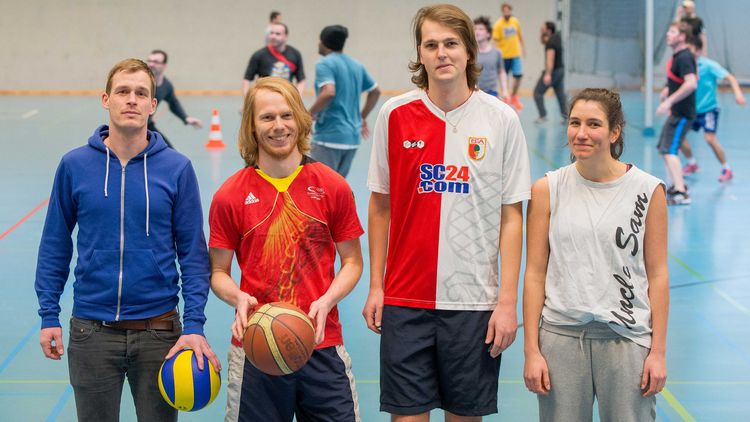


The idea was born in a seminar: eight students on the "Sport and lifestyles" master's programme developed a sports project for refugees. "Refugees Welcome in Sports" is now so well attended that the courses have been moved to a larger sports hall.
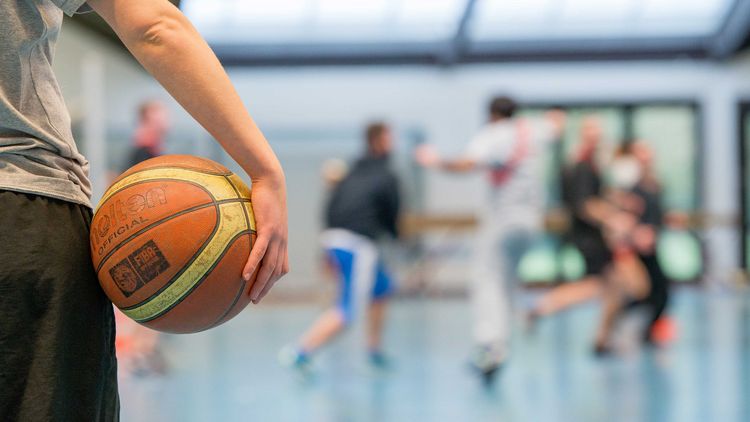
Wednesday afternoon in the sports hall in the sports wing of the University of Oldenburg. Xemgin, 21 years old, sets up the volleyball net. He fled Syria a few months ago. Since then, he has been living in a refugee centre in Oldenburg. He shares his fate with the other men who come to the sports hall. They are taking part in the "Refugees Welcome in Sports" project, which was set up by students Micòl Feuchter, Sebastian Banse, Ingo Gerhardt and David Scholz together with four other fellow students. Under this name, they offer a sports programme for refugees twice a week for two and a half hours.
The students on the "Sport and Lifestyles" Master's degree programme developed the idea for this project as part of a seminar. The task: to design a sports-related project for a specific target group. Eight seminar participants quickly came together to offer their project to refugees. They organised sports shoes and bus tickets and had flyers and posters printed. In co-operation with the intercultural work centre IBIS e. V., the students publicised their project to the refugees. To do this, they went to the refugee café organised by IBIS and to accommodation facilities to talk directly to the refugees.
"Despite our efforts, we were worried that the offer would not be accepted," says Micòl Feuchter, one of the organisers. But then ten people came to the first meeting on a Wednesday in January. "Ten more people than we expected," she says. Xemgin was also among them. He had heard about the project from a friend. Since then, he has been coming to the university every Wednesday. "I can do sport here, meet new people and improve my German," he says.
"Sport brings people together, even if they don't all speak the same language."
The students also designed a sports course aimed exclusively at women with aerobics and dance. Nobody came in the first week, recalls Sebastian Banse from the organisation team. The students therefore specifically sought contact with women and offered them the opportunity to bring their children to the sports programme. Since then, this Friday programme has also been well attended - between 20 and 25 refugees use it every week. So that everyone can be active at the same time, the events were recently moved from the small sports hall in A13 to the large hall in the sports wing.
"The atmosphere is always relaxed, there are hardly any communication problems," reports Sebastian. "Sport brings people together, even if not everyone speaks the same language." Xemgin confirms this: "I'm grateful for the offer. 'Refugees Welcome in Sports' is very important to me and my friends."
Eight dates were originally planned for the project. Ending it after that was out of the question for the students due to the great popularity. So the first extension until April was quickly finalised. And it is set to continue in the new semester. "We just need a place where we can train next semester," says Sebastian. "In any case," says Micòl, "we'll continue on a voluntary basis. That goes without saying".