
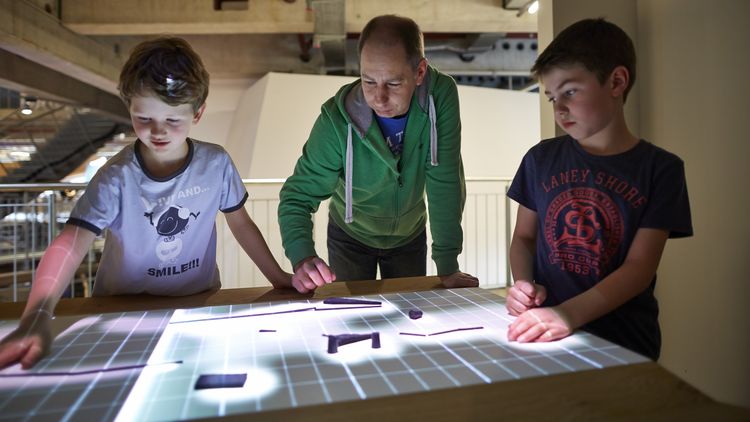
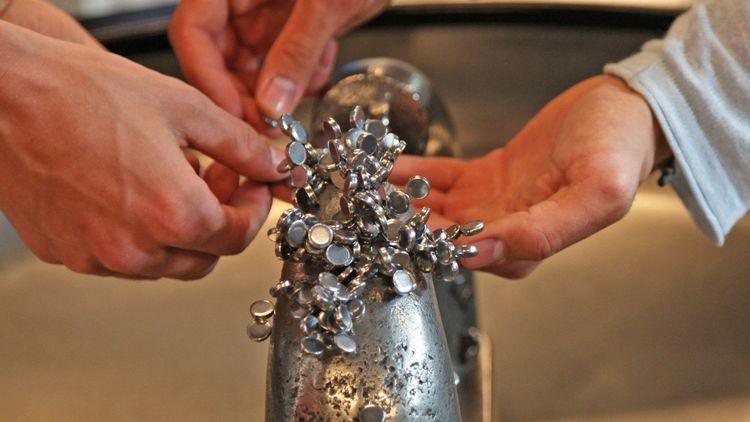
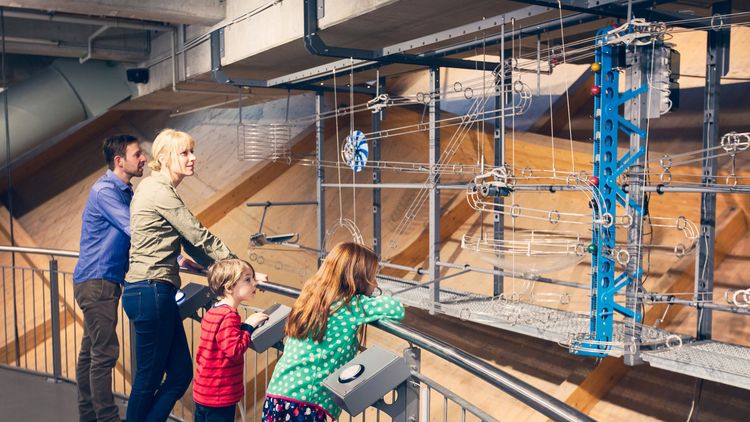


Excursions to science centres or museums are popular with schoolchildren and adults alike. But how exactly do they learn during such visits, what motivates them? This is what 16 doctoral candidates in the GINT doctoral programme are investigating.
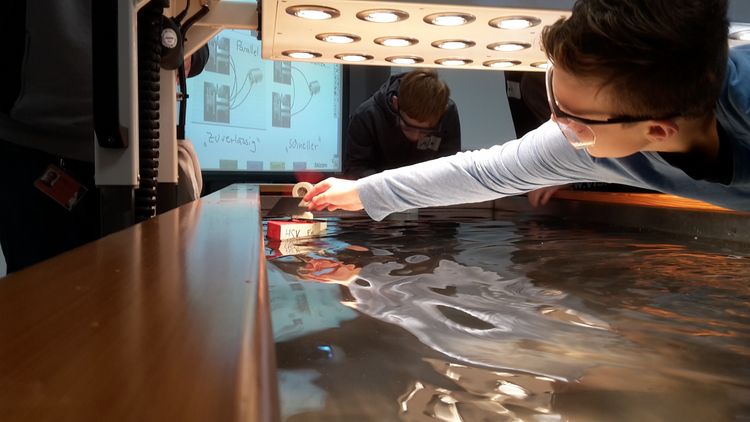
Christin Sajons asks the girls and boys at the Technology and Nature Learning Centre in Wilhelmshaven very simple questions. "Explain: What are you doing right now?" the doctoral student asks some sixth-graders who are cutting out the hull of a solar boat. "Why did you use a parallel circuit?" she wants to know from another group who are soldering solar cells together with an electric motor.
Sajons, who studied English and physics to become a teacher and is now doing her doctorate in the Didactics and History of Physics working group, wants to use these questions to find out where the pupils find it difficult to master the construction task set. Or how they learn new technical terms such as "parallel circuit". "In my doctoral thesis, I am investigating which thought processes are stimulated in pupils at extracurricular learning centres, what motivates them and also what tends to inhibit their enthusiasm," she reports.
Arousing interest in nature and technology
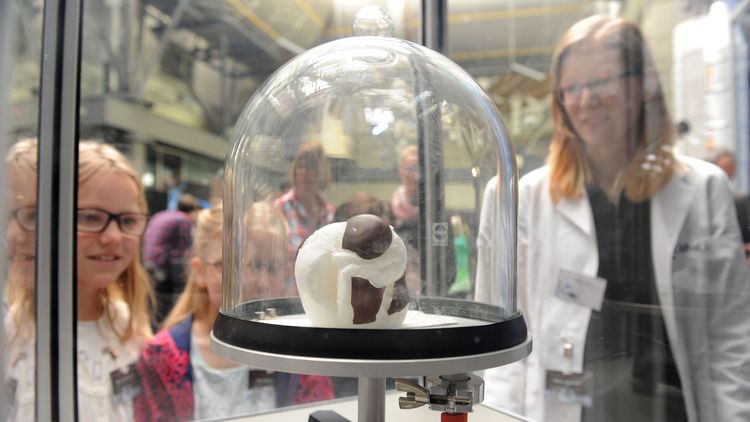
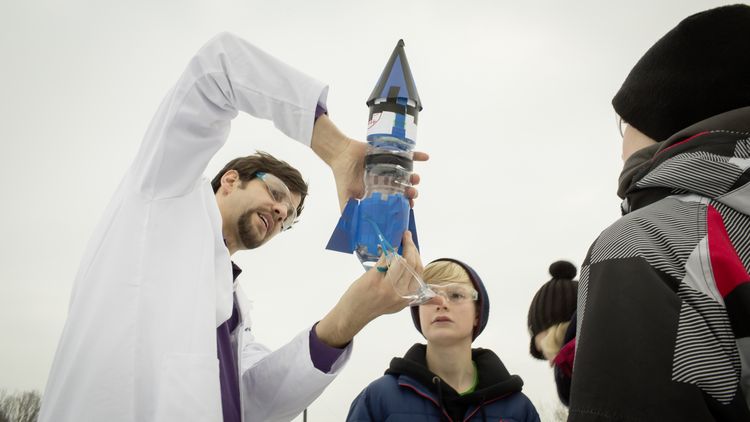
The number of extracurricular learning locations such as school laboratories, science museums and science centres has increased significantly in recent years. What they all have in common is that they aim to increase the interest of visitors of all ages in nature, technology and science. "However, from the perspective of didactic learning research, little has been clarified in detail about the processes that take place in these places," reports Oldenburg physics didactics expert Prof Dr Michael Komorek. Extracurricular learning spaces are a kind of black box for didactics; opening them up is the goal of the GINT (STEM Learning in Informal Spaces) doctoral programme, which Komorek heads together with Prof. Dr Peter Röben from the Technical Education working group. In this programme, 16 doctoral candidates at the universities of Oldenburg, Vechta and Hanover are studying various aspects of learning outside of school.
The programme has been funded by the Lower Saxony Ministry of Science (MWK) since 2016 and is carried out cooperatively by the universities of Oldenburg, Hanover, Vechta, Odense (Denmark) and Rethymno (Greece). Komorek emphasises that the programme is a response to changes in the educational landscape: More and more non-formal programmes are supplementing formal school education, and some also have an independent character. Researching and further developing these programmes should also be seen as part of regional development, says the educationalist.
Philosophising about infinity
The participating doctoral candidates specialise in fields ranging from physics and chemistry to geography and technology. Even philosophy is represented: At the Universum® Science Centre in Bremen, Caroline Kather is investigating how scientific phenomena stimulate philosophical thought processes in children. As part of her doctoral thesis, the educationalist, who has a master's degree programme in philosophy as well as a Master of Education, is developing a philosophical programme for nine to eleven-year-olds at Universum. "The children first explore the exhibition. We then hold a philosophical discussion together, which takes up and sharpens the children's thoughts and questions," reports Kather. During the pilot phase, the doctoral student has observed that very different topics come up when philosophising - from progress to infinity. "I want to find out what role the exhibits and the dialogue play in what questions the children come up with," she reports. She is also investigating the extent to which the girls' and boys' ideas and perceptions are shaped by social conditions - and whether they are aware of this. Until now, there have been hardly any empirical methods to track down children's thought processes, says Kather. With her doctorate, she wants to contribute to the development of such methods, although she also has their limitations in mind.
Jana Marks, who is doing her doctorate in the Technical Education working group, does not have a traditional scientific background either. She studied art history, but has already spent several years developing activities for school classes at a science centre in Nuremberg. Her doctorate also revolves around the Universum Science Centre in Bremen. "A common criticism levelled at exhibition organisers is that they don't involve visitors enough in the planning," she says. Marks is researching what a trip to the Universum triggers in visitors. For example, she observes how intensively families or individuals engage with certain exhibits, whether they have fun experimenting or quickly become frustrated. Through surveys, she has found that a visit to the Science Centre is also a valuable experience for many adults: "Their idea that they can't learn anything more there has not been confirmed from our point of view."
How experiments get better
In addition to the fundamental research interest in how visitors use the learning centres' offerings, the doctoral theses are also intended to contribute to the further development of the offerings. "The experiments and exhibits are often already very good, but certain adjustments can often be made to increase cognitive stimulation and create more interaction," says Komorek. Together with the Technology and Nature Learning Centre, Christin Sajons has modified the solar boat exhibit so that the pupils can think and decide for themselves - for example, what shape the hull of their boat should have for physical reasons and whether they should arrange the solar cells in series or parallel connection. Sajon's work has shown that greater autonomy increases pupils' motivation as well as their technical understanding.
Dr Dirk Stiefs, head of the DLR_School_Lab in Bremen and also a GINT doctoral candidate, is delighted with the tangible results of the programme. Sajons has also accompanied groups of pupils in his school laboratory and investigated learning opportunities. "We benefit from the collaboration by further developing individual programmes with regard to aspects relevant to learning, for example in terms of problem orientation," he says. Stiefs has a doctorate in physics and is continuing his education in the field of didactics with his second doctorate.
Doing a doctorate in a team
The programme management organises seminars for the doctoral candidates three to four times a year on topics such as motivational research, learning in museums or scientific writing. There are also regular workshops to discuss the status of the work with all supervisors. "These discussions benefit greatly from the fact that everyone brings a different level of expertise to the table and the work receives a lot of different food for thought," says Röben. The fact that supervisors from Denmark and Greece are involved in the programme and other guests from abroad are invited to take part in the exchange means that international perspectives also stimulate the work. A conference recently organised by GINT with 140 guests, to which representatives from universities and extracurricular places of learning were invited, also contributed to this.
The doctoral candidates also see the exchange and cooperation within the interdisciplinary programme as positive: "The doctoral programme is very valuable for me because it opens my eyes to other subject areas and provides insights into other places of learning," says Stiefs. "There are a lot of parallels and points of contact between the different projects, and the exchange within the team is very close," reports Caroline Kather. Sajons also finds: "The meetings and the re-registering students from the other universities are extremely enriching."