



Exercise is the best remedy for back pain - preferably in the form of regular exercises at home. An interdisciplinary team of Computing Science specialists and doctors is developing a smartphone app that monitors the course of therapy with AI support.
Back pain is one of the most widespread ailments: According to surveys, up to a seventh of the population suffers from chronic problems. These conditions are often treated with medication, but studies show that exercise is the best therapy. However, tailoring individual training plans to patients is time-consuming. "Exercise therapy is rarely included in outpatient treatment plans due to the high personnel costs," says Prof Dr Andreas Hein, Head of the Department of Assistance Systems and Medical Technology at the University of Oldenburg.
Another problem is that many patients fail to continue their exercises independently at home, for example because they forget or are afraid of doing something wrong and making the pain worse. Hein and his team are working to ensure that patients receive more support in future - through artificial intelligence (AI): In a sub-project of the "Smart-BT" project, the researchers are currently further developing a smartphone app from Varel-based medical start-up Herodikos. This app is already helping doctors to develop training plans. In future, this process is to be further automated. The app will also monitor whether patients are doing the exercises correctly at home.
The abbreviation Smart-BT stands for "Optimised exercise therapy through the interaction of artificial intelligence and video technology with healthcare professionals and patients". The Federal Ministry of Education and Research (BMBF) is funding the project with around 530,000 euros over two and a half years, with Herodikos in charge. The university team is contributing its expertise in automatically recording movements and analysing them using machine learning methods.
Suggestion for the training plan
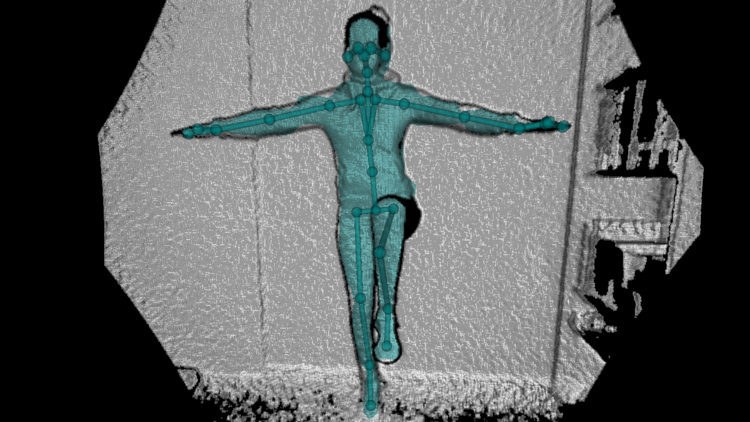
The app currently guides therapists through a questionnaire and diagnostic tests with patients. The patients complete exercises such as the one-legged stand. For example, the strength of the trunk and gluteal muscles as well as stability in the ankle joint and balance are tested. Therapists enter the results into the app. This then generates a suggestion for a training plan that doctors and therapists can check and adapt. In future, patients will be able to carry out the diagnostic tests themselves under the guidance of the app. "However, expert opinion will still be included," emphasises Hein. The aim is to minimise the effort involved without compromising the doctor-patient relationship.
Hein's team is now developing a decision-making system that is based on AI processes, i.e. is trained using examples and derives decisions based on these results. On the one hand, the researchers are collecting data from diagnostic tests. They have test subjects perform the exercises and register the values recorded by a 3D camera. The AI uses the recordings to estimate where the test subjects' joints are located and recognises their movements. This motion tracking provides the basis for detecting incorrect movement patterns.
Hein's team is familiar with analysing movements. The scientists' other projects focus, for example, on recording and analysing physically strenuous activities in the care sector. The researchers also use special camera systems for this, which can image and recognise joints and other skeletal points. For the current project, the team is collating other data in addition to movement data, such as diagnoses and training histories. With the help of this information, the team is developing a system that adapts the individual training plans it designs to the patients more and more effectively.
Support for training at home
Another aim is for the app to use a webcam or mobile phone camera to automatically monitor how well patients are training at home. If the movements deviate from the optimal sequence, the app should issue a visual or voice message.
It is particularly important to the team to involve all users - i.e. therapists, doctors and patients - in the development process. "The scenario is a complex human-technology interaction," explains Hein. For all of this to work in the end, the app has to be as easy to use as possible for all users - without any technical barriers.