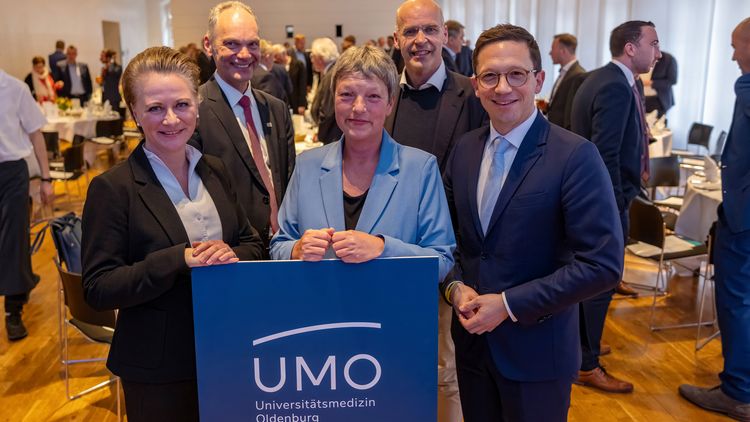


Science Minister Falko Mohrs even held out the prospect of more than 200 places for new students at the University Medicine Oldenburg Parliamentary Evening - University President Bruder urges budget resolution.
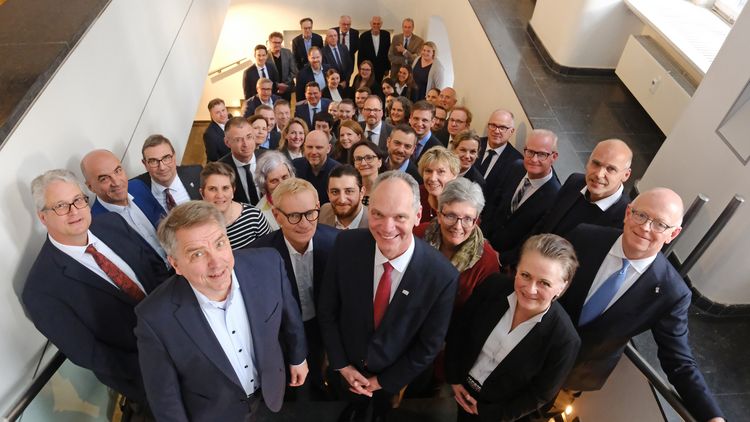
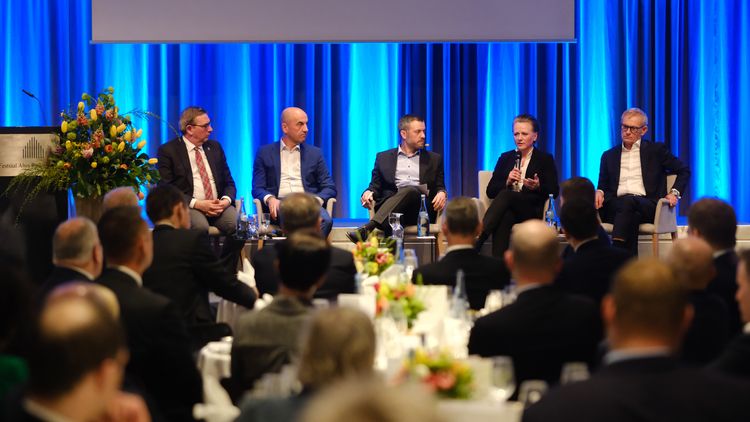
The delegation from University Medicine Oldenburg (UMO), which travelled to Hanover on Wednesday evening for what is now the fifth Parliamentary Evening to once again lobby members of the state parliament for adequate financing for UMO, was able to take several positive signals back to Oldenburg. "I have understood what my task is," said Science Minister Falko Mohrs. He left no doubt that the planned increase to 200 places for first-year students at the University of Oldenburg is firmly planned. Although it will be a real feat of strength - both for those involved on site and for the state government, which will have to provide the necessary funds - "We have set the course for this international project, which is unique in Europe. We must and we want to see it through to the end."
Mohrs reported on a close exchange between the three University Medicine Oldenburg, Hanover and Göttingen sites in Lower Saxony, in which, among other things, a joint strategy for the development of medical studies had been developed in recent months. One goal: to create more study places in Lower Saxony overall - even more than previously planned. "We are talking to all locations about how the expansion can also succeed beyond this," said Mohrs. The new student places are urgently needed.
State Parliament President Hanna Naber also shares this view. "Only with strong university medical care that is both adequately and sustainably funded can we master the challenges in Lower Saxony," she said. Everyone involved agreed that the course for this must be set now.
Prof Dr Andrea Morgner Miehlke, Chief Medical Officer and Deputy Chairwoman of the Executive Board of Klinikum Oldenburg, the largest clinical partner in the UMO, also shares this impression. "We are in a very constructive dialogue with state politicians," she said, reporting on talks with both the Ministry of Science and the Ministry of Social Affairs. "I am sure that together we will get the things that are relevant now on the road," she added. After all, every euro invested in a university hospital directly benefits the region.
Sven Ambrosy, District Administrator of the district of Friesland and Chair of the Association Assembly of the Oldenburg District Association, which comprises six districts and three independent cities, represented the north-west region on Wednesday evening. "University medicine strengthens the area and the region. It is a real, hard location factor," he emphasised. The UMO was therefore also a project of civil society and the regional economy from the very beginning.
The economic importance of healthcare for the region was also emphasised by EWE CEO Stefan Dohler. The north-west of Lower Saxony is the eye in the storm of the forthcoming transformations in the energy sector. With its importance, particularly for the generation of wind energy, it has the potential to become the "Ruhrpott of tomorrow, only clean". "But we need a lot of labour from outside for this," he explained. Good local medical care plays a particularly important role in the attractiveness of the region. Excellent care - together with other location factors - can develop a pull effect that attracts the required labour force to the northwest.
Dr Jürgen Peter, Chairman of the Board of AOK Niedersachsen, explained that UMO already has many factors that make it an excellent provider in the region. For example, the total number of beds at the UMO co-operation hospitals exceeds the corresponding figures in Hanover and Göttingen. "University Medicine Oldenburg is an equal player in university medicine," he emphasised. In some service groups - such as premature baby care - the location is a leader. At the same time, Peter also emphasised the importance of the UMO for rural areas. The AOK supports the demand for more study places in the north-west, particularly because of the early practical training in rural medical practices. "We hope that this will strengthen the supply of general practitioners in rural areas."
The university, hospitals and the region once again demonstrated their close ties at the parliamentary evening. "We will convey this 'we' very clearly to Hanover," announced University President Prof Dr Ralph Bruder, alluding to the recently launched UMO campaign "Doctors don't fall from the sky". With this campaign, University Medicine is calling on citizens in the north-west to sign the petition to emphasise the demand for adequate financing and thus join forces to combat the impending shortage of doctors.
All signatures are to be handed over to Minister President Stephan Weil before the budget negotiations begin in June. After all, there have often been commitments to the UMO in the past. "However, it would be even better if we could now see figures in a draft budget," emphasised Bruder. Then the UMO would be in a position to deliver quickly. "If the 2025 budget includes the aforementioned items, we will welcome 200 students in the winter semester 26/27," he announced. However, this would also mean that there could be no more growth in this legislative period if the upcoming budget does not take Oldenburg's needs into account.