

Horst Janssen or Joseph Beuys, Dáli or Magritte - over the past 100 years, many artists have dedicated works to the philosopher Immanuel Kant, whose 300th birthday is being celebrated. At the same time, one of Kant's texts plays a key role in the theory of aesthetics right up to today's art criticism. A guest article on Kant and modern art by historian Matthias Weber.
"Beautiful art, on the other hand, is a mode of conception which is expedient in itself, and although without purpose, yet promotes the culture of the powers of the mind for sociable communication."
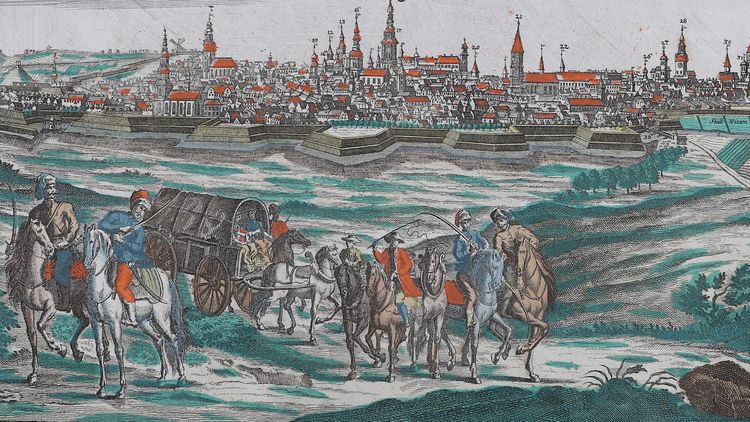
The philosopher Immanuel Kant, born 300 years ago, is an outstanding personality of the European Enlightenment and is regarded as a pioneer of modernity. He almost never left his native Königsberg, the capital of East Prussia, throughout his life - and yet he was a citizen of the world in his thoughts. This is only seemingly a contradiction, as Königsberg was a vibrant, multi-ethnic and multi-denominational city at the time - in short, a cosmopolitan city.
Today Königsberg is called Kaliningrad and has been behind a new Iron Curtain since February 2022. Russia's attack on Ukraine has severed all institutional contact between institutions in Germany and Kaliningrad. A joint professional, social or artistic tribute to the great philosopher in his home town is not possible. The propagandistic appropriation of Kant by Russia in Kaliningrad, which had been looming for a long time, reached its climax in the anniversary year.
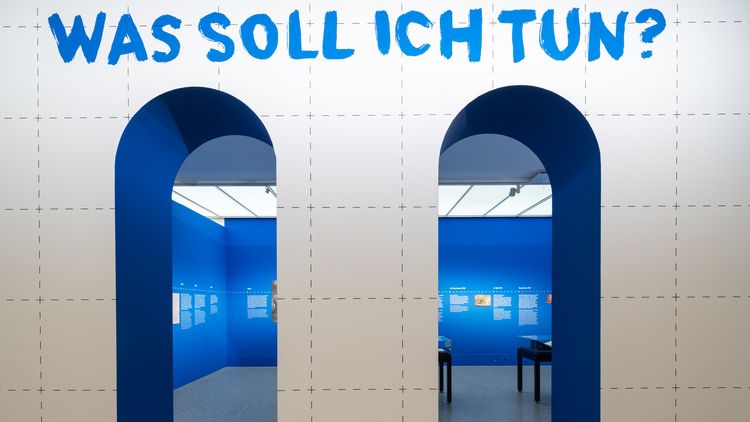
Almost everyone can associate something with Immanuel Kant: be it his answer to the question "What is Enlightenment?", the Categorical Imperative, the Copernican Revolution or, more recently, the question of whether the philosopher was possibly a racist and anti-Semite. Kant's work is generally considered to be difficult to understand, although his basic questions are easy to grasp: What can I know? What should I do? What can I hope for? What is man? And Kant's topics are currently highly topical, for example his magnificent philosophical draft "On Perpetual Peace" (1795). Many people are currently asking themselves whether peace between states is even possible.
When Kant mentions modern art, hardly anyone is likely to think of it, except perhaps those who have read the chapter on "aesthetic judgement" in the "Critique of Judgement" (1790), which deals with beauty and artistic genius - from which the opening quotation also comes. Did the author realise what consequences this very idea would have for art?
After the "Critique of Pure Reason" (Riga 1781) and the "Critique of Practical Reason" (Riga 1788), the "Critique of Judgement" (Berlin, Liebau 1790) is Kant's third major work; in it he develops a theory of aesthetics in relation to beauty in nature and in art. This is not an easy read, but it became a key text for the theory of aesthetics in art right up to today's art criticism.
In it, Kant defines beauty as a non-purposeful pleasure without further conceptual definitions and describes the subjective but nevertheless generalisable judgement of taste and aesthetic experience as a free play of cognitive faculty, imagination, sensuality and reason. It is these insights that have led to the "Critique of Aesthetic Judgement" often being regarded as the philosophical work that paved the way for modern art.
However, the fact that many artists around the world have dedicated their works to Immanuel Kant and his oeuvre and that they deal with Kant's philosophy in the language of their art has not yet been recognised or researched.
Big names are among them: Joseph Beuys, whose ready-made "Ich kenne kein Weekend" (1971/72) shows a Reclam edition of the "Critique of Pure Reason" and a Maggi bottle mounted in a suitcase and gives rise to much speculation; Salvador Dalí, who expressed his very personal engagement with Kant in an object entitled "Monumento à Kant" (1935); Horst Janssen from Oldenburg, who created several portraits of Kant and dedicated one of them to former German Chancellor Helmut Schmidt on his birthday.
We should also mention Anselm Kiefer, who varied the magnificent Kant quote "The starry sky above me..." in numerous works and also staged it magnificently; the American painter Jack Levine, whose oil painting "Feast of pure Reason" (1937) combined Kantian reason with social criticism; and the surrealist René Magritte, whose enigmatic work "La pure raison" (1937) translates philosophy into painting.
Or the American conceptual artist and philosopher Adrian Piper: her installation "The probable Trust Registry: The Rules of the Game' 1-3" translates the Categorical Imperative directly into our everyday lives. Finally, Yinka Shonibare raises the question of the connection between enlightenment and colonialism with a headless Kant in the cycle "The Age of Enlightenment" (2008).
While Russian tanks approached her studio not far from Kiev in February 2022, the Ukrainian artist Alevtina Kakhidze created a highly emotional drawing with the signature Thinking About Immanuel Kant on 26.02.2022, in which she poses the question of whether the eternal peace described by Kant will ever be attainable. The tanks were eventually stopped by the Ukrainian army a few kilometres away - Kakhidze still lives in Ukraine today.
The artistic spectrum is heterogeneous in every respect. Stylistically, it ranges from the American socially critical realism of the 1930s to surrealism, Dadaism and minimalism through to contemporary classical realism, grotesque painting, pop art and digital art. Imagination and creativity know no bounds, as does philosophy - as evidenced by the ongoing exploration of Kant's ideas by artists worldwide. The cosmopolitan would probably like that.