-
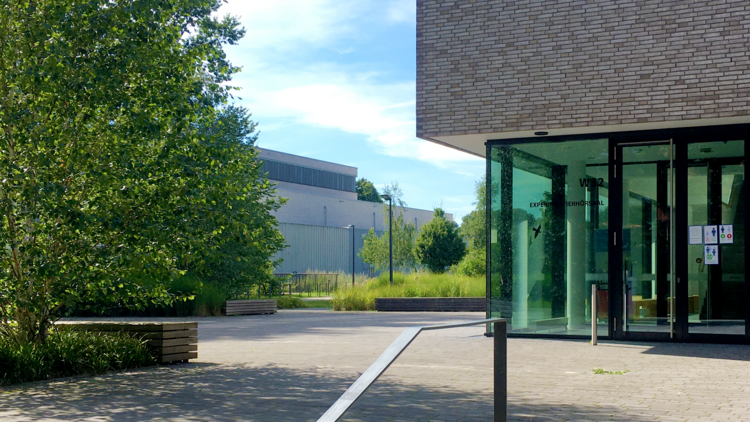
The experimental lecture theatre on the Wechloy campus also remained empty during the summer semester due to the coronavirus pandemic. Photo: University of Oldenburg
“Virtual yet very real” – A look back at the summer semester (Part 2)
Video chats instead of lecture theatres, online Master’s thesis defences: the past summer semester demanded a great deal of improvisation and flexibility from many. Here, lecturers and students share how they coped with their new everyday university life.
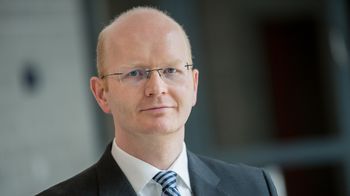
Prof Dr Christian Busse is a university lecturer in Sustainable Production Management at the Department of Economics and Law.
“As far as I’m concerned, the 2020 summer semester – which suddenly had to be delivered digitally – went surprisingly smoothly. Fortunately, everyone involved pulled together right from the start: the students understood the need for the change, the IT services expanded our technical capacity at an astonishing pace, and the Presidential Board not only steered things in the right direction but also provided very reassuring communication throughout.
I myself was very fortunate that my wife effectively managed our children’s ‘home schooling’ on her own – otherwise, as a lecturer, I might well have been overwhelmed by chaos. This allowed me to concentrate on further developing the content of two key teaching modules as planned and digitising them at the same time. The unofficial feedback from students on this was very positive.
Looking ahead, I hope that the university will engage in constructive and critical reflection on the extent to which digital elements should be retained in teaching once the coronavirus crisis is over. At least for traditional lectures, in which so-called explicit knowledge is to be conveyed, I believe there is a significant gain in flexibility for students. They are now free to choose the place, time, pace and frequency at which they work through lecture videos. Looking ahead, there could be similar gains in flexibility for lecturers. However, I do not see this advantage for seminars and other courses that thrive on discourse and the exchange of implicit knowledge. As far as those are concerned, I look forward to communicating with students in person again as soon as possible.”
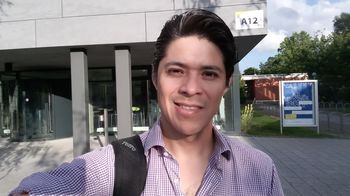
Gustavo Montoya recently completed a Master's degree in Neurocognitive Psychology.
"Listening to and learning from lectures last semester meant, above all, organising myself well. I even held my Master's defence online! I would never have dreamed of doing that before. It was an interesting experience. I was less nervous because the audience wasn't there. Nevertheless, I would have liked to have given a presentation in person - also so that I could celebrate with my friends afterwards.
While writing my master's thesis, it was important for me to take breaks and go outside - and at least see people from a distance. I believe that online and on-site activities can be combined well in the future, but I also recognise how important physical presence is for learning together. I will not forget this semester, not only because I completed my degree at all, but also because of the unusual way I did it - virtually and very real at the same time."
Wibke Duwe is a research assistant in the Didactics of Computing Science department at the Department of Computing Science.
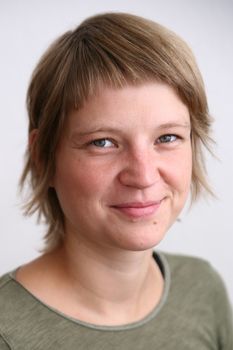
“In my seminars, students usually develop short teaching sequences themselves, in which they try out many things in practice and thus learn and teach simple Computing Science fundamentals. Converting this format into purely online seminars was completely new to me and, of course, involved extra work. I now see this as a benefit: whereas in previous semesters students learnt and taught about the digital world, they are now using precisely these digital media for their own learning and teaching.
Student feedback on the seminar was positive: above all, the link to the current situation – in which teachers are faced with the challenge of delivering their lessons using digital tools – motivated many to try out the tips and ideas for designing online learning units for themselves.
However, I missed the personal contact with the students – despite regular video chats. Very few students used their cameras or microphones, though, so I never actually saw most of them. If I were to run the course again, I would make it more personal. I’m pleased with how the summer semester went and have gained a lot of experience that I can apply and build on during the winter semester.”
Max Schewe is in his 4th semester, Master of Education, studying German, Politics-Economics and History to become a secondary school teacher.
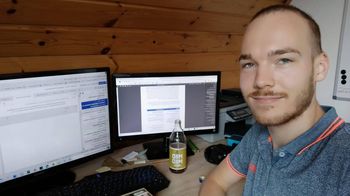
"In my experience, lecturers who also offer interesting, insightful and well-structured courses in a regular semester invest just as much effort and dedication in an adequate online solution. The feared worst-case scenario did not materialise and it is clear that lecturers are showing us students a great deal of understanding and help in this completely unfamiliar situation. However, no online format, no matter how good, can replace or simulate the familiar seminar environment, which encourages discussion of the topics covered and, like varied forms of work, requires physical presence.
However, the coronavirus crisis may have shown that individual teaching and learning formats will also take place digitally in the future and can be a useful addition to actual face-to-face teaching. But one thing is certain: I can hardly wait to finally get back to a regular university routine - with controversial discussions in seminars, informative lectures, work sessions in the library and short breaks to relax with a coffee or mate on campus."
Dr Nadine Hüllbrock is Teaching staff for special tasks at the Institute of Educational Sciences.
"Switching our teaching to digital formats was not easy - especially for seminars with a practical focus, such as the preparation for school internships or visits to extracurricular learning centres. I received help from colleagues who had prepared digital modules for the school internships for the teachers. My students were actively involved in the digital seminar work and the student assistants tirelessly tested apps and plug-ins and reflected the moods from the seminars back to me. In the long term, digitalisation will bring more diversity to teaching. This semester has shown me that independent and sustainable digital study is possible: the students' online results have generated direct feedback outside the seminar through publications and can also be used in my teaching in the future.
A particular challenge for me, as for many students and colleagues, was the additional care of children at home. Studying at night, caring for and teaching children during the day - certainly not a reasonable model, but one that has been reported to me. When there is hardly any time left to answer the question of work-life balance and the digital home office makes it possible to work at any (in)conceivable time and situation, it is important to communicate with each other. However, I haven't had enough verbal communication this semester. I'll be paying attention to this in future - because right now we need a strong sense of togetherness."


Topics
- Astronomy
- Biology
- Botanical garden
- Chemistry
- Computing Science
- Cooperations
- Covid
- Culture
- Dutch Studies
- Early Career
- Economics
- Educational Sciences
- Energy
- Energy Research
- Environmental Sciences
- Equal opportunities
- German Studies
- Graduate academy
- Health Services Research
- Higher Education Policy
- History
- Human Medicine
- International affairs
- Marine Sciences
- Material Culture
- Medical ethics
- Medical Physics and Acoustics
- Music
- Neuroscience
- People
- Philosophy
- Physics
- Presidential Board
- Psychology
- Research
- Slavic Studies
- Social Sciences
- Special Needs Education
- Sport Science
- Study Affairs
- Sustainability
- Teacher Education
- Theology
- Transfer
- University Medicine
- Ukraine
- Wind Physics