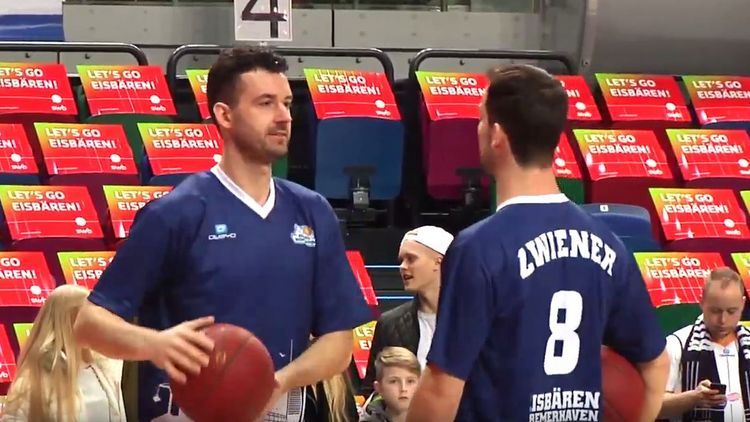

Want to study alongside your sporting career? At the University of Oldenburg, this is possible through the ‘Business Administration for Elite Athletes’ bachelor’s degree programme. A degree programme with its own set of rules.
In competitive sport, there’s no room for half-measures. Athletes devote all their energy to their sport. After all, they want to reach the very top – or stay there. Coaches, fans and sponsors also expect total commitment. Is there still time for a degree? “With us, there certainly is,” says Manuel Karczmarzyk. The expert in academic further education and study programmes coordinates the “Business Administration for Elite Athletes” bachelor’s degree programme at the C3L – Centre for Lifelong Learning. For the past twelve years, the University of Oldenburg, under the leadership of economist Prof. Dr Thomas Breisig, has been offering this part-time degree programme – for anyone who trains for at least 20 hours a week.
The idea is that, alongside their sporting activities, elite athletes prepare for life after their careers. “Many former professionals move into management or take on leadership roles within their clubs, whilst some also enter the private sector. To do this, they need business management expertise,” explains Karczmarzyk. This is provided by the C3L – via an online platform and thus tailored to their tightly scheduled sporting lives. The internationally recognised Bachelor’s degree programme is characterised by a combination of online study and compact on-campus sessions. These on-campus sessions always take place on Mondays and Tuesdays, i.e. outside of usual match or competition dates.
The standard period of study is eight semesters, but this can be extended without any problems. Each student can decide for themselves how many modules they wish to complete per semester. Even breaks of several semesters are not a problem. The programme requires a university entrance qualification. Athletes who do not have an Abitur can, as an alternative, complete a specified number of compulsory modules and thereby qualify for the programme.
No written exam after a home defeat
And what happens if something comes up in the hectic daily life of an athlete? Within certain limits, lecturers, mentors and coordinators can respond flexibly to their students’ needs. Karczmarzyk gives an example: “If the team lost 0–5 at the weekend, we don’t expect the student to turn up for the written exam on Monday morning.” It goes without saying that professional athletes are first and foremost committed to their club – in this case, to extra training following that frustrating home defeat. “Nowadays, you can easily sit written exams online,” says Karczmarzyk.
The programme coordinator currently looks after around 40 “business and sport students”, including some familiar faces such as national football player Jonas Hector and handball player Sven Sören Christophersen. Among the roughly 60 alumni are former Werder Bremen player Florian Bruns – now assistant manager at SC Freiburg – basketball player Jannik Freese and long-serving national football player Hans Jörg Butt, who heads up sales and marketing at his family’s loading systems company. “The footballers are certainly our best-known students,” says Karczmarzyk. However, as professional athletes in a multi-billion market, they are also under particularly high pressure. So it can sometimes happen that a reminder has to be sent about a seminar paper before anything gets done.
Stressed footballers, reliable triathletes
In his experience, triathletes are a different kettle of fish: generally calm and very reliable. They also like to prepare for exams on their own – just as they are used to doing in their sport. The situation is similar with equestrians and sailors. “I’m not one for stereotypes, but every now and then you do spot a few parallels,” says the programme coordinator, who is himself active as a coach in sports acrobatics.
For elite athletes, he says, it is immensely important to prepare for life after their career. “So that life moves on in a meaningful way and you don’t fall into a slump after all the hustle and bustle,” he explains. On top of that, he adds, athletes can provide important impetus to the sports industry thanks to their years of practical experience. “There’s a lot of untapped potential there that belongs in the boardrooms of sports clubs.” Universities in Cologne, Jena and Leipzig offer similar programmes, although these tend to be more focused on sports management. The Oldenburg degree programme has a broader scope. An alumni survey conducted in 2016 showed that 95 per cent of graduates see the programme as a springboard into their ‘second’ career. “They want to be more than ‘just athletes’. That’s perfectly understandable, and we’re paving the way for them to achieve that.”
Those interested can enrol for the 2019 summer semester until 15 February. An online information session will take place on 12 February at 6.00 pm. You can register here.