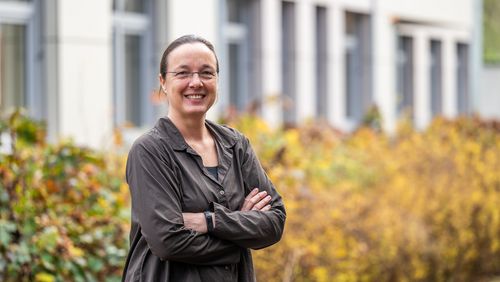


The protest actions of the Russian punk group Pussy Riot, their arrest and imprisonment are the focus of the theatre performance "Tage des Aufstands - Riot Days", which can be seen this week at the Kulturetage. In this interview, religious scholar and Russia expert Joachim Willems talks about solidarity with the convicts in the West and the political situation in Russia then and now.
QUESTION: Mr Willems, Maria Alyokhina's theatre performance is based on the book of the same name, in which the Russian Pussy Riot activist describes her experiences before and after the group's legendary action in Moscow's Cathedral of Christ the Saviour in March 2012. How did you follow the events in 2012?
ANSWER: I had seen the video of the performance in the cathedral quite early on, even with a Russian eye, and thought: This is trouble. The group touched on a lot of taboos. The action was an incredible provocation for traditional mainstream Orthodoxy and the church leadership in Russia.
QUESTION: They obviously hit a nerve with the punk prayer.
ANSWER: In Russia, yes. In this country, people would have reacted relatively calmly. Criticism of the connection between church and state, criticism of authoritarian rule in the country, criticism of human rights violations - that's what the group was about: combining certain forms of political activism with performance elements. Before the punk prayer, Pussy Riot had already released a few other videos criticising the authoritarian state leadership under Putin, against the rigged Duma elections and in favour of women's and LGBT rights.
QUESTION: The group became particularly well known here after three of its members were arrested...
ANSWER: The attention here came because the women were punished disproportionately harshly with two years in prison - even if one can argue about the appropriateness of the performance. In 2012, the support scene was very broad. World-famous stars stood up for her - Madonna showed her solidarity at a concert in Russia. The Russian government wanted to set an example, but ultimately gave the group publicity and damaged its own image abroad.
QUESTION: Has this also damaged Putin at home?
ANSWER: No. There are many people in Russia who remember the 1990s - wild privatisation, great poverty, social problems. Many say: We would rather have a man with a strong hand than have the chaos of that time return and the people sink into misery. From a Russian perspective, there is a lot of understanding and support for Putin. And there were much more scandalous judicial judgements at that time that didn't get any attention here.
QUESTION: What was that about?
ANSWER: During the large demonstrations against the falsification of the elections, there were mass arrests and very draconian sentences. People were imprisoned for many years, not according to the rule of law. But good-looking young women fighting with a pure heart against the authoritarian villain: that's a simpler story than the question: was the demonstration authorised or not? Were there riots or not? What exactly happened? That's much more difficult. That's also how the media works.
QUESTION: Does Pussy Riot seem more political or artistic today?
ANSWER: Political activism was and is more important than artistic activism. And the group was politically active the whole time - even in prison. They clashed with the camp management and tried to politicise fellow prisoners, assert their own rights and have an impact on the outside world. In the West, they are now more involved in a small scene of undogmatic left-wing, feminist and politically committed people - in the independent theatre scene, beyond the mainstream.
QUESTION: Does that mean they play no role in the current political situation in Russia?
ANSWER: No. According to independent surveys, Putin can rely on the support of around 60 per cent of the country. But he needs even greater support. He must appear to be the tribune of the people for his system. That is why he is not running as the candidate of a party, but as an independent. And that is why there is still repression, perhaps even falsification, to make the victory appear clearer. In Moscow, Putin probably does not have an absolute majority, but here too he definitely has a relative one. This is also because everything that is oppositional has been discredited, slandered and kept down with repression for years. No civil society has developed in a free debate.
Interview: Constanze Böttcher