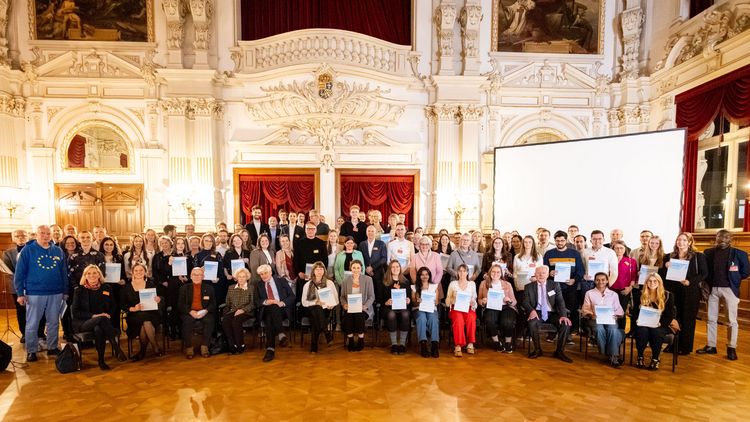


A total of 84 students at the university have been awarded a Deutschlandstipendium for one year - only one year has seen more. They were presented with their certificates at a ceremony.
84 particularly talented and committed students at the University of Oldenburg are receiving a Deutschlandstipendium scholarship this academic year - the highest number since 2013. The grant amounts to 300 euros per month and lasts for one year. Half of the sum comes from the federal government, while the university has raised the other half from private donors. A total of 744 young people applied for a scholarship - almost twice as many as in the previous year.
"A Deutschlandstipendium scholarship not only makes it easier to study, it also creates scope for commitment outside the university. This benefits not only the scholarship holders, but society as a whole," said Prof Dr Katharina Al-Shamery, Vice President for Academic Career Paths, Equal Opportunities and International Affairs, at the award ceremony for the scholarship certificates in Oldenburg Palace. According to Al-Shamery, around 81 per cent of the scholarship recipients are involved in voluntary work alongside their studies.
On behalf of the university, Al-Shamery expressly thanked the sponsors: 17 individuals, seven companies and 21 other foundations, associations and institutions were involved in the Deutschlandstipendium this year. "Anyone who supports a scholarship holder is not only doing something very worthwhile, but also has the opportunity to get to know the scholarship holders personally," said Al-Shamery. This personal exchange, which often continues after the end of the programme and leads to friendships or academic appointments, is what makes the Deutschlandstipendium so special and enriching for everyone involved.
Since it was founded over 50 years ago, the University of Oldenburg has been a nationwide pioneer in paving the way for new target groups to study: Both students with a non-traditional educational biography and students with a limited time budget are significantly more strongly represented at the University of Oldenburg than at other face-to-face universities. Around a third of students have previously gained a vocational qualification or other work experience. According to the most recent survey of new students, many Oldenburg first-year students are also the first in their family to start a degree course - among those receiving funding, this figure is around 63 per cent, five per cent more than in the previous year. "This is particularly remarkable and significant because in Germany, the children of academically educated parents are around three times more likely to start a degree programme than those whose parents did not attend university," explained Al-Shamery.
The University of Oldenburg has been involved in the Deutschlandstipendium since 2011 and, together with the sponsors in the programme, has since been able to provide financial support to over 900 students.