

With its campaign ‘Doctors don’t just fall from the sky’, University Medicine Oldenburg aims to emphasise its call for adequate financing. The aim: more medical school places in Oldenburg.
Through a petition entitled ‘Doctors don’t just fall from the sky’, University Medicine Oldenburg is calling on citizens across the north-west of Germany to support the demand for more medical school places at the University of Oldenburg. “We want to counteract the looming shortage of doctors in our region and train at least 200 students per year in future, rather than 120. However, this depends on the Lower Saxony state government finally providing our institution with adequate funding, as promised,” explains Prof. Dr Ralph Bruder, President of the University of Oldenburg.
Residents can support this appeal by adding their signature. At Oldenburg General Hospital, the Evangelical Hospital in Oldenburg, the Karl Jaspers Clinic and Pius Hospital in Oldenburg, as well as in more than 200 practices within the teaching practice network and at the academic teaching hospitals, patients will find information leaflets, cards and collection boxes where they can add their signatures. The Lower Saxony Rural Women’s Association Weser-Ems is also supporting the campaign and is calling on its members to take part. At uol.de/bestemedizin, members of the public also have the option of submitting their signatures digitally. The collected signatures will be handed over to Minister-President Stephan Weil in Hanover in June – just in time for the upcoming budget retreat.
The campaign has been launched in response to the looming shortage of doctors, particularly in the north-west. According to forecasts by the Association of Statutory Health Insurance Physicians, the region will be short of more than 400 GPs and around 930 doctors in private practice in about ten years’ time. “From our own experience and many years of practice, we know that the place where doctors train plays an important role in their decision about where to spend their professional lives. During their studies, they become familiar with the regional medical infrastructure and gain the confidence that they can practise their profession responsibly in this environment,” says Dr Maria Bösenberg, a specialist in general practice from Oldenburg, whose GP practice in the Lambertihaus has been a member of the UMO’s teaching practice network for many years. Patients can also take part in the petition at her practice.
Medical studies and specialist training take a total of around twelve years. “That is why the state government must finally increase the number of university places now and make it a priority to allocate the necessary funds – both for the required professorships and for the buildings that have been urgently needed for years – in next year’s budget. This would finally see them follow up on the plans set out in the 2022 coalition agreement,” demands Prof. Dr Hans Gerd Nothwang, Dean of School V - School of Medicine and Health Sciences.
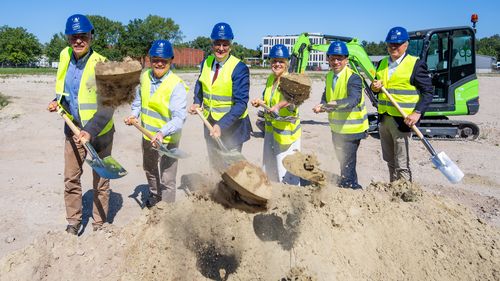
Specifically, the aim is to increase the annual state funding for the university – as already agreed in 2019 with the state government at the time – and to support the affiliated hospitals with around 10 million euros annually to cover their additional costs. The number of students has risen from the original 40 to 120, and with it the number of professorships and staff at the School. However, the planned 200 places have not yet been funded. Furthermore, the UMO requires its own buildings. The Planning Institute for Higher Education Development has identified a space shortfall of around 20,000 square metres based on an expansion target of 200 students per class of medical students. Although the first phase of construction for a research building on Pophankenweg is due to begin this year, the costs for the second phase, amounting to around 84 million euros, have not yet been included in the budget. The UMO is equally in urgent need of a teaching building. To date, there has been no funding commitment for the construction costs of 83 million euros.