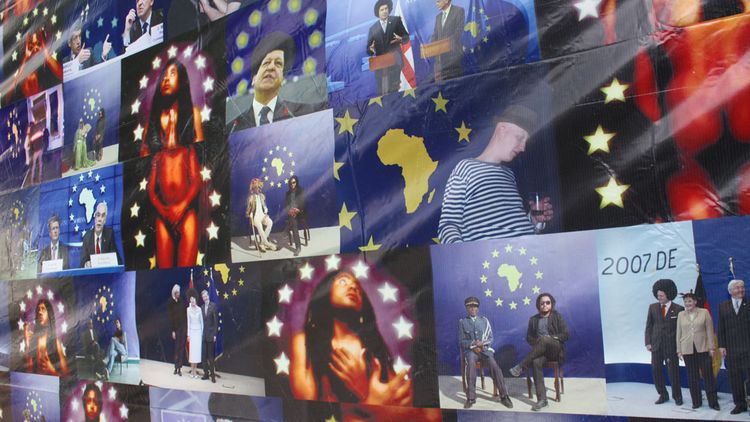
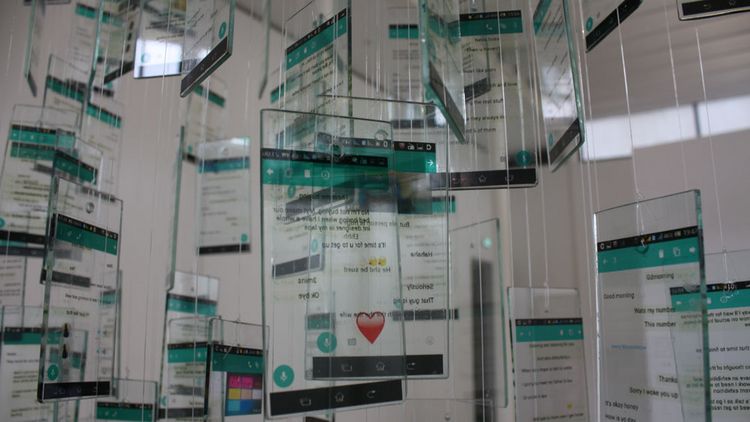
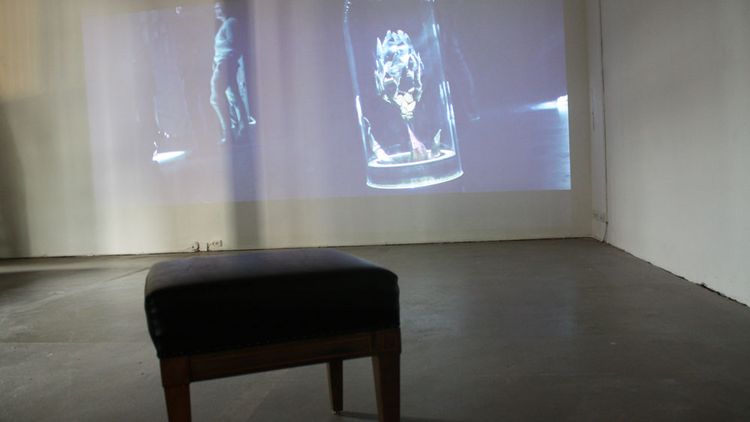
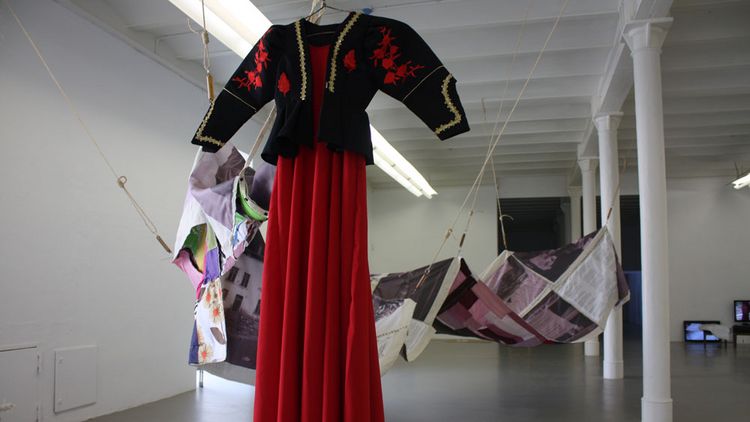


What does it mean to leave your home country? Setting off to a foreign country to build something new there? The topic of "migration" in all its facets is at the centre of the international exhibition "Kabbo ka Muwala", which originated at the University of Oldenburg and can now be seen in Bremen. "Wait, I just have to switch on the exhibition." Ingmar Lähnemann, curator of the exhibition "Kabbo ka Muwala (The Girl's Basket)", disappears into the darkness with several remote controls. A short time later, lights flicker on, strange voices sound from loudspeakers, an oversized mobile swings gently in the breeze and a person in a spacesuit is projected onto the wall opposite. Visitors to the exhibition at the Städtische Galerie Bremen are presented with an impressive variety of works. A total of 15 exhibits - from a video to a series of pictures to a walk-through tunnel - take up the theme of migration. They are extremely diverse, and yet each of them makes sense both individually and in combination. All of the works express the thoughts and feelings that their creators, 15 artists from Africa and Europe, associate with the topic of migration and mobility. Researchers from the Oldenburg Centre for Interdisciplinary Women's and Gender Studies and the EMMIR (European Master in Migration and Intercultural Relations) master's programme initiated and coordinated the show; cooperation partners are the National Gallery of Zimbabwe, the Makerere Art Gallery (Uganda) and the Städtische Galerie Bremen. The German Federal Cultural Foundation is supporting the project with more than 120,000 euros from its TURN fund. Stops in Zimbabwe, Uganda and Bremen In keeping with its theme, the exhibition has already travelled extensively. Over the past few months, the show has already been on display in Uganda and Zimbabwe - in a slightly different form in each case. It has now been on show at the Städtische Galerie Bremen since 24 September. As an artistic prelude, the Kenyan artist Miriam Syowia Kyambi set off on a journey across Bremen under the title "I Have Heard Many Things About You". She impressively demonstrated how difficult the "burden of migration" can be: The performance artist wore a specially tailored dress with a train several metres long. The special feature: The train consists of historical documents, letters, photographs and drawings from the colonial era and is intended to remind us of the responsibility of the Germans as a former colonial power. Following her walk through the city, Kyambi permanently installed the dress and train in the exhibition. Her work was created exclusively for the Bremen show because, as a trading metropolis, the Hanseatic city has a particularly strong connection to the theme of colonialism. The oppressive feeling of shame Anawana Haloba's walk-through tunnel is also being shown in Bremen for the first time. The video installation entitled "Rape at Piccadilly Circus" brings the fate of the South African Sarah Baartmann home to visitors in a very impressive way. The young woman was deported to London at the beginning of the 19th century and exhibited there as a curiosity because she had an unusual fat deposit on her rump. Even though her fate triggered a debate about the treatment of supposedly different people, in the end hardly anyone paid any attention to Sarah Baartmann as a person. The video installation manages to convey precisely this omission. Anyone who enters the tunnel and lets the images and sounds sink in can feel the oppressive sense of human shame. But migration is not just a burden, trepidation or guilt. Artist Kiluanji Kia Henda takes a completely different approach in his oversized photo installation "As God Wants And The Devil Likes It", which awaits visitors outside the entrance. He dares to take an ironic look at the European-African relationship by founding an African non-governmental organisation that wants to help Europe. In his pictures, he gives leading EU politicians Afro hair, groups the stars of the European flag as a halo around a dark-skinned Madonna and makes the silhouette of Africa appear in a golden light. Comprehensive accompanying programme The appeal of the exhibition lies in this variety of exhibits and installations. It can be seen until 11 December at the Städtische Galerie Bremen, Buntentorsteinweg 112. The gallery is open Tuesdays to Sundays from 12 noon to 6 pm. Those responsible have put together a comprehensive programme of events to accompany the exhibition: On Tuesday, 27 September, those involved in the EMMIR degree programme will be holding an opening symposium at the University of Oldenburg (room A13 0-027) from 10am. The speakers will be Jo Vearay from Witwatersrand University in South Africa and Ketil Fred Hansen from the University of Stavanger in Norway. From 19 October until the end of the exhibition in December, Cine K Oldenburg invites you to a thematically appropriate film series every Wednesday at 6 pm. On Friday and Saturday, 28 and 29 October, the international conference of the network "Gender and Migration@Niedersachsen" will take place in the library hall of the University of Oldenburg. An overview of all dates in the accompanying programme can be found here. (bb)
More on the topic
press releaseContact
Dr Lydia Potts
Tel: 0441/798-2530
Dr Katharina Hoffmann Tel: 0441/798-4157