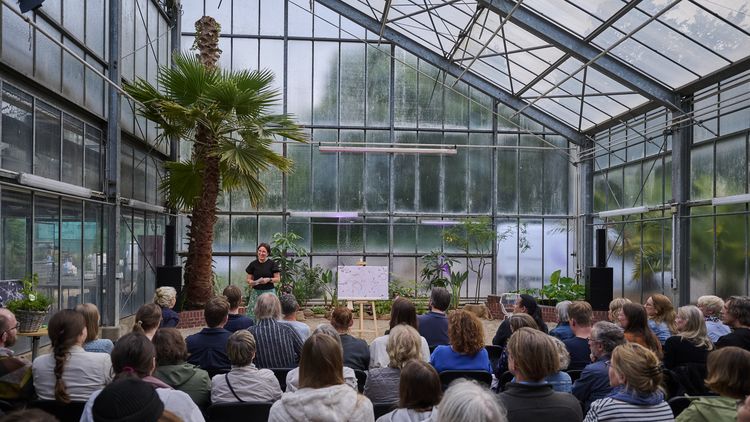
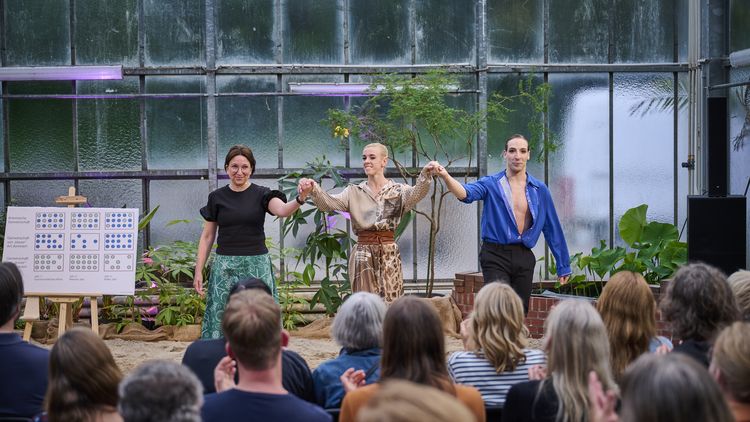


The audience experienced a particularly unusual fusion of art and science at the third instalment of the “wissenskunst” series in the University’s Botanical Garden.
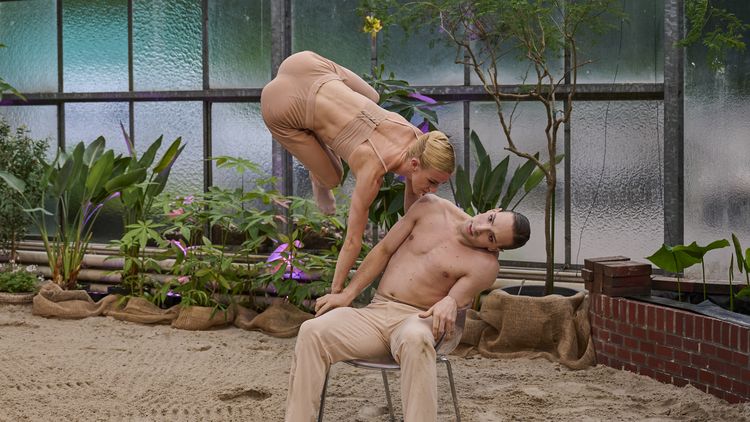
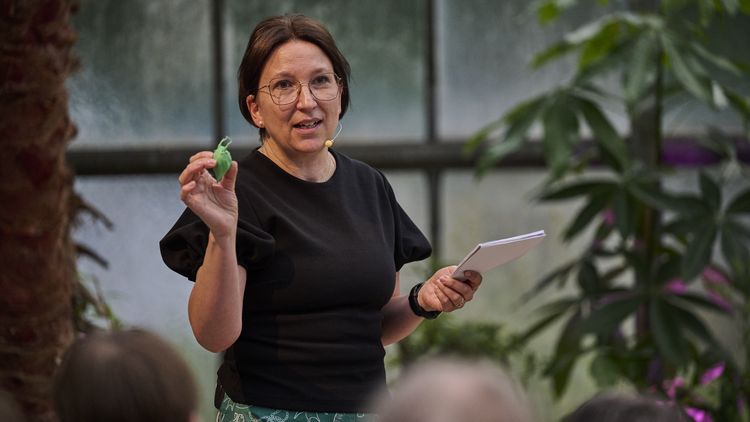
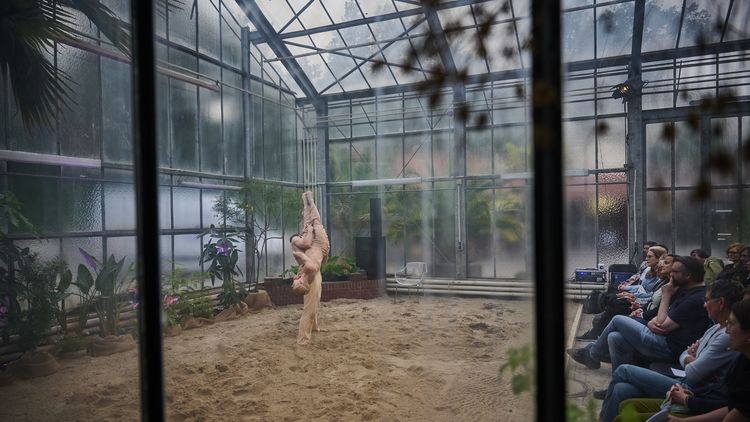
Surrounded by plants and on a specially created sandy area, last Thursday saw the dance duet “Is this it?” by Antoine Jully, ballet director and chief choreographer of the State Theatre, meet the research of biologist Dr Maren Striebel from the Institute of Chemistry and Biology of the Marine Environment (ICBM). The themes only appeared different at first glance: both contributions revolved around central questions of relationships and interdependencies – in ecosystems as well as in human coexistence. The Botanical Garden’s Tropical House was a venue that was as unusual as it was fitting.
The artistic starting point was the duet “Is this it?”. In their choreography, Nicol Omezzolli and Fran Kovačić explored questions such as how closeness and distance arise, how expectations shape our interactions, and how external influences can alter relationships. The encounter between the two figures developed into a multi-layered exploration of the fragility of human communities. The fact that the stage in the Tropical House was made of sand presented a particular challenge for the duet and made the dance all the more intense.
Striebel took up these ideas from a scientific perspective. In her lecture, she presented her research on plankton communities in oceans and lakes. Part of this involves so-called planktotrons. In these 600-litre tanks, Striebel investigates, under realistic conditions, how communities of algae, tiny crustaceans and bacteria react to environmental changes such as rising temperatures, nutrient depletion or other disturbances. These organisms play a central role in the climate and ecosystems – and at the same time illustrate how sensitive even stable communities can be to external influences.